
Final Fantasy VI - A Masterpiece That Still Holds a Special Place in My Heart
Of all the Final Fantasy games I’ve discussed so far, Final Fantasy VI holds a particularly special place in my heart for a very simple reason: it was the first Final Fantasy game I ever owned. My older brother, who was working in retail at the time, bought it for me as a gift. I’d already been introduced to the franchise through Final Fantasy IV, but there was something special about finally having a copy of my own.
And what a game it turned out to be.
More than three decades later, I would comfortably place FFVI among my favourite entries in the franchise. Depending on when you ask me, it might even be my absolute favourite. There are other games that do certain things better, but as a complete experience, FFVI is remarkably difficult to beat.
Final Fantasy IV brought together many of the ideas introduced in the original trilogy, while FFV refined the job system from FFIII. With FFVI, Square took the character-driven storytelling of IV in a considerably more ambitious direction, combining it with a flexible progression system, a much larger cast, and a world that looked unlike anything we’d previously seen in the series.
My First Experience: Where Did All the Magic Go?
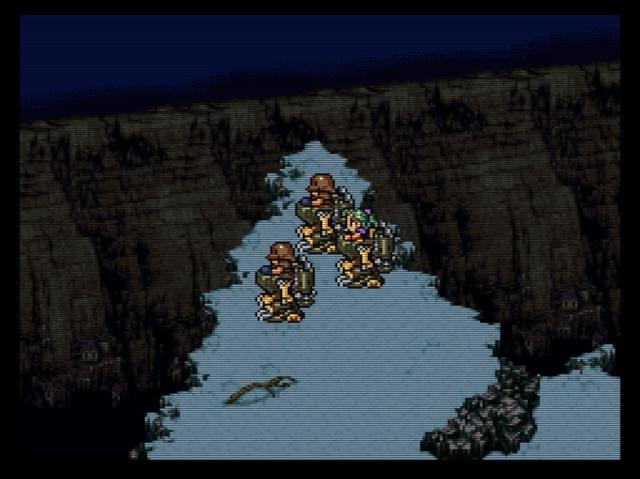
One of my earliest impressions of Final Fantasy VI was just how strange its setting was. Instead of the relatively traditional fantasy world of FFIV, with its knights, dragons, and mages, we find ourselves in an industrialized world of machinery, steam-powered technology, and enormous mechanical suits known as Magitek Armor.
And seemingly, there was no magic.
I remember wondering whether this was supposed to be some sort of futuristic science-fiction RPG, perhaps something resembling cyberpunk. Looking back, steampunk is a much more appropriate description, but as a kid, I was fascinated by how different it was from what I associated with Final Fantasy.
The opening sequence captures that feeling perfectly. Three soldiers piloting Magitek Armor march through the snow towards the mining town of Narshe, where an Esper has been discovered frozen in ice. Among them is Terra Branford, a young woman who can use magic in a world where such abilities are considered extraordinary.
A thousand years before the events of the game, a conflict known as the War of the Magi devastated the world. Three powerful beings, the Warring Triad, transformed humans into magical creatures called Espers and forced them to fight. Eventually, the Triad recognized the destruction they had caused and sealed themselves away, while the Espers retreated from the human world. Magic gradually faded into legend, and humanity developed technology in its place.
Unfortunately, the Gestahlian Empire has discovered a way to exploit the magical powers of the Espers, creating Magitek technology and using it to strengthen its military. I love the contrast between technology and magic, particularly the idea that the Empire is essentially attempting to industrialize something supernatural.
FFVI also marks a departure from the traditional crystal-based narrative that had dominated FFI, III, IV, and V. Magicite is still a crystallized substance, but its significance is very different from that of the elemental crystals. Much like FFII, FFVI demonstrates that Final Fantasy doesn’t need to revolve around protecting or restoring four crystals to tell a compelling story.
An Empire, a Resistance, and a Young Woman Searching for Her Identity
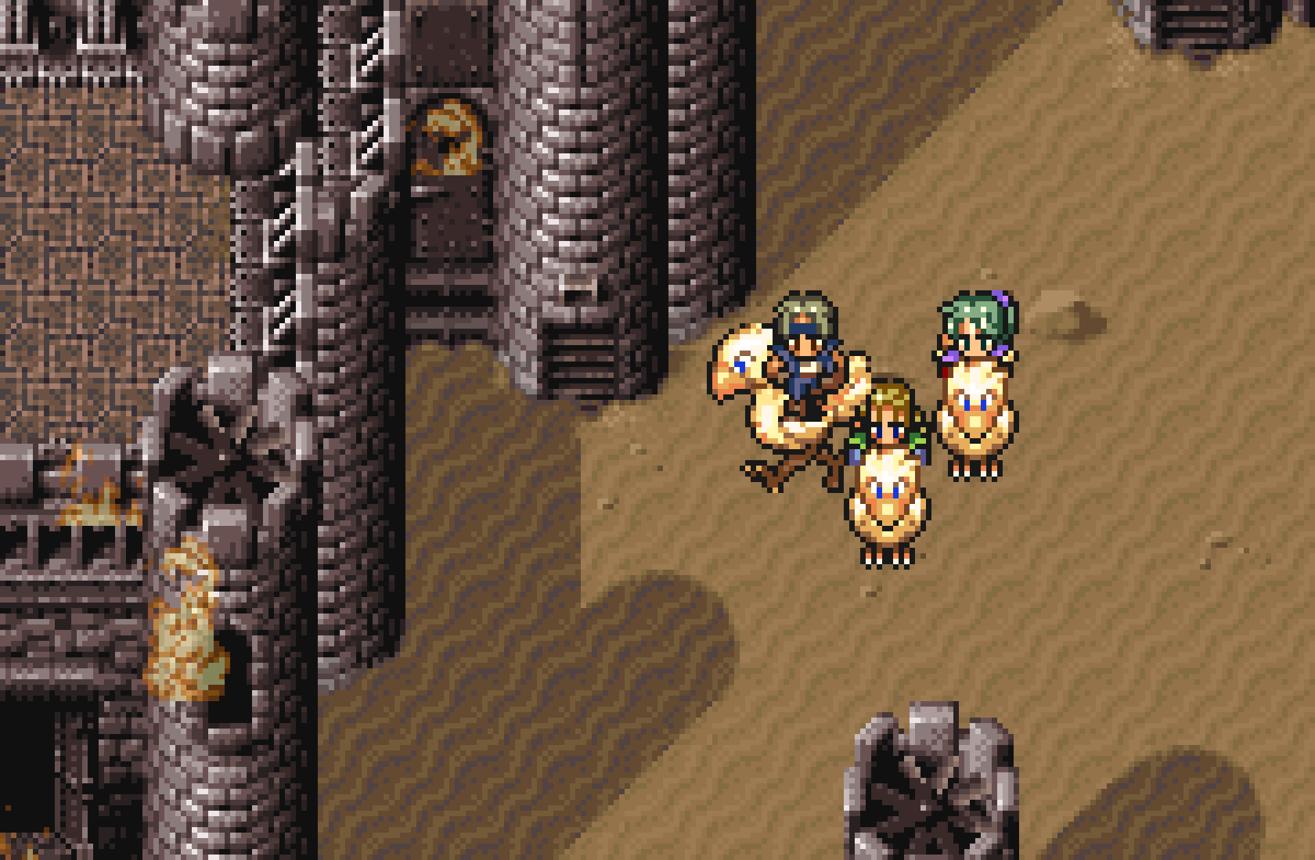
Terra begins the adventure under the control of the Empire, having been fitted with a Slave Crown that suppresses her free will. Her encounter with the frozen Esper Valigarmanda (Tritoch in the original North American release) leaves her unconscious and separated from her Imperial companions. She awakens without the crown and with little memory of her previous life.
With the help of Locke Cole, a self-described treasure hunter working with the Returners, Terra escapes Narshe and travels to Figaro. There she meets Edgar, a young king who maintains a nominal alliance with the Empire while secretly supporting the resistance.
Naturally, the Empire isn’t particularly pleased. Kefka arrives demanding that Edgar surrender Terra and sets Figaro Castle ablaze when he refuses. Fortunately, the entire castle can burrow beneath the desert. I still think that’s an incredibly cool idea, and it’s another example of how the game makes technology integral to its world rather than simply using it as decoration.
As the adventure progresses, Terra’s search for her identity becomes intertwined with the struggle against the Empire. We’re introduced to people who have their own reasons for opposing it, including former Imperial general Celes, Edgar’s twin brother Sabin, and Cyan, a samurai serving the kingdom of Doma.
In some respects, the premise reminds me of FFII, particularly its emphasis on a resistance movement fighting an empire and the consequences of war. But the leap in storytelling and characterization is substantial. And unlike FFV, where I sometimes felt the humour undermined the drama, FFVI strikes an excellent balance between the two.
One of the Greatest Casts in Final Fantasy
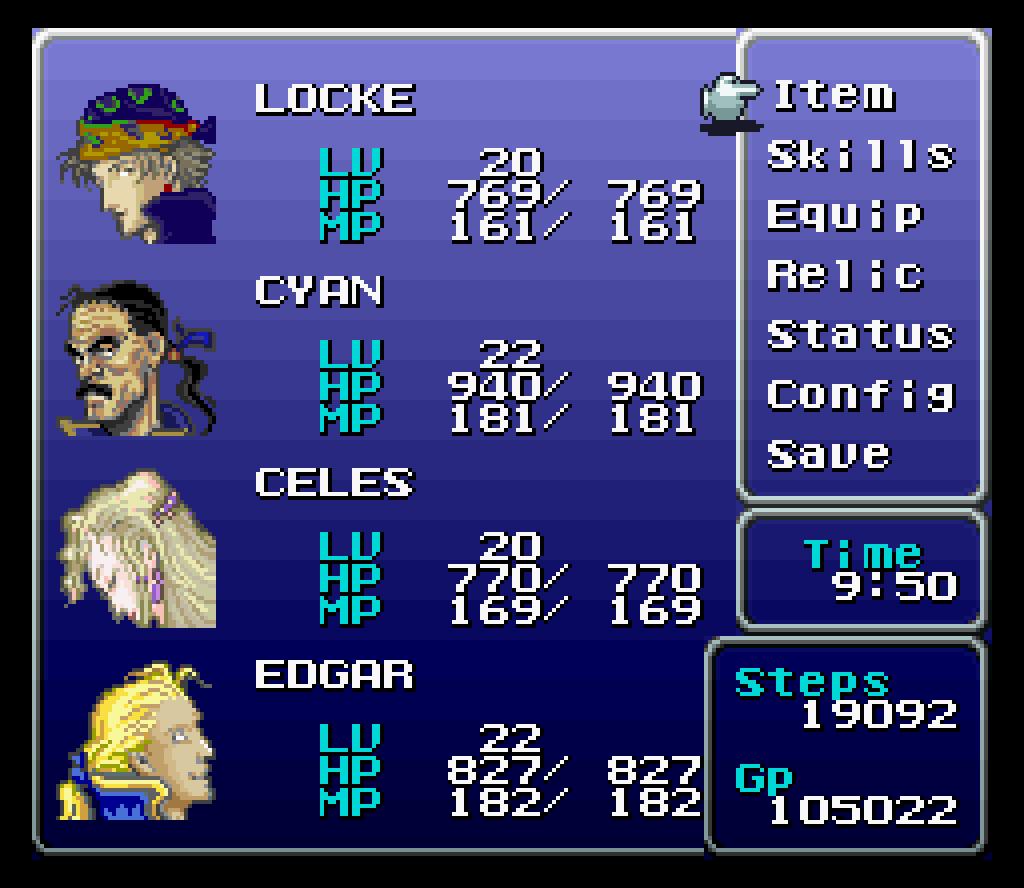
FFVI features fourteen permanent playable characters, an impressive number considering how many of them have their own stories. Terra struggles to understand her origins, Locke is burdened by guilt over someone he loved, and Celes has to find her place in the world after turning against the Empire. Edgar and Sabin have taken very different paths in life, while Cyan has to deal with the loss of his family.
Then there’s Shadow, a mysterious assassin accompanied by his dog, Interceptor; Setzer, a gambler with his own airship; Gau, a wild child raised among monsters; Strago, an elderly practitioner of blue magic; and Relm, a young artist. Even Mog, the talking moogle, has a personality of his own. Gogo and Umaro round out the cast as optional characters with considerably less involvement in the story.
Of course, not all of them receive the same amount of attention. I don’t necessarily see this as a problem, but it’s one of the reasons I’ve never entirely agreed with the argument that FFVI has no main character. I’ll get into that in the spoiler section.
Gameplay: Character Classes, Espers, and Relics
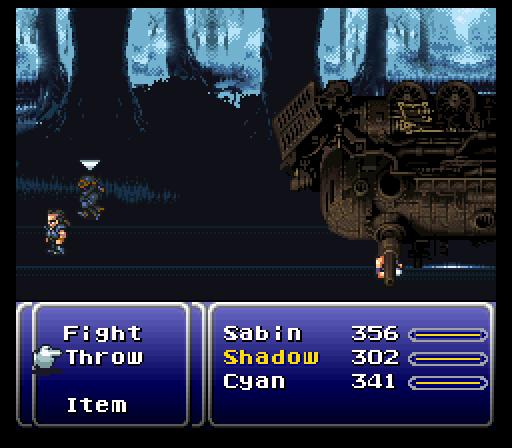
After FFV’s elaborate job system, Square returned to something closer to FFIV, giving characters established roles and abilities while allowing players to customize them through the Esper system. Each character has something resembling a traditional Final Fantasy job, even if it isn’t presented through a job-selection menu.
Locke is effectively a Thief, Sabin a Monk, Cyan a Samurai, and Shadow a Ninja. Strago uses blue magic through Lore, while Gau learns to imitate monsters through Rage. Relm’s Sketch ability makes her a Pictomancer, and Setzer’s Slot command incorporates his gambling background into the battle system. Edgar is essentially a machinist whose Tools range from a mechanical crossbow to a chainsaw. Terra and Celes resemble magical knights, with Celes also possessing Runic, which can absorb certain spells.
Sabin’s Blitz attacks are particularly fun because they require specific controller inputs, something rather unusual for a turn-based RPG. And yes, the fact that you can have Sabin suplex a train is every bit as ridiculous as it sounds. I love it.
What really makes the character progression interesting, however, is Magicite, the crystallized remains of Espers. Equipping it allows a character to summon the associated Esper in battle and learn spells by earning Magic Points. Once learned, those spells can still be used after switching to another Esper. Some Espers also provide permanent attribute bonuses when the equipped character levels up.
This gives you considerable freedom without sacrificing the characters’ individual identities. You can develop Celes as a powerful physical attacker, turn Shadow into a competent spellcaster, or focus on Sabin’s magic rather than his physical attributes. Most characters can eventually learn the same spells, although Gogo and Umaro are exceptions to the normal Magicite system. Gogo can instead use magic known by other members of the active party if equipped with the Magic command.
There is a downside: once almost everyone has learned spells such as Ultima, the distinctions between characters can become less important. Still, I much prefer this approach to being completely locked into predetermined roles. It combines what I liked about FFIV’s characters with some of FFV’s flexibility, without being overly complicated.
The Relic system adds another layer of customization. Accessories can modify commands, increase attributes, protect against status effects, and provide special abilities. Combining the Genji Glove, which allows dual-wielding, with the Offering (Master’s Scroll in later releases) is one particularly entertaining way to make a physical attacker ridiculously powerful.
FFVI retains the Active Time Battle system introduced in FFIV, and I think the combination of unique abilities, Espers, and Relics makes the combat enjoyable even today. Optional encounters such as the eight legendary dragons provide plenty of opportunities to experiment with different setups. Unlike some of the earlier games, I don’t find myself having to make many allowances for its age.
Graphics and Presentation: Square at Its 16-Bit Best
Released in 1994 for the Super Famicom and in North America as Final Fantasy III, FFVI is one of the most visually impressive RPGs on the Super Nintendo. The sprites are considerably more expressive than those of the previous games, and the environments have distinct identities. Narshe’s snowy industrial landscape looks nothing like Figaro’s desert, and the Imperial capital of Vector contrasts nicely with places such as Mobliz and South Figaro.
The opening march through the snow remains one of my favourite introductions to a video game. There is something almost cinematic about it, despite the hardware limitations. More impressive to me is how much emotion the developers communicate through small sprites, music, and a few simple animations. You don’t need an elaborate cutscene to understand that a character is grieving or uncomfortable.
I’d certainly be interested in seeing Square Enix revisit the game with a larger budget, but the original presentation has aged so well that I don’t think it needs a remake to remain compelling.
Music: One of Nobuo Uematsu’s Greatest Achievements
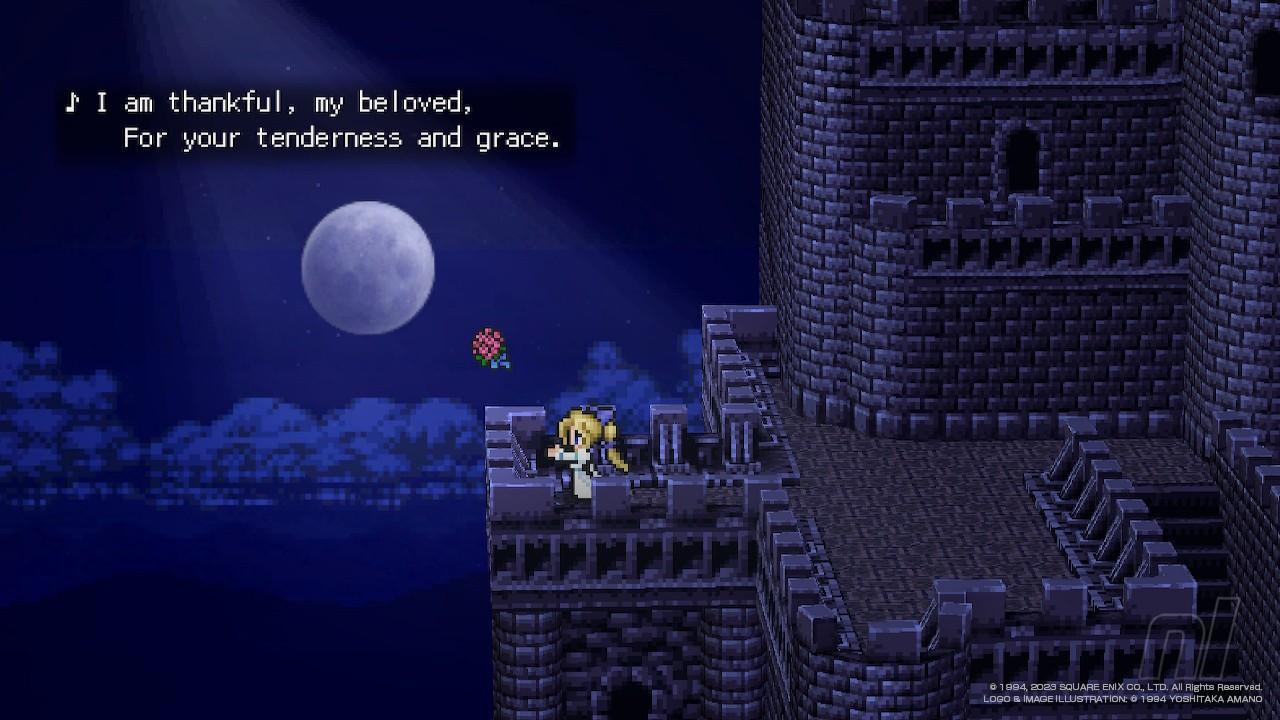
I could probably devote an entire article to FFVI’s soundtrack. What particularly stands out is how closely the music is associated with the characters and locations. Terra, Locke, Celes, Shadow, Cyan, and many of the others have their own recognizable themes, giving the cast a musical identity that complements their stories.
I’ve always particularly enjoyed the regular battle theme. There’s something almost funky or jazzy about its rhythm and bassline, which makes it quite different from the battle music in FFIV and V. Considering how often you hear it, I’m amazed that I never really got tired of it.
Terra’s Theme is one of those compositions that perfectly captures the atmosphere of the game. It accompanies much of the overworld exploration in the first half and manages to sound adventurous and melancholy at the same time. Celes’s Theme, meanwhile, conveys the character’s vulnerability beneath her disciplined exterior.
And then there’s the opera. The entire sequence is remarkable for a 1994 video game, particularly Aria di Mezzo Carattere. The original uses synthesized vocal sounds, while the Pixel Remaster features actual recorded vocals. Whatever criticisms I may have of the Pixel Remasters, I think the work done on this particular sequence deserves considerable praise.
There are so many other tracks I love: The Decisive Battle is an excellent boss theme, Phantom Forest creates a wonderfully unsettling atmosphere, and Forever Rachel and Coin of Fate are particularly emotional when you consider the scenes they accompany. Magitek Research Facility perfectly captures the industrial setting, while Slam Shuffle gives Zozo a character of its own.
Searching for Friends is one of my favourite overworld themes in the entire franchise. Its sense of adventure and renewed hope is particularly appropriate given when you first hear it. And Dancing Mad, the multi-part composition accompanying the final battle, is an astonishing achievement on the Super Nintendo. It feels more like a musical suite than an ordinary boss theme, developing alongside the stages of the fight itself.
As I mentioned in my FFV review, I still have a particular fondness for Battle at the Big Bridge and might even consider it my favourite individual composition from the 16-bit era. But as a complete soundtrack, FFVI is extraordinarily difficult to beat.
The Different Versions and Missing Bonus Content
The original North American SNES release features Ted Woolsey’s localization, which has acquired a certain nostalgic charm despite its changes to the Japanese dialogue and terminology. The PlayStation version added features but introduced loading times that weren’t present in the cartridge release.
The GBA version offered a revised translation, additional Espers, bosses, and two optional areas: the Dragons’ Den and Soul Shrine. The former expands upon the dragon encounters, while the latter provides a lengthy series of battles that test your understanding of the combat system. The older mobile and PC releases retained these additions.
Unfortunately, the Pixel Remaster doesn’t. As with FFV’s Sealed Temple, I find it disappointing that content from previous versions was omitted. I understand the desire to recreate the original games, but I would have preferred the option of experiencing the extra content as well.
That said, the Pixel Remaster has an excellent rearranged soundtrack, a beautifully updated opera sequence, and welcome quality-of-life improvements. Each version has its merits, and the original SNES release remains an excellent way to experience FFVI.
Story Discussion — Spoilers Ahead
Terra, Locke, and Celes: Does Final Fantasy VI Really Have No Main Character?
I frequently see people describe FFVI as an ensemble story with no central protagonist. While it’s certainly an ensemble, I don’t think having a large cast necessarily means that everyone occupies the same narrative position. Gau, Relm, Strago, and Umaro simply aren’t as important to the main story as Terra or Celes.
My interpretation is that FFVI has three principal protagonists whose importance shifts as the adventure progresses: Terra, Locke, and Celes.
Terra is clearly the focus of the opening. The story begins with her, the mystery surrounding her magical abilities drives the early narrative, and much of what the party does revolves around protecting her from the Empire. When she transforms into her Esper form during the second visit to Narshe and flies away, the immediate focus of the adventure changes.
This is where I think Locke becomes particularly important. He plays a central role in the opera-house operation, the infiltration of Vector, and the expedition to Thamasa alongside Terra. His relationship with Celes also becomes increasingly important. Terra remains integral to the story, but Locke occupies something resembling the position of principal male lead during much of the latter part of the World of Balance.
Then there’s Celes. Following the events of the Floating Continent, the World of Ruin begins from her perspective. She’s the one who discovers what has happened and sets out to reunite the surviving members of the party. Even though the player can eventually select another party leader, it’s her journey that gives the second half of the game its initial direction.
I’m not suggesting that these are officially designated protagonists. I simply think an ensemble cast with a shifting narrative focus is a more accurate description of how FFVI tells its story.
Kefka: The Villain Who Actually Wins
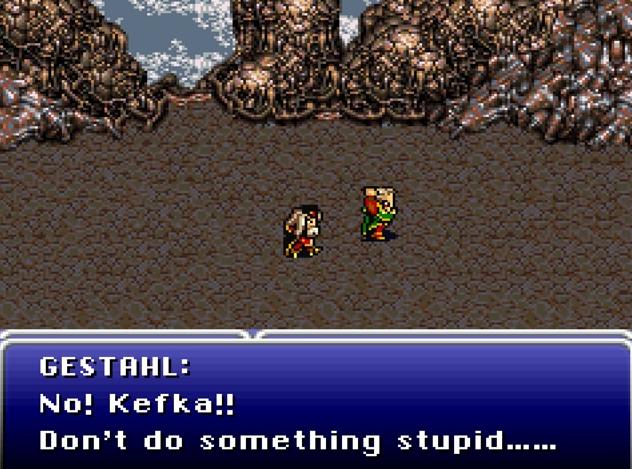
Kefka begins as an eccentric, theatrical Imperial officer working under Emperor Gestahl. His behaviour is frequently played for laughs, but it becomes clear quite early that there’s something deeply wrong with him. His decision to poison Doma’s water supply, killing civilians and soldiers alike, including Cyan’s wife and son, establishes him as considerably more than a comic-relief villain.
On the Floating Continent, Kefka betrays Gestahl and seizes the power of the Warring Triad. And this is where FFVI does something that I still consider one of the most brilliant developments in the franchise.
The villain wins.
In most RPGs, the heroes arrive just in time to prevent the catastrophe. Here, they fail. Kefka moves the statues out of alignment, devastating the planet, destroying cities, and reshaping entire continents. The consequences aren’t immediately reversed, nor is the adventure simply reset to the point before the disaster. The entire second half takes place in the aftermath of the party’s failure.
The World of Ruin: Learning to Live After Defeat
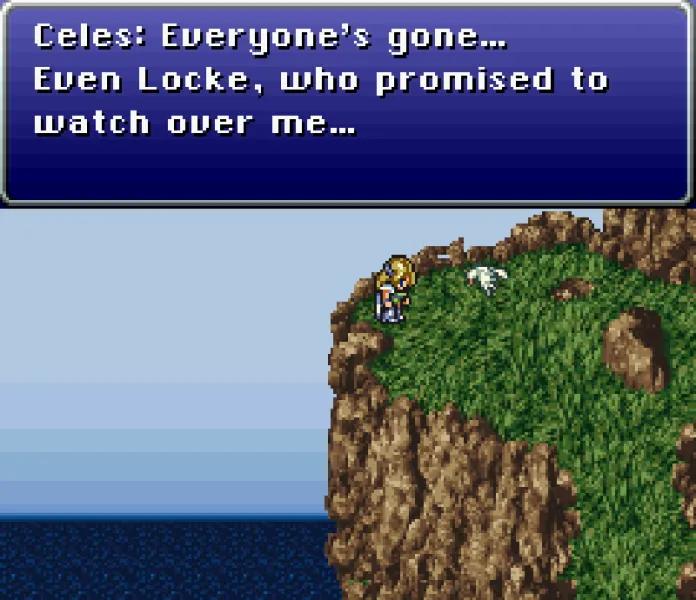
A year later, Celes awakens on an isolated island where Cid has been caring for her. Civilization has largely collapsed, and Kefka now rules with godlike power, destroying settlements that defy him. Depending on the player’s actions, Cid may die, leading to Celes attempting to take her own life. It’s an incredibly bleak sequence, especially for a game released in 1994. Her discovery that her companions may still be alive gives her a reason to continue.
What I love about the World of Ruin is that the story changes from a struggle against an oppressive empire into one about surviving loss and finding a reason to live. Terra discovers a sense of purpose by caring for the orphaned children of Mobliz, Cyan confronts the grief surrounding his family’s deaths, and Locke continues struggling with his inability to save Rachel.
There’s also a remarkable amount of freedom. Once you obtain the Falcon, you can explore most of the world and recruit the surviving characters in almost any order. It’s even possible to finish the game without recovering most of your original party. The objective remains the same, but how much time you spend reconnecting with the characters and resolving their stories is largely up to you.
It’s one of my favourite sections of any Final Fantasy game, and Searching for Friends could hardly have been a more appropriate piece of music for it.
Shadow and Relm: The Ending That Has Always Bothered Me
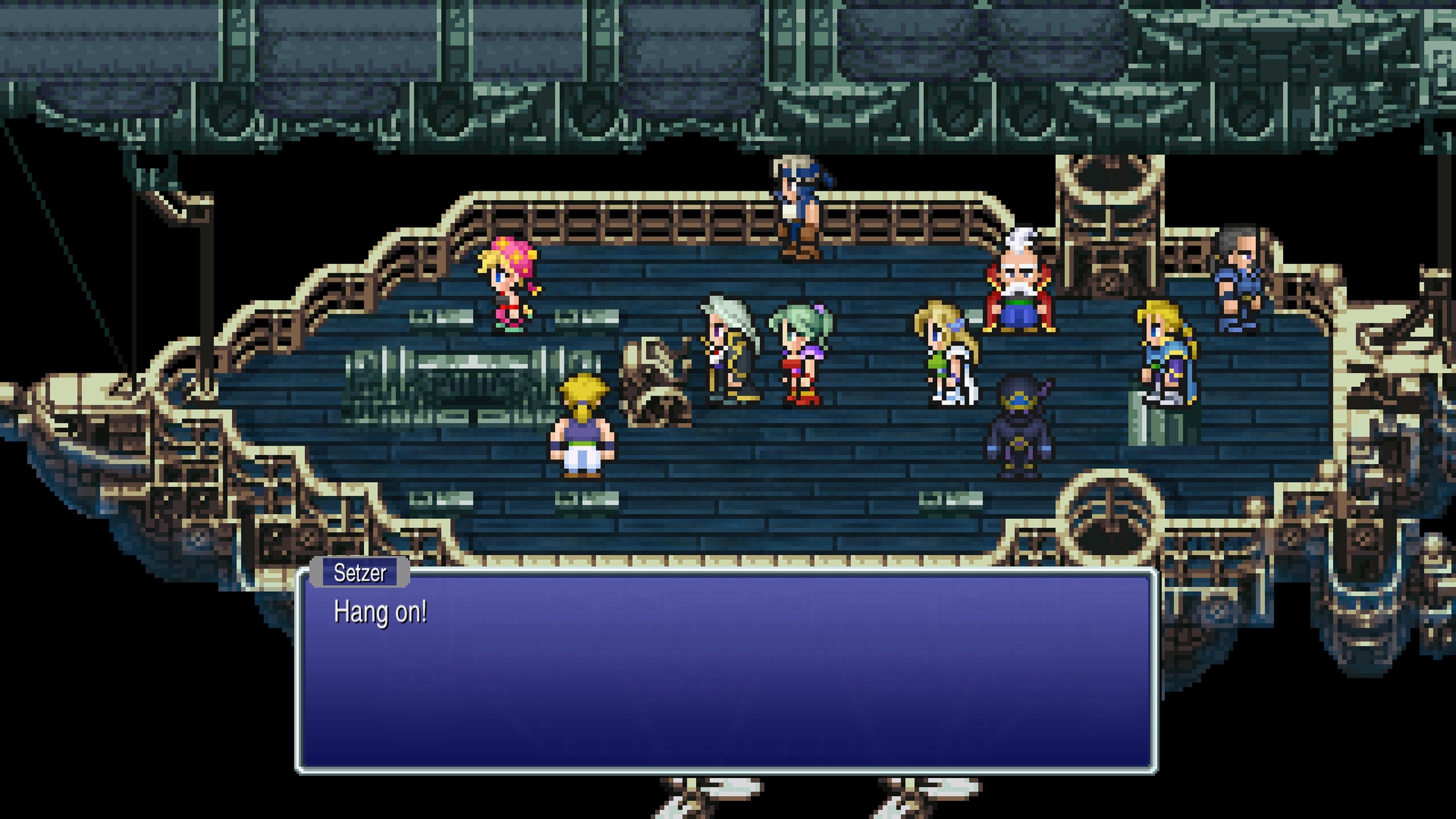
As much as I love FFVI, there is one aspect of its ending that has never sat particularly well with me.
By staying at inns with Shadow in your party, you can trigger dreams that reveal his past. Shadow was once a man named Clyde, who worked alongside a fellow criminal named Baram. After a robbery ended with Baram seriously wounded, Clyde abandoned him rather than killing him as requested. He eventually arrived in Thamasa, where he was cared for by a woman, before ultimately leaving behind his old life.
The dreams strongly imply that Relm is his daughter. Interceptor’s affection for her and the Memento Ring, which both characters can equip, further reinforce the connection. The original game doesn’t have Shadow explicitly acknowledge her as his daughter, but I think the relationship is fairly obvious.
After defeating Kefka, Shadow chooses to remain in the collapsing tower, sending Interceptor away and seemingly accepting his fate. I understand that this is intended as a tragic conclusion for someone who has spent much of his life running from the past, but there’s a fairly significant problem with that interpretation.
Relm is still alive.
She’s approximately ten years old, and assuming you’ve recruited them both, Shadow has just spent a considerable amount of time travelling alongside her. He has the opportunity to acknowledge his mistakes and become part of his daughter’s life. Instead, he stays behind in the tower. We don’t actually see him die, but the implication is clear enough.
To me, there’s something ironic about a man who claims to have stopped running from his past choosing what amounts to another way of running away from his responsibilities. I would have found it much more meaningful to see him choose to live with his mistakes and attempt to make amends. Cecil’s redemption in FFIV worked precisely because he couldn’t undo what he’d done but could choose to become a better person. I wish Shadow had been given a similar opportunity.
I’ve never played through FFVI without waiting for Shadow on the Floating Continent. After going out of my way to save him, recruit him again, and uncover his history, it’s particularly frustrating to see him apparently choose death anyway. It’s probably my single biggest criticism of the game’s story.
Gogo and the Mystery That Could Have Been
Gogo is one of the more unusual playable characters. Found inside the Zone Eater on Triangle Island, this mysterious figure can imitate the actions of the other party members. Because Gogo’s identity is never revealed, fans have speculated for decades, including the theory that Gogo could somehow be Rachel. I find the theories entertaining, but there’s very little evidence for any of them.
What’s particularly interesting is the developers’ abandoned concept for Gogo’s recruitment. The idea was that Gogo would appear in pubs throughout the World of Ruin, impersonating characters you hadn’t yet recruited. You could encounter someone who appeared to be Locke, for instance, only to realize something wasn’t quite right once you’d found the real character.
I think that would have been a fantastic mechanic, encouraging players to pay attention to dialogue and remember strange encounters. As much as I appreciate Gogo’s mystery, it’s a shame we never got to experience that original idea.
The Coliseum: Why Can’t I Control My Own Character?
One aspect of the World of Ruin that I’ve never particularly liked is the Dragon’s Neck Coliseum. I enjoy the idea of wagering an item to fight an opponent for another piece of equipment, but I absolutely hate that the character you select fights automatically. After spending hours customizing characters, I’d much rather be allowed to control them myself. Gogo’s configurable commands provide something of a workaround, but I’d still have preferred manual combat, particularly given that subsequent releases kept the same basic system.
The Coliseum is worth visiting for some of the rewards. For example, in Narshe you can choose between the Ragnarok sword and the Ragnarok Magicite, which teaches Ultima. If you choose the sword, you can wager it at the Coliseum to obtain Lightbringer. I just wish the process of acquiring these items were more enjoyable.
The Final Confrontation and the Disappearance of Magic
Unlike FFIII and IV, FFVI doesn’t introduce a completely different antagonist at the last minute. Kefka gradually becomes the central villain, destroys the world, and remains the enemy we ultimately confront. After everything we’ve witnessed, there’s absolutely no need for another villain to appear.
What makes the confrontation particularly effective is Kefka’s nihilism. Having gained enormous power, he finds existence meaningless and questions why people continue to struggle when everything eventually disappears. The party’s response draws upon everything they’ve experienced in the World of Ruin. They’ve found meaning in love, friendship, memories, and the people who depend on them. The final battle is as much a rejection of Kefka’s worldview as it is an attempt to defeat him.
With Kefka’s defeat, magic begins to disappear. This places Terra in a rather precarious situation given her half-Esper heritage, but she survives through her connection to her humanity. I think it’s a beautiful conclusion: the game begins with Terra being valued as a weapon for her magical abilities and ends with her finding purpose through her capacity to care for others. The world finally has a chance to rebuild, and the future feels hopeful despite everything that’s happened.
Conclusion: One of the Greatest Final Fantasy Games Ever Made
Final Fantasy VI isn’t without flaws. Some characters receive considerably more development than others, the Esper system can make the party a little too similar toward the end, I can’t stand the automated Coliseum battles, and Shadow’s ending still bothers me.
But when I consider the complete experience, those shortcomings do very little to diminish my appreciation. The cast, the music, the combat, the steampunk setting, and particularly the transition from the World of Balance to the World of Ruin make FFVI an extraordinary achievement. It’s also one of the games where I feel the story and gameplay complement each other especially well.
I still have fond memories of receiving the game from my older brother. Final Fantasy IV may have been the first game I completed, but FFVI was the first one that was actually mine. Final Fantasy VII and IX are among my other favourites, and depending on my mood, my ranking of them can change. But FFVI remains comfortably among the best.
I don’t think a perfect score necessarily means that a game is flawless. It means its strengths are so substantial that the things I dislike don’t take much away from the experience as a whole. Final Fantasy VI doesn’t need to be judged solely by what was possible in 1994. It’s still one of the finest RPGs I’ve ever played.
Final Rating: 5/5
Masterpiece: One of the Finest RPGs Ever Made
| Category | Rating |
|---|---|
| Story | 4.75/5 |
| Characters | 5/5 |
| Combat and Gameplay | 4.75/5 |
| Character Progression System | 4.75/5 |
| World and Exploration | 5/5 |
| Graphics (SNES) | 5/5 |
| Music | 5/5 |
| Historical Significance | 5/5 |
| Overall Rating | 5/5 |