
Final Fantasy V - Is it really still underrated, or maybe overrated?
There’s one word that seems to come up almost every time I see someone discussing Final Fantasy V: underrated.
I can understand how that reputation developed. Unlike Final Fantasy IV and VI, FFV never received an original North American Super Nintendo release. Many Western fans discovered it through imported Super Famicom cartridges, emulators, and fan translations, and the first official English-language release didn’t arrive until 1999, when Square included it alongside FFVI in Final Fantasy Anthology for the PlayStation.
For years, it genuinely was an overlooked entry. But it’s been more than three decades since its original release, and we seem to have reached a point where practically everyone who discusses FFV insists that it’s underrated.
At what point does something stop being underrated when everyone keeps telling you how underrated it is? I feel like FFV has become almost overrated in its supposed underratedness.
That’s not to suggest it’s a bad game. Its job system is excellent, it has a devoted following, and it’s been rereleased across numerous platforms. I just don’t think it’s some forgotten masterpiece that hasn’t received the recognition it deserves. While I enjoyed it, there are things that prevent me from ranking it alongside my favourites.
It did, however, introduce what I consider one of the greatest supporting characters in Final Fantasy history, along with what might be my favourite musical composition from the Famicom and Super Nintendo eras.
My First Experience with Final Fantasy V
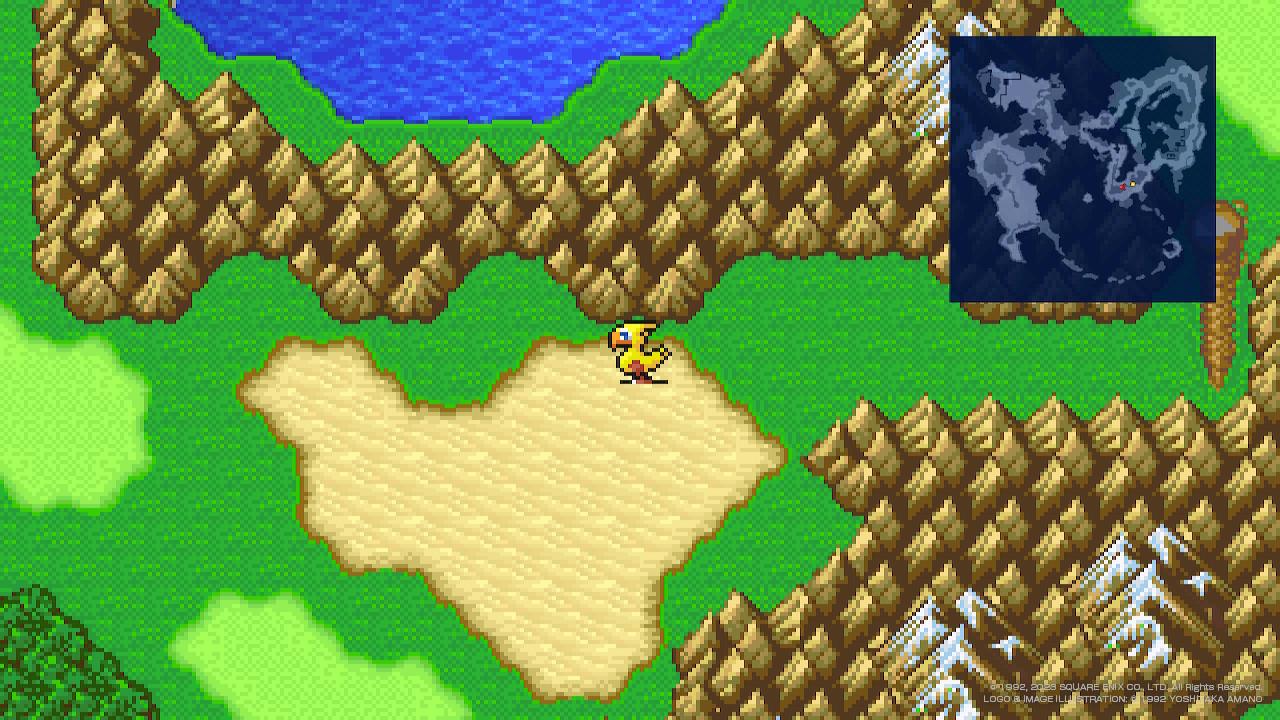
Much like Final Fantasy II and III, I didn’t originally play FFV on the hardware for which it was developed. My introduction came through an English-translated Super Famicom ROM running on an emulator, during a period when fan translations were often the only practical way for Western players to experience Japanese RPGs that hadn’t been officially localized.
I think it’s worth remembering how important those communities were. There was a time when being interested in a game wasn’t enough to guarantee that you’d ever have the opportunity to play it in English. Given how popular Final Fantasy had become following FFVII, it was unfortunate that several of the earlier games remained unavailable to so many fans.
I eventually revisited FFV through the original iOS remake, which featured updated graphics and additional content based on the Game Boy Advance edition. I’ve also spent some time with the Pixel Remaster, although not nearly as extensively.
I have a particular fondness for the pre-Pixel Remaster mobile edition, not necessarily because I consider its graphics superior, but because it retains the additional content from Final Fantasy V Advance. As with the earlier games, I find it disappointing that so much of this material was omitted from the Pixel Remasters.
A Return to Adventure
Final Fantasy V feels like a combination of the first, third, and fourth games, with a little FFII in there as well. However, I think it takes more inspiration from the straightforward adventuring of FFI and the gameplay flexibility of FFIII than from the dramatic storytelling of FFIV.
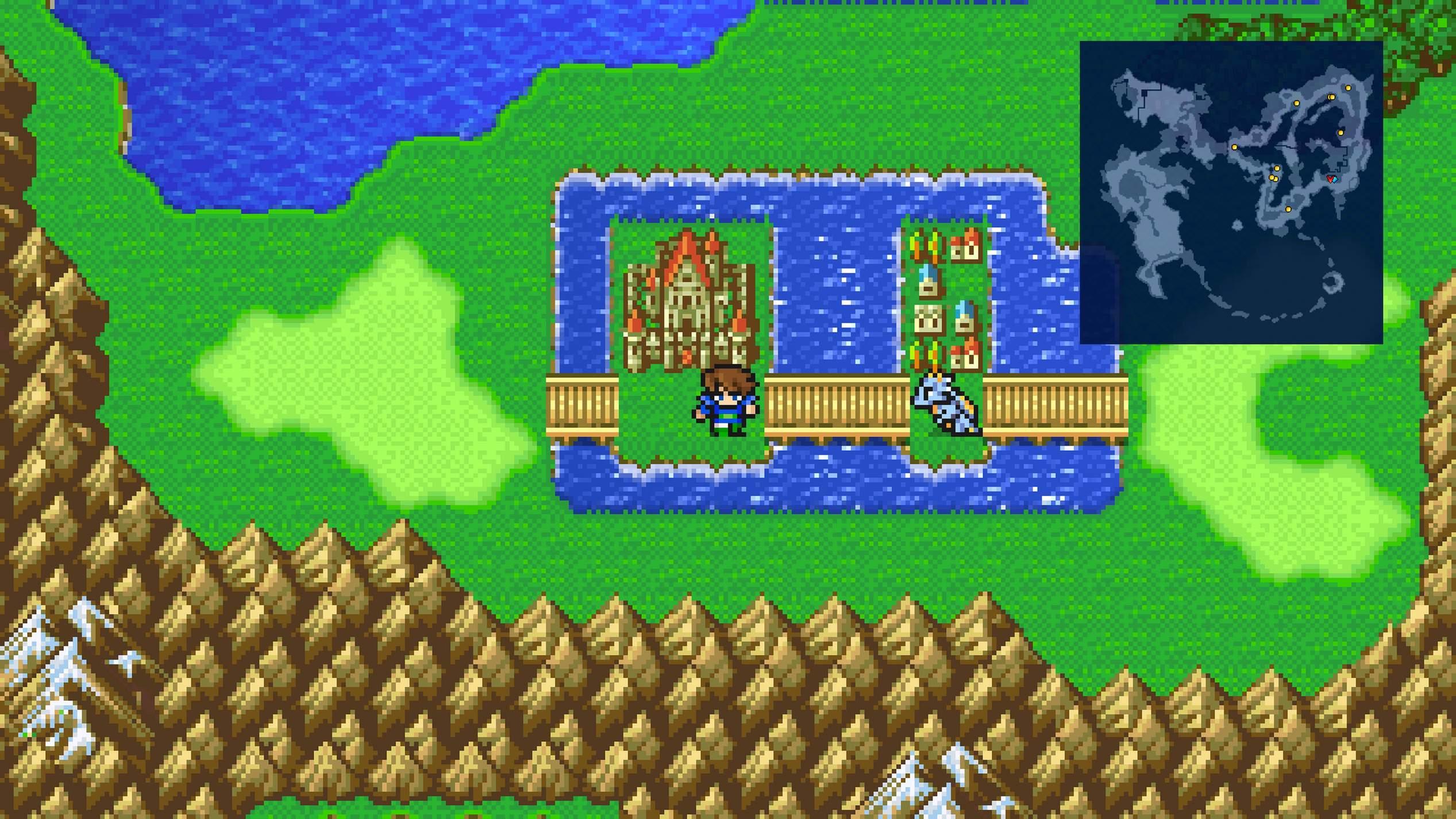
The story begins with King Tycoon investigating the weakening of the Wind Crystal. When he disappears, his daughter Lenna sets out to find him. Meanwhile, a meteorite crashes nearby, attracting the attention of Bartz Klauser, a wandering adventurer travelling with his chocobo, Boko.
Bartz encounters Lenna and an elderly man named Galuf, who has lost his memory. The three eventually meet Faris, a pirate captain whose ship is pulled by a sea dragon named Syldra, allowing it to travel even when the wind has stopped blowing.
The four reach the Wind Shrine too late to prevent the crystal from shattering. Its fragments grant them access to different jobs, and they spend much of the adventure attempting to protect the remaining crystals and uncover the source of the threat.
It’s a fairly conventional Final Fantasy premise involving ancient crystals, lost civilizations, airships, and a villain threatening the world. Unlike FFIV, which places considerable emphasis on Cecil’s personal struggles, FFV is more concerned with delivering an enjoyable fantasy adventure supported by a particularly flexible battle system.
A Likeable, If Somewhat Less Compelling, Cast
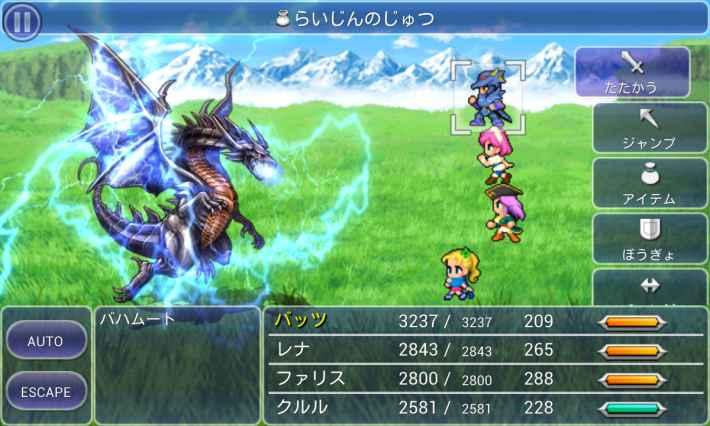
Unlike the original Final Fantasy or the Famicom version of FFIII, FFV gives its protagonists established identities and backgrounds. Bartz travels the world following the wishes of his late father. He’s carefree, loyal, and willing to put himself in danger to help others.
In some respects, he’s the opposite of Cecil. Whereas Cecil begins his adventure burdened by guilt and questioning his loyalty to Baron, Bartz is already a fundamentally decent person. He doesn’t need to undergo some dramatic transformation to become a hero, which makes him somewhat less interesting to me.
Lenna is a compassionate young woman whose concern for others extends to animals, particularly wind drakes. Faris is probably the more interesting of the two sisters. Initially introduced as a pirate captain who presents herself as a man, she’s eventually revealed to be Sarisa, Lenna’s long-lost older sister. I like the idea of a princess who has spent much of her life commanding pirates rather than living in a castle. I like the contrast between Lenna, who is comfortable with her royal identity, and Faris, who is considerably more independent and has little interest in the expectations associated with royalty.
Then there’s Galuf, whose apparent amnesia conceals a history that becomes central to the conflict with Exdeath. His relationship with his granddaughter Krile provides some of the game’s most emotional moments.
The cast is perfectly likeable, but I don’t find them quite as compelling as FFIV’s characters. The game doesn’t spend nearly as much time exploring their relationships or personal conflicts, and its overall tone sometimes makes it difficult for me to take the story as seriously as I would have liked.
The Lighter Tone: Final Fantasy Meets Anime
One of my biggest criticisms of FFV is that it leans considerably more heavily into comedy than its predecessor. I enjoy humour in RPGs, and I don’t think every Final Fantasy needs to be some grim, depressing experience where everyone is constantly suffering. However, FFV occasionally feels more like a lighthearted fantasy anime.
Take the early sequence where Bartz and Galuf are surprised by Faris’ appearance while she’s sleeping. Their exaggerated reactions wouldn’t feel out of place in an anime from the period. There are plenty of similar moments throughout the adventure.
FFIV certainly had its lighter moments, particularly involving Palom, Porom, Edge, and Cid, but I think it struck a better balance between comedy and drama. With FFV, I sometimes get the impression that the developers were more interested in creating a fun adventure than telling a compelling story. There’s nothing inherently wrong with that, but for me, it feels like a slight step backward.
Interestingly enough, FFV actually received an animated sequel, Final Fantasy: Legend of the Crystals, in 1994. So perhaps the comparison isn’t entirely inappropriate.
The Job System: Final Fantasy V’s Greatest Strength
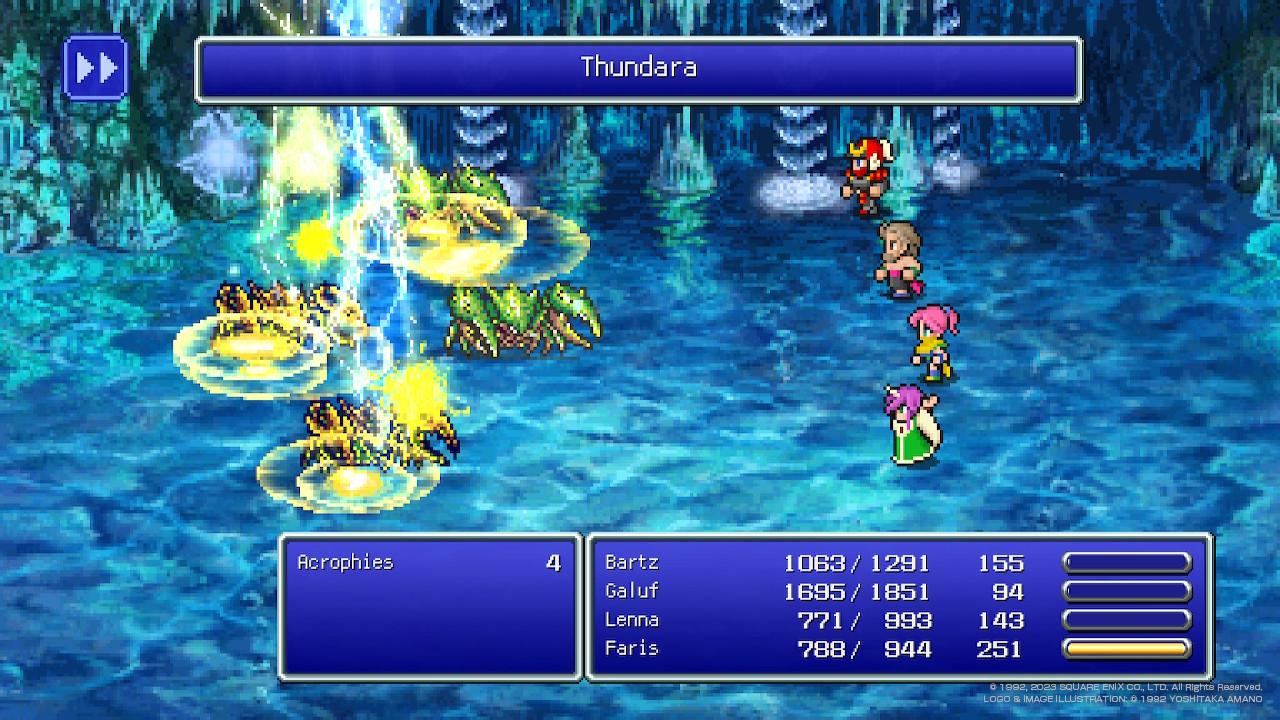
If there’s one aspect of FFV that I have very little to complain about, it’s the job system. Final Fantasy III introduced the ability to change jobs throughout the adventure, but FFV improves upon the idea considerably by allowing characters to learn abilities from one class and use them while assigned to another.
You might develop a character as a White Mage before switching them to a Knight capable of casting healing magic. Or you could train someone as a Ninja and give another class the ability to wield two weapons. A particularly famous combination involves the Ranger’s Rapid Fire ability, the Mystic Knight’s Spellblade, and Dual-Wield, allowing a character to unleash multiple magically enhanced attacks.
The variety of jobs is equally impressive. Blue Mages learn abilities from enemies, Time Mages manipulate the flow of battle, Beastmasters can control monsters, and Chemists can mix items to produce all sorts of effects. The game encourages you to discover how these abilities complement one another rather than simply sticking with the same four classes.
In addition to experience points, characters earn Ability Points (ABP) in battle, unlocking new skills as they develop their jobs. Even if you don’t immediately need an ability, learning it might prove worthwhile later. The Freelancer and Mime jobs also inherit useful characteristics from mastered classes, rewarding players who spend time developing several different jobs.
There’s something satisfying about eventually creating a character capable of performing tasks that would ordinarily require several party members. And while the system allows players to discover some ridiculously powerful combinations, I don’t consider that much of a problem. That’s part of what makes it fun.
Unlike FFII, where I spent considerable amounts of time deliberately attacking my own party members to improve their attributes, FFV generally rewards you for participating in ordinary battles. You can certainly grind for ABP, but at least it feels like a natural extension of the gameplay.
I would argue that FFV has one of the strongest gameplay systems of the entire Super Nintendo era, and it remains remarkably enjoyable today.
Bosses, Exploration, and Replayability
Different bosses encourage different approaches, and a party composition that works perfectly against one enemy might struggle against another. Some encounters reward elemental magic, others require defensive abilities, and some can be practically trivialized if you understand the underlying mechanics.
The fact that fans continue to find ways to challenge themselves through events such as the Four Job Fiesta, in which participants restrict themselves to a limited selection of jobs, says quite a bit about the quality of the battle system.
Exploration follows a relatively traditional structure, with the party acquiring airships and other vehicles that gradually open up new areas. Much like FFIII and IV, the world is considerably larger than it first appears.
FFV has a particular advantage when it comes to replayability, though. Even if you already know the story and where you’re supposed to go, experimenting with a completely different party composition can make another playthrough feel substantially different.
Music: The Battle at the Big Bridge
Now we come to what might be my favourite aspect of FFV: one particular composition.
Battle at the Big Bridge.
I absolutely love this track. In fact, I would probably rank it as my favourite individual composition from the entire Famicom and Super Nintendo eras of Final Fantasy. That’s quite a statement considering what Nobuo Uematsu accomplished with FFIV and VI, but I like it so much that I regularly use it as my ringtone. I think that says more about my appreciation for it than any lengthy musical analysis could.
It’s energetic, dramatic, and incredibly memorable, with a driving rhythm that perfectly complements the encounter. The original Super Nintendo version is fantastic, and I’ve also enjoyed the rearrangements that have appeared in subsequent Final Fantasy games.
Of course, FFV has other excellent music. The Main Theme of Final Fantasy V captures the sense of adventure that defines much of the game. Home, Sweet Home has a more reflective, nostalgic quality, while Dear Friends is a beautiful piece that deserves recognition. The Decisive Battle and the final battle theme are also particularly enjoyable.
I would probably place FFIV and VI ahead of FFV when considering their soundtracks as a whole, but when it comes to individual compositions, Battle at the Big Bridge is difficult to beat.
And the character associated with that theme is every bit as memorable.
Gilgamesh: One of Final Fantasy’s Greatest Supporting Characters
If you asked me to name my favourite supporting character from the entire franchise, Gilgamesh would probably be near the top of the list. He might even be my favourite.
Introduced as one of Exdeath’s subordinates, he’s a powerful swordsman who repeatedly confronts Bartz and his companions, making exaggerated declarations about his abilities that aren’t always supported by his actual performance. He’s arrogant, theatrical, occasionally incompetent, and surprisingly likeable.
His obsession with collecting powerful swords is particularly entertaining when it leads to him acquiring Excalipoor, a weapon whose appearance suggests tremendous power but whose actual damage output is rather pathetic. Naturally, Gilgamesh is precisely the sort of character who would fall for something like that.
What I appreciate most is that he isn’t simply there for comic relief. Over the course of his encounters with the party, he gradually becomes something of a rival and demonstrates genuine respect for Bartz and the others.
Unlike Cid, who generally represents a different character in each game, many of Gilgamesh’s subsequent appearances suggest that he’s the same individual travelling between worlds. I particularly enjoyed encountering him in Final Fantasy IV: The After Years, where he appears as a boss in the Depths of the True Moon. Considering his association with the Interdimensional Rift, these appearances are rather fitting.
I genuinely think he’s one of Square’s best creations, and of course, he has one hell of a theme song.
The Different Versions and the Missing Bonus Dungeon
The Game Boy Advance edition introduced four additional jobs: Gladiator, Cannoneer, Oracle, and Necromancer. It also added the Sealed Temple, an optional dungeon with puzzles, powerful enemies, and enhanced versions of familiar superbosses, including Omega Mk. II and Neo Shinryu.
The most interesting addition for me, however, is Enuo. Throughout the main story, he’s mentioned as an ancient sorcerer who once possessed the power of the Void, but the original game never allows you to confront him. Final Fantasy V Advance changes that.
Rather than simply adding another powerful monster with no particular connection to the story, the developers took an established figure from the game’s lore and turned him into an optional superboss. I think that’s a fantastic way of expanding upon the original narrative without fundamentally changing it.
The extra dungeon and jobs also give players more opportunities to experiment with the battle system after completing the main adventure. The original mobile remake retained these additions, but unfortunately, the Pixel Remaster does not.
I understand the intention behind recreating the original games, but especially with FFV, where the battle system is arguably the primary attraction, it seems unfortunate to remove content that provides more opportunities to enjoy it. For the rearranged soundtrack and modern conveniences, the Pixel Remaster is appealing, but based purely on the amount of content, I’d still lean toward the GBA or original mobile release.
Story Discussion — Spoilers Ahead
The Warriors of Dawn and the Two Worlds
One of the more interesting revelations in FFV is that the world Bartz and his companions have been exploring is only half of a much larger world. The two worlds were separated long ago to seal away the Void, a force that had once threatened existence itself.
Galuf turns out to be one of the four Warriors of Dawn who defeated and sealed away Exdeath thirty years earlier, alongside Xezat, Kelger, and Dorgann. Dorgann, as it turns out, was Bartz’s father. I like that this connects a seemingly ordinary wanderer to the history of the larger conflict.
The journey to Galuf’s world is reminiscent of FFIII’s revelation concerning the floating continent and the world beneath it, but FFV takes the idea further when the two worlds eventually merge. Familiar locations suddenly exist alongside places that were previously part of another world.
Galuf’s Sacrifice
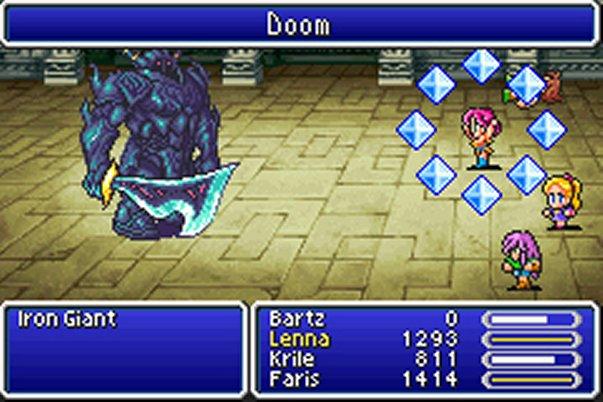
Despite my criticisms of FFV’s lighthearted tone, Galuf’s sacrifice is one of the more effective character deaths in the early Final Fantasy games.
During the confrontation with Exdeath in the Great Forest of Moore, Galuf fights to protect Krile and the other Warriors of Light, continuing even after taking enough damage that he should have died. He manages to drive Exdeath away, but the effort proves fatal.
Unlike some of the apparent sacrifices in FFIV, Galuf’s death is permanent. The party even attempts to revive him using magic and items, but nothing works. He’s gone.
What I particularly appreciate is how the game handles his replacement. Rather than introducing an unrelated character, it brings Krile into the party and allows her to inherit Galuf’s job levels and abilities. From a gameplay perspective, the player doesn’t lose hours of progress. From a storytelling perspective, Krile is carrying on her grandfather’s legacy.
It’s one of the moments where the gameplay and narrative complement one another particularly well.
Exdeath: A Villain Who Remains the Villain
One thing I appreciate about FFV is that Exdeath remains the principal antagonist until the end. FFIII spends much of its story establishing Xande before introducing the Cloud of Darkness, while FFIV presents Golbez as the central villain before revealing Zemus as the mastermind behind his actions.
FFV doesn’t really do that. Exdeath is the villain you spend much of the adventure attempting to stop, and he’s ultimately the enemy you confront at the end. There is a transformation into Neo Exdeath after he’s overwhelmed by the Void, but I see that as the culmination of the same threat rather than an entirely different antagonist appearing at the last minute.
He’s not necessarily the most sophisticated villain in the franchise. His motivations revolve around power and the Void, and there’s something rather amusing about eventually discovering that the main antagonist is essentially an evil tree. Nevertheless, he works well enough within the context of the adventure, and I appreciate the consistency.
Gilgamesh’s Final Appearance
After repeatedly failing to defeat the party, Gilgamesh falls out of favour with Exdeath and is banished to the Interdimensional Rift. When the party encounters him there, he initially attacks before recognizing them, eventually treating them almost like old acquaintances.
His most memorable moment comes during the confrontation with Necrophobe, when Gilgamesh unexpectedly intervenes. After sharing a few personal remarks with the party, he sacrifices himself to defeat Necrophobe.
It’s a surprisingly touching conclusion for someone introduced as a recurring comic-relief boss. He’s gone from an arrogant swordsman obsessed with powerful weapons to someone willing to put himself in danger for the very people he once considered enemies. His subsequent appearances complicate the idea that this was his definitive ending, but that doesn’t diminish the significance of the scene for me.
The Ending and Its Variations
FFV also has an interesting approach to its ending. Depending on which characters are conscious when Neo Exdeath is defeated, portions of the epilogue change. The surviving characters initially believe their fallen companions have been lost, although the missing party members are eventually restored.
It’s not quite the same as Chrono Trigger, where different actions can result in substantially different endings, but I think it’s a neat touch for a game released in 1992.
Where’s the Romance?
One of my more personal disappointments was the lack of a meaningful romantic storyline involving Bartz. Not every Final Fantasy needs a romance, but having played FFIV first and seen how important Cecil and Rosa’s relationship was to that story, I suppose I expected something similar.
I could have imagined Bartz developing a relationship with Faris. He’s a carefree wanderer, while she’s an independent pirate captain with little interest in her royal responsibilities. I like the idea of the two travelling the world together. Alternatively, a relationship with Lenna could have provided a more conventional romantic conclusion. Krile is considerably younger and was never someone I considered a serious romantic prospect.
Bartz remaining a wandering adventurer is consistent with his personality, but I would have liked to see a little more development in his relationships with the others.
Legend of the Crystals: Two Hundred Years Later
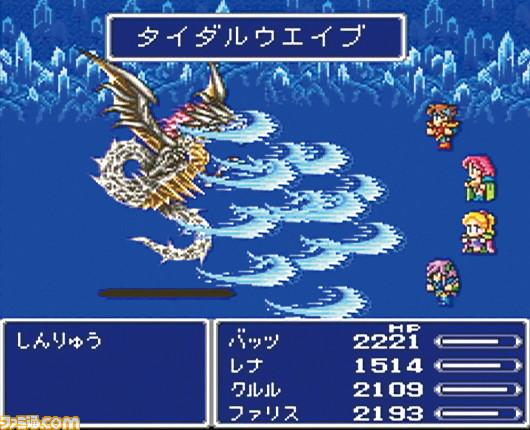
Final Fantasy: Legend of the Crystals is a four-episode OVA released in 1994 and set approximately two hundred years after the events of FFV. It follows Linaly Klauser, a descendant of Bartz, establishing that he eventually had descendants of his own.
Having watched some of the OVA, I was hoping to find out whether he ended up with Lenna, Faris, or someone else entirely. Unfortunately, it doesn’t answer that question.
There’s also a Queen Lenna ruling Tycoon, apparently descended from the original Lenna. I initially wondered whether Linaly’s blue hair might suggest some connection to Faris, who is generally associated with purple hair. Of course, hair colour alone isn’t particularly meaningful in a fantasy anime, and the existence of two separate descendants doesn’t definitively establish whom Bartz married.
I wasn’t expecting the OVA to resolve every unanswered question, but a little more information about what happened to the original characters would have been a nice bit of closure.
Conclusion: A Great RPG That Doesn’t Need to Be Called Underrated Anymore
Final Fantasy V is an excellent RPG mechanically. The job system substantially improves upon FFIII, the battle system rewards experimentation, and there are plenty of reasons to revisit it. It also has a terrific soundtrack, one of my favourite compositions in the franchise, and arguably my favourite supporting character in Gilgamesh.
Nevertheless, I prefer the balance between humour and drama that Square achieved with FFIV and would later refine with FFVI. FFV has its emotional moments, particularly Galuf’s sacrifice, but I don’t find the story or character relationships nearly as compelling overall. The lack of romance is more a matter of personal preference than an objective flaw, but it contributes to that impression.
As for its reputation, I think it’s time we acknowledged that FFV has been getting its due for quite a while now. Its job system is celebrated, its music is widely appreciated, and Gilgamesh has become one of the franchise’s most recognizable recurring characters.
Personally, I’d place FFIV ahead of it, and I suspect I’d even rank FFII more highly. Yes, I’m aware that’s probably an unpopular opinion. Despite FFII’s flawed progression system, I appreciate its more serious story and willingness to experiment. FFV is undoubtedly more polished mechanically, but that doesn’t necessarily make it more enjoyable to me.
That’s what these retrospectives are about. I’m not trying to assign some supposedly scientific or objective score to each game, but to discuss what I enjoyed, what I didn’t, and how those experiences have stayed with me over the years.
Final Fantasy V is absolutely worth playing, particularly if you appreciate flexible character progression systems. I just don’t think it needs to be described as some obscure, unappreciated gem anymore.
And that’s perfectly fine.
Final Rating: 3.25/5
Good: Excellent Gameplay, but a Less Compelling Story
| Category | Rating |
|---|---|
| Story | 3.25/5 |
| Characters | 3.5/5 |
| Combat and Gameplay | 4.75/5 |
| Character Class System | 5/5 |
| World and Exploration | 4/5 |
| Graphics (Original Mobile Remake) | 3.75/5 |
| Music | 4.5/5 |
| Historical Significance | 4.5/5 |
| Overall Rating | 3.25/5 |