
Final Fantasy IV - Where everything came together
Of all the Final Fantasy games I’ve discussed so far, Final Fantasy IV probably holds the greatest sentimental value for me. It’s not necessarily because I consider it the best entry in the franchise, although I certainly think it’s among the stronger ones. Rather, it was the first Final Fantasy I actually played through to completion.
I’ve also revisited it more times than most other entries, from the original Super Nintendo release to the beautifully updated PSP version, the Pixel Remaster, and the 3D remake originally developed for the Nintendo DS. I even played its sequel, Final Fantasy IV: The After Years, on the Wii.
Looking back, I think FFIV represents the culmination of everything Square had been attempting with the previous three games. The original established the foundation, FFII experimented with more substantial storytelling and established characters, and FFIII introduced the job-changing system and summoning magic.
Final Fantasy IV brought many of those ideas together, while the move to the Super Nintendo allowed Square to realize its ambitions with considerably better graphics, sound, and presentation. The result, to me, feels like the first truly modern Final Fantasy.
My First Experience with Final Fantasy IV
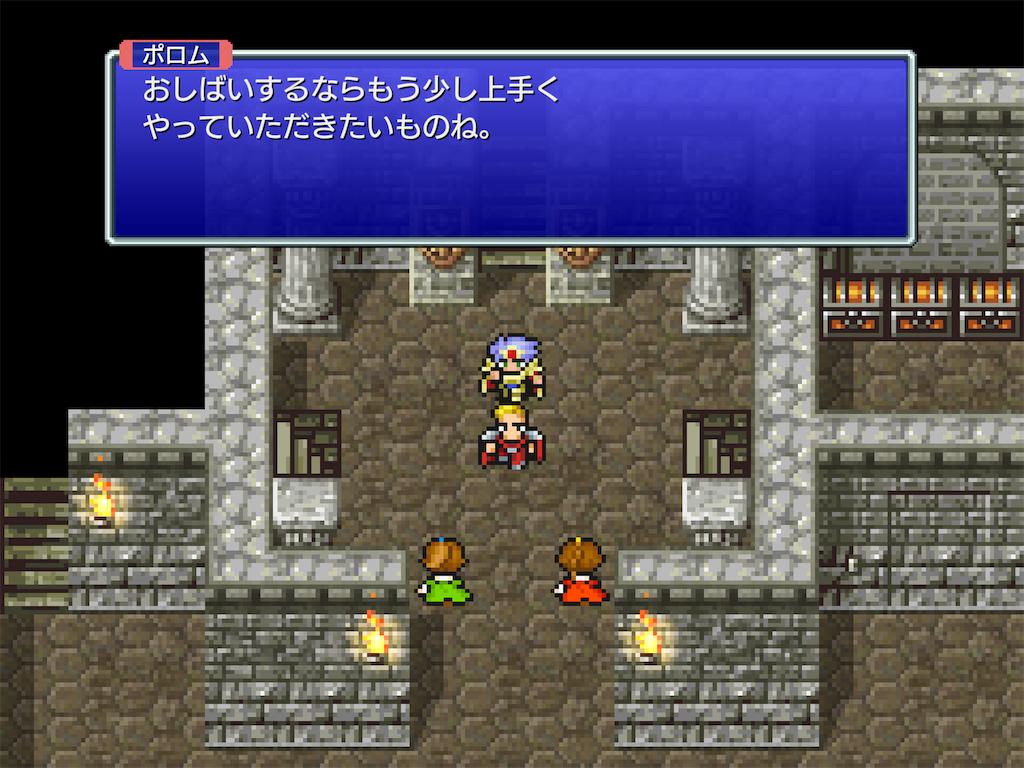
One somewhat amusing aspect of being a North American Final Fantasy fan is that FFIV was originally released here as Final Fantasy II. Since the actual second and third games hadn’t been localized, Square renamed the fourth entry to reflect the fact that it was only the second Final Fantasy released in North America.
I first experienced the game on the Super Nintendo, and unlike the previous three entries, which I primarily experienced through later remakes, I have some familiarity with FFIV’s original presentation.
I think this makes it easier for me to appreciate how well the game has aged. The sprite work still has plenty of charm, the music is excellent, and the story has enough substance to remain interesting even after multiple playthroughs. I don’t find myself making nearly as many excuses for its age as I do when discussing the earlier entries.
Cecil Harvey and the Tragedy of Mist
One of FFIV’s greatest strengths is its protagonist, Cecil Harvey. An orphan raised by the King of Baron, Cecil became a Dark Knight and eventually rose to command the kingdom’s powerful airship fleet, the Red Wings. He grew up alongside Rosa Farrell and Kain Highwind, a White Mage and Dragoon, respectively. Cecil and Rosa are romantically involved, while Kain harbours feelings for Rosa, creating considerable tension between the three.
What I particularly appreciate about Cecil is that he isn’t introduced as an innocent hero destined to save the world. The game opens with the Red Wings attacking Mysidia to seize its Water Crystal. Cecil follows his orders but is clearly disturbed by the suffering he and his men have inflicted upon people who did nothing to deserve it.
When he questions the King’s behaviour, he’s stripped of his command and sent with Kain to deliver a mysterious package to the village of Mist, home to a community of Summoners. Along the way, the two defeat the Mist Dragon, only to discover upon arriving that the package contains Bomb monsters that set the village ablaze.
They weren’t sent to deliver something to the Summoners. They were sent to destroy them.
Among the survivors is a young girl named Rydia, whose mother died when Cecil and Kain killed the Mist Dragon. Rydia understandably wants nothing to do with them, and her summoning magic causes an earthquake that separates Cecil and Kain. When Cecil awakens, he decides to protect her.
I think this is a fantastic introduction. Unlike the protagonists of the previous games, Cecil begins his adventure on the side of the aggressors. He has actively participated in the suffering of others, and now he’s confronted with a child who lost her mother because of something he did. He can’t undo what happened, but he can decide what kind of person he wants to become.
An Adventure Filled with Memorable Characters
FFII introduced the idea of established characters joining and leaving your party, but FFIV takes it much further. As Cecil travels across the world, he encounters people whose own personal tragedies and ambitions become intertwined with his struggle against Baron.
Tellah, an elderly sage, is searching for his daughter Anna, who has fallen in love with Edward, the Prince of Damcyan. When the Red Wings attack Damcyan and Anna is killed, Tellah becomes consumed by revenge against their new commander, Golbez. Edward, meanwhile, struggles with grief and feelings of inadequacy. Cecil wants redemption, Tellah wants revenge, and Edward wants to honour Anna’s memory. They have their own reasons for fighting, which I think makes them considerably more interesting than the largely anonymous adventurers of the original game.
The party also meets Yang, a martial artist from Fabul, a kingdom whose East Asian-inspired architecture and culture contrast nicely with the European fantasy aesthetic of Baron. Along the way, Rydia is forced to confront her fear of fire when the party encounters a wall of ice. I particularly like this moment because her trauma directly affects the gameplay. Casting Fire becomes a small but meaningful step in her development.
Unfortunately, the party fails to protect Fabul’s Wind Crystal. Kain reappears on the side of Golbez, Rosa is kidnapped, and the survivors set out for Baron to seek the help of Cid, the kingdom’s chief engineer. Leviathan attacks their ship, scattering the party and leaving Cecil alone near Mysidia.
The Redemption of Cecil
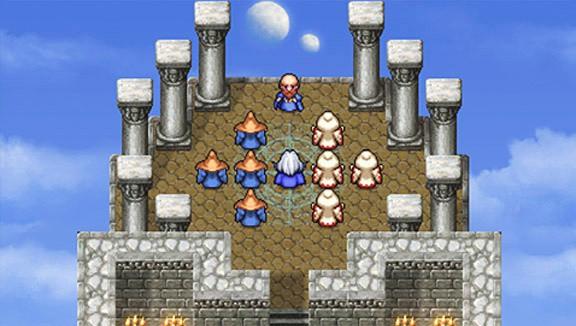
One of my favourite sequences in FFIV is Cecil’s transformation from a Dark Knight into a Paladin. Returning to Mysidia, the very town he attacked at the beginning of the game, he finds that the inhabitants haven’t forgotten what he has done to their village; there is even a villager who will cast magic on him to turn him into a frog or pig. His decision to oppose Baron doesn’t automatically erase his past actions.
The Elder recognizes Cecil’s desire to change and sends him to Mount Ordeals, accompanied by the young mages Palom and Porom. The twins are entertaining characters in their own right, but they’ve also been tasked with determining whether Cecil’s intentions are genuine. Along the way, the party reunites with Tellah, who’s seeking the legendary Meteor spell, and confronts Scarmiglione, the first of Golbez’s Four Elemental Archfiends. I’ve always found him to be the oddest of the four. While the others are fairly recognizable representations of their respective elements: wind, water, and fire, Scarmiglione resembles some sort of undead monstrosity. I suppose there’s a connection between earth, decay, and the undead, but he certainly isn’t what comes to mind when I think of an earth-elemental creature.
At the summit, a mysterious presence offers Cecil the opportunity to become a Paladin. To do so, he must confront a manifestation of his former self. And the solution isn’t to overpower it. Rather, he must refuse to fight back.
I think this is one of the most effective instances of gameplay reinforcing the story. Becoming a Paladin isn’t merely a class upgrade; Cecil has to demonstrate that he’s genuinely changed. Even his character level is reset, almost as if he’s being given the opportunity to start his life over again.
The voice guiding him also addresses him as its son, a rather curious detail whose significance only becomes apparent much later in the adventure.
Gameplay: The Introduction of Active Time Battle
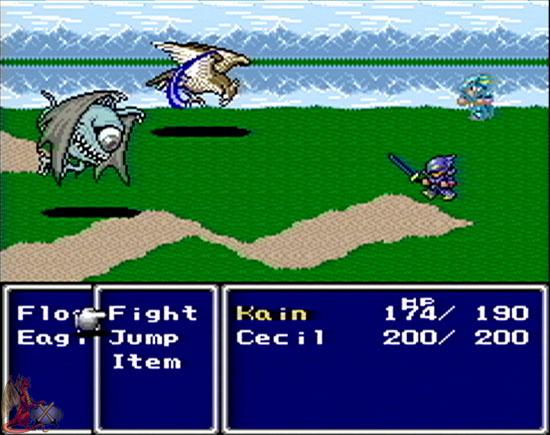
Perhaps FFIV’s most significant mechanical contribution is the Active Time Battle system, developed by Hiroyuki Ito. Unlike the conventional round-based combat of the first three games, ATB allows characters and enemies to act as their individual timers advance. Faster characters can act more frequently, and depending on your settings, enemies won’t necessarily wait politely while you decide what to do.
The original FFIV doesn’t display the familiar ATB gauges, but the underlying system is already there. I think it was an excellent way to retain the strategic nature of turn-based combat while introducing a greater sense of urgency, particularly during boss encounters.
FFIV also returns to fixed character classes. Cecil is a Dark Knight who becomes a Paladin (or Knight), Kain is a Dragoon, Rosa is a White Mage, Rydia is a Summoner, and Edge is a Ninja, Yang is a Monk, Edward is a Bard, and Palom and Porom are a traditional Black and White Mage. Their abilities are directly tied to their identities, which I think suits a character-driven game rather well. Rydia’s summoning magic, for instance, is integral to her story rather than simply an ability you’ve assigned to her.
The game also allows up to five active party members, an increase from the four-character parties of the original trilogy. Although it doesn’t offer the customization of FFV or the Materia system of FFVII, I think it strikes an excellent balance between accessibility and strategic depth. The individual strengths of the characters matter without requiring an excessive amount of time managing their builds.
Boss Battles and the Four Archfiends
I particularly appreciate how FFIV’s boss encounters encourage players to pay attention to their enemies rather than simply attacking until they die. Even the Mist Dragon at the beginning can punish you for attacking while it’s in its mist form.
The Four Elemental Archfiends are a great example. Scarmiglione, the Earth Archfiend, resembles some sort of decaying zombie, which I suppose fits the association between earth and decay, although he’s not what I’d normally imagine an earth-elemental boss looking like. Cagnazzo surrounds himself with water, while Barbariccia uses a protective tornado that Kain can disrupt with his Jump ability. I always thought it was clever that a character’s signature ability could become so important in a major encounter.
Rubicante, the Fire Archfiend, is probably my favourite of the four because he actually has something resembling a personality. He demonstrates a certain sense of honour and even restores the party’s health before fighting them. The idea of Four Elemental Fiends were introduced in the original Final Fantasy, but here they’re considerably more memorable.
A World That Keeps Expanding
Another thing I love about FFIV is the way its world continually expands. Initially, you’re travelling between kingdoms such as Baron, Mysidia, Fabul, and Troia. Eventually, you discover an entire underground civilization inhabited by dwarves, with its own landscapes and another set of elemental crystals.
The struggle against Golbez expands into the underworld, and the Tower of Babil connects the two worlds. Even that isn’t the final destination, as the adventure eventually takes the party to the moon. For a Super Nintendo RPG released in 1991, I think it’s an impressive amount of variety.
FFIV also expands on summoning magic, which was introduced in FFIII. Here, it becomes integral to Rydia’s character, and the Feymarch gives the Eidolons an actual home within the world. Players can encounter Leviathan and Asura, challenge Bahamut, and obtain Odin, whose connection to the King of Baron is particularly interesting.
Chocobos also receive some welcome additions, including flying black chocobos and white chocobos that replenish MP. Fat Chocobo returns from FFIII. None of these refinements is particularly revolutionary, but they contribute to a more cohesive experience.
Graphics and Presentation: The Move to 16-Bit
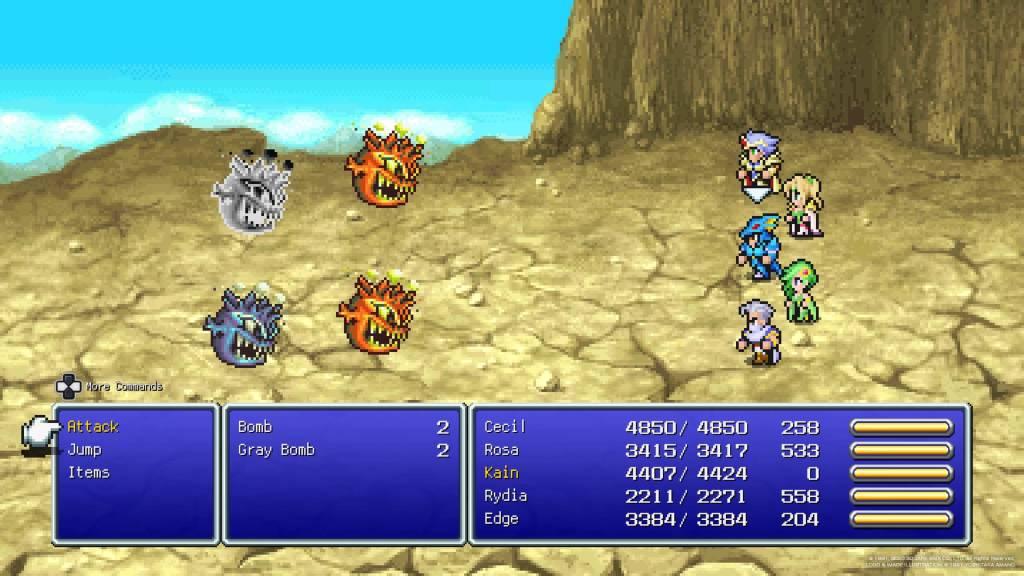
The move to the Super Nintendo allowed Square to create considerably more expressive characters, detailed environments, and dramatic sequences. Locations such as Fabul, Mysidia, and the underworld have distinct visual identities, while events like the destruction of Damcyan have a greater sense of spectacle than anything in the first three games.
Even today, I don’t think the original necessarily requires a graphical overhaul to remain enjoyable. Nevertheless, the PSP version’s updated 2D graphics are beautiful and retain much of the original’s charm. The Nintendo DS remake offers a different experience altogether with its 3D models, and the Pixel Remaster takes a more traditional approach. I like that there are several visually distinct versions of the same game, each with its own appeal.
Music: One of Nobuo Uematsu’s Finest Early Soundtracks
If there was one area where I struggled to recall much of the music from the first three games, I certainly don’t have that problem with FFIV. The soundtrack represents a substantial leap forward, and the Super Nintendo’s sound hardware allowed Uematsu to create richer and more elaborate arrangements.
I particularly like Troian Beauty and Mystic Mysidia, which help establish the identities of their respective locations. Not every town has its own music, but there is considerably more variety than in the earlier games. Theme of Love, associated with Cecil and Rosa, is a beautiful composition, and Rydia’s own theme is equally appropriate given her importance to the story.
Then there’s The Red Wings, which establishes the militaristic atmosphere of the game’s opening, and the main overworld theme, which combines melancholy with a sense of adventure. Both are immediately recognizable to me.
The battle music is excellent as well, with Battle with the Four Fiends being one of my favourite boss themes from the Super Nintendo era. The later portions of the game feature some particularly good compositions, including The Lunarians, Within the Giant, and The Final Battle.
I wouldn’t necessarily rank FFIV above the soundtracks of VI, VII, or IX, but I think this is where Uematsu’s music really begins reaching the level of sophistication I associate with his finest work. It contributes enormously to the atmosphere and emotional impact of the adventure.
The Different Versions: Which One Is Best?
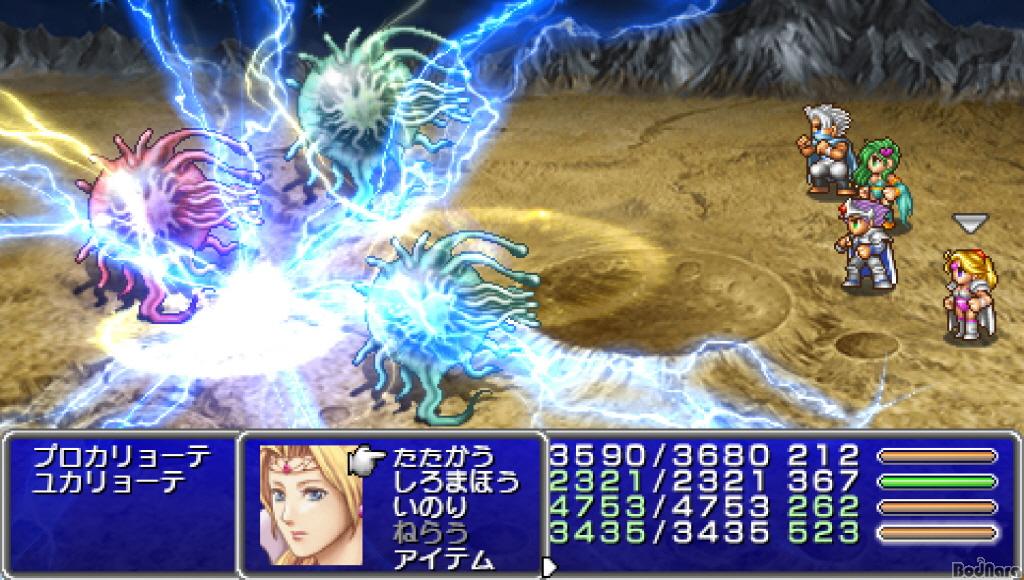
FFIV has received a remarkable number of releases, and unlike some games whose various ports are largely identical, these can offer substantially different experiences.
The original North American SNES release was simplified in several respects. The PlayStation version restored elements closer to the Japanese original, while the Game Boy Advance edition allowed players to change party members near the end, allowing you to have Yang, Edward, Palom, Porom, or Cid in your party as you gith Zeromus, and added optional challenges such as the Lunar Ruins.
The PSP’s Final Fantasy IV: The Complete Collection builds on the enhanced 2D versions, with beautifully updated graphics, the additional content, Interlude, and The After Years. I think it’s a particularly appealing package for anyone interested in experiencing more than the original adventure.
The Nintendo DS remake is a more substantial reimagining. In addition to 3D graphics and voice acting, it expands the dialogue and adds scenes that provide important context for the story. The Augment system also allows characters to acquire abilities associated with other party members, partially addressing the limitations of fixed classes. It’s a noticeably more demanding experience than the North American SNES release.
Finally, the Pixel Remaster modernizes the original 2D presentation and introduces various quality-of-life improvements. My biggest disappointment is that it doesn’t retain the additional GBA and PSP content. I would have preferred a version that allowed players to experience those additions if they wanted.
Personally, I don’t think there’s one definitive release that makes all the others obsolete. The PSP version is particularly attractive for its presentation and additional content, the DS remake offers expanded characterization, and the Pixel Remaster is a convenient way to experience a modernization of the original.
The Sequel: Final Fantasy IV: The After Years
I also played The After Years, which originally appeared on Japanese mobile phones before receiving a Western release through WiiWare in 2009. Yes, WiiWare.
Set seventeen years after the original, it introduces a new generation of characters, including Cecil and Rosa’s son, Ceodore, while letting us revisit the original cast. It retains the familiar battle system while adding Band abilities and a moon-phase mechanic that affects the strength of Black or White magic, and physical attacks.
Whether the original really needed a sequel is another question, given how conclusive its ending was. Nevertheless, I appreciated the opportunity to return to the world. I’ll leave a more detailed discussion of The After Years for its own review at some point in the future, perhaps after my FFXII review - which is literally the last numbered FF I’ve played.
Story Discussion: Spoilers Ahead
The Return to Baron and the Problem with Character Sacrifices
After becoming a Paladin, Cecil returns to Baron through the Devil’s Road. There, the party discovers that the King has been replaced by Cagnazzo, the Water Archfiend. The man responsible for Cecil’s immoral assignments wasn’t actually the man who raised him. While I appreciate the twist, I do wonder how the story would have played out had the original King simply become corrupted by power.
Following Cagnazzo’s defeat, Palom and Porom turn themselves to stone to save the party from being crushed between two walls. It’s an emotional moment, especially given how comical the twins initially were. Unfortunately, FFIV has a habit of presenting characters as having sacrificed themselves, only for them to turn up alive later, with one exception.
I don’t necessarily mind that these characters survive, and it’s great to see them return to help out, however, repeatedly reversing such dramatic moments diminishes their emotional impact.
The one exception is Tellah. At the Tower of Zot, he finally confronts Golbez and casts Meteor, sacrificing his life in the process to power the magic attack. The truly tragic part is that he doesn’t even accomplish what he set out to do. Golbez survives, Tellah dies, and his revenge remains unsettled. I think that’s a far more effective use of a character’s death, particularly given Tellah’s obsession with revenge.
Kain, Rydia, and Edge
The Tower of Zot also allows the party to rescue Rosa and temporarily free Kain from Golbez’s control. I appreciate that Kain’s jealousy and feelings for Rosa make him particularly vulnerable to manipulation, but the repeated use of mind control becomes rather tiresome. After a certain point, you almost expect him to betray the party again, unfortunately, that’s more or less what happens.
The underworld brings one of my favourite developments: Rydia’s return. Having been taken to the Feymarch by Leviathan, where time flows differently, she has grown older and become a powerful Summoner and Black Mage. It’s a clever way to reintroduce her, and another example of the game reflecting character development through its mechanics.
We also meet Edge, whose kingdom has been devastated and whose parents have been transformed into monsters by Dr. Lugae. I particularly appreciate that Rubicante expresses disgust at what happened to them. It doesn’t excuse his actions elsewhere, but it gives him a sense of individuality that distinguishes him from the other Archfiends.
The Lunar Whale and the Lunarians
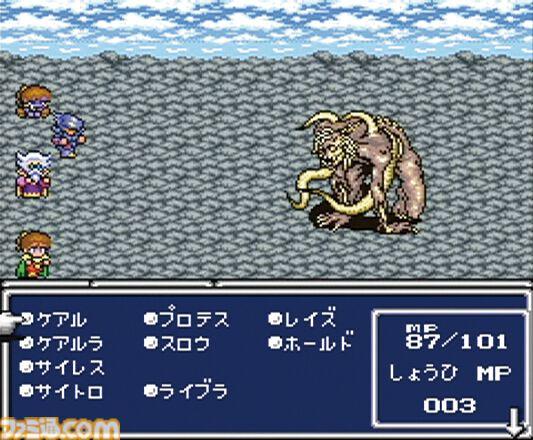
After Golbez obtains the final Crystal, the mages of Mysidia awaken the Lunar Whale, a vessel capable of travelling to the moon. There’s something wonderfully absurd about spending hours battling monsters and travelling between medieval kingdoms, only to find yourself piloting a giant whale-shaped spaceship. Why not? It’s Final Fantasy, after all.
On the moon, the party meets Fusoya, who explains that the Lunarians travelled there after their original world was destroyed. They entered a prolonged sleep, intending to wait until humanity had developed sufficiently for the two civilizations to coexist. One of them, Zemus, wanted to eliminate the inhabitants of the Blue Planet instead. Although he was placed in suspended animation, he remained able to manipulate others, including Golbez, whom he used to gather the crystals and activate the Giant of Babil.
Kluya, Cecil, and Golbez: A Family History That Raises Questions
Perhaps the most interesting revelation is that Cecil and Golbez are brothers. Their father, Kluya, was a Lunarian who settled among humans, shared some of his people’s knowledge of magic, and helped establish the Devil’s Road connecting Mysidia and Baron. He eventually married a human woman named Cecilia, with whom he had two children: Theodor, who would become Golbez, and Cecil.
This explains the mysterious voice that addressed Cecil as its son during his transformation into a Paladin. However, I’ve always wondered about the chronology of Kluya’s life. How long had he been living on the Blue Planet before meeting Cecilia? Given Mysidia’s apparent history and the existence of the Devil’s Road, are we talking about decades, or perhaps considerably longer? The unusual lifespans of the Lunarians make either possibility plausible, but it’s something I would have liked the game to clarify.
One of the things I particularly appreciate about the DS remake is its expanded depiction of the brothers’ childhood. Theodor was initially excited about having a younger brother, but following Kluya’s death and Cecilia dying in childbirth, Zemus exploited his grief and encouraged him to blame Cecil. Theodor abandoned his infant brother near Baron Castle, where Cecil was subsequently discovered and raised by the king.
I think this additional characterization makes Golbez’s eventual redemption considerably more meaningful. He wasn’t simply an evil man who happened to be Cecil’s brother. He was a traumatized child who lost both parents and was manipulated into resenting the person who otherwise would have been his closest family.
Unfortunately, even with these additions, I still wish the game had devoted more time to the relationship between the two brothers. By the time the truth is revealed, we’re already approaching the conclusion, and there is relatively little opportunity for them to interact further.
Zemus and Zeromus: Another Last-Minute Antagonist
Following the destruction of the Giant of Babil, Fusoya breaks Zemus’s control over Golbez. The two subsequently travel to the moon’s core and defeat Zemus, only for his hatred to manifest as Zeromus.
And this is where one of my recurring criticisms of the franchise comes into play. We spend most of the adventure pursuing Golbez, only to learn that he’s been manipulated by another individual. While this allows for his redemption and ties the story to Cecil’s Lunarian heritage, I can’t help thinking that a confrontation between the two brothers could have provided a more personal conclusion.
There is a potentially compelling story in two brothers separated during childhood, one of whom becomes a Paladin while the other embraces darkness. Instead, our final opponent is the embodiment of Zemus’s hatred, an enormous, vaguely brain-like-looking monstrosity that I’ve always thought resembled a mutated pizza with too many tentacles and an extremely bad attitude.
It reminds me of FFIII’s sudden switch from Xande to the Cloud of Darkness. I don’t think the approach is inherently bad, but I prefer a final antagonist whose presence and motivations have been established throughout the adventure. Zeromus is an imposing boss, and I love the music accompanying the fight, but I don’t find him nearly as interesting as Golbez.
Golbez’s Redemption and the Ending
After Zeromus is defeated, Fusoya and Golbez decide to join the other Lunarians in their long sleep. Despite having been manipulated, Golbez recognizes that he’s responsible for tremendous suffering and doesn’t feel he can simply return to the Blue Planet. Cecil finally acknowledges him as his brother before he leaves. It’s a bittersweet conclusion, particularly because the two have only just discovered the possibility of having a relationship before being separated again.
Kain, still burdened by guilt, decides to continue training on Mount Ordeals. I think that’s a fitting ending for him. Unlike Cecil, whose transformation into a Paladin represents a clear turning point, Kain’s struggle with his jealousy and resentment remains more complicated.
The other characters return to their kingdoms, and Cecil and Rosa are married and crowned king and queen of Baron. It’s a relatively conventional happy ending, but one that brings Cecil’s journey full circle. He began the game questioning his place as a knight serving a corrupt regime and ends it as a Paladin who has earned the trust of his people as their new King.
Conclusion: The First Truly Modern Final Fantasy
Unlike the first three games, I don’t think FFIV’s significance is primarily historical. It’s still an excellent RPG in its own right. The combat remains enjoyable, the music is outstanding, and Cecil’s journey contains some of the most memorable moments in the early history of the franchise.
Of course, there are things I would change. The repeated mind control, the character sacrifices that are subsequently reversed, and the introduction of Zemus and Zeromus are probably my biggest criticisms. I also wish the relationship between Cecil and Golbez had received more attention, even with the additional scenes in the DS remake.
Nevertheless, I don’t find myself making excuses for the game because it was released in 1991. It’s an adventure I’ve happily revisited across several generations of hardware, and there’s something comforting about returning to its world and hearing those familiar compositions.
FFIV is always one of my favourite Final Fantasy games, though whether I’d call it my absolute favourite depends on the day, and perhaps how I woke up that morning. Later entries have stories, characters, and music I may appreciate even more, but FFIV holds a special place as the first game in the series I completed, and the moment Square’s earlier experiments came together into something truly memorable.
Final Fantasy IV isn’t simply an important chapter in the franchise’s history. It’s where, for me, Final Fantasy truly came into its own.
Final Rating: 4.5/5
Excellent: A Defining Entry in the Franchise
| Category | Rating |
|---|---|
| Story | 4.25/5 |
| Characters | 4.5/5 |
| Combat and Gameplay | 4.5/5 |
| Character Class System | 4/5 |
| World and Exploration | 4.5/5 |
| Graphics (SNES and Subsequent Remakes) | 4.5/5 |
| Music | 4.75/5 |
| Historical Significance | 5/5 |
| Overall Rating | 4.5/5 |