
Final Fantasy III - A Return to Tradition, With a Few Big Ideas
Looking back at the earliest Final Fantasy games, I find it interesting how willing Square was to experiment with the formula. Final Fantasy II abandoned conventional character levels in favour of a system that rewarded players for repeatedly using weapons and abilities, while also introducing a more involved story and established characters.
Final Fantasy III, released for the Famicom in 1990, returned to the original game’s more traditional approach. Experience points and character levels are back, as are four Warriors of Light chosen by the crystals. However, rather than simply recreating the first game, Square introduced something that would eventually become one of the franchise’s most celebrated features: the job-changing system.
My First Experience with Final Fantasy III
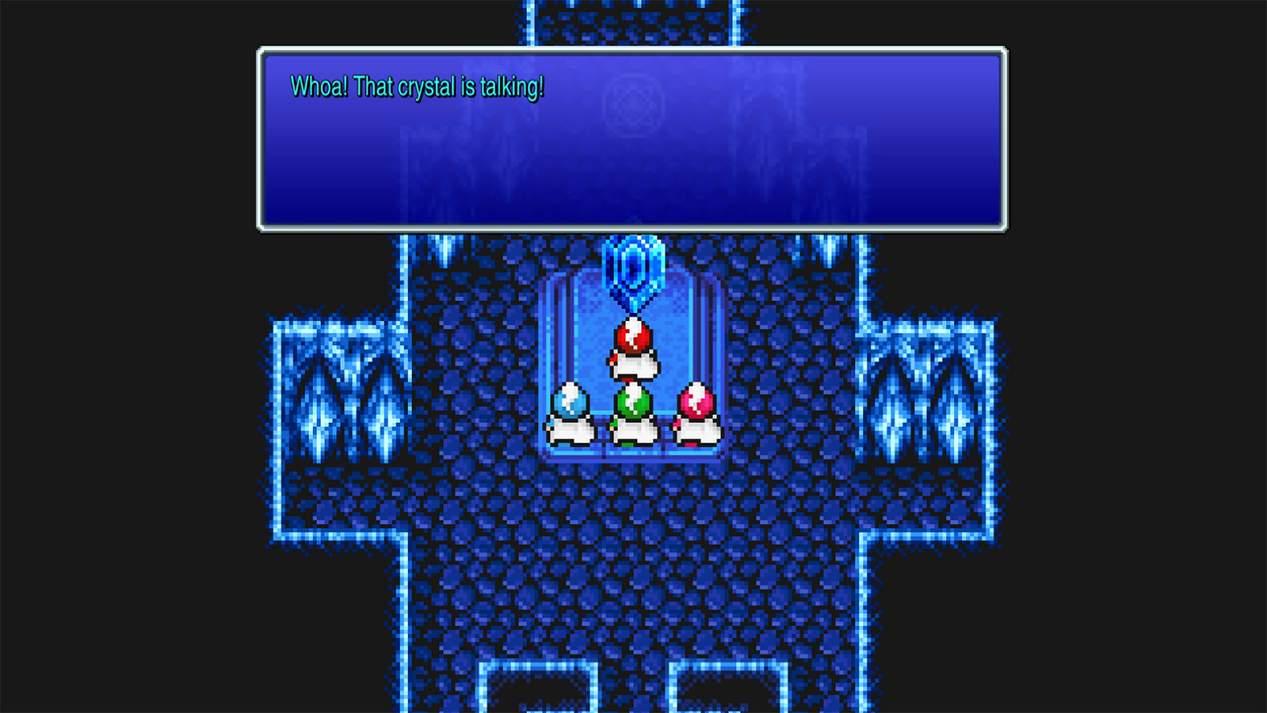
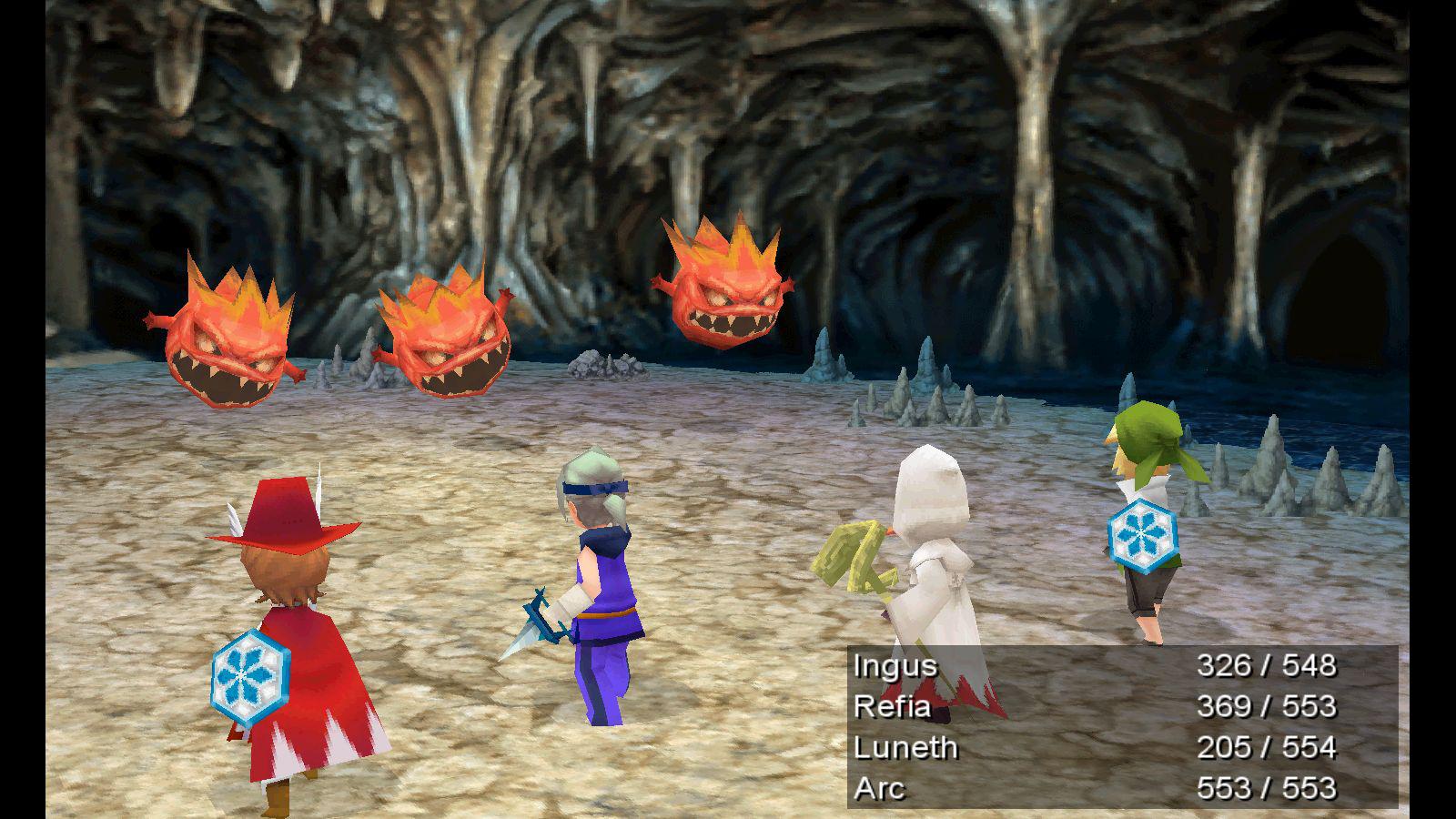
Much like Final Fantasy II, I never played the original Famicom release. FFIII was the last of the original six games to receive an official English-language release, finally arriving in North America in 2006 as a fully 3D remake for the Nintendo DS.
One of the biggest changes was giving the four previously unnamed Warriors of Light their own identities. The remake introduces Luneth, an adventurous orphan from Ur, and his timid childhood friend Arc. They’re eventually joined by Refia, the adopted daughter of a blacksmith, and Ingus, a knight serving the kingdom of Sasune.
Their adventure begins with the discovery of the Wind Crystal and leads them to Kazus, where a Djinn has cursed the inhabitants, including the familiar airship engineer Cid. With Princess Sara’s help, the four defeat the Djinn and lift the curse.
The characters aren’t particularly complex, but I appreciate that the remake gives them personalities and reasons to stick together.
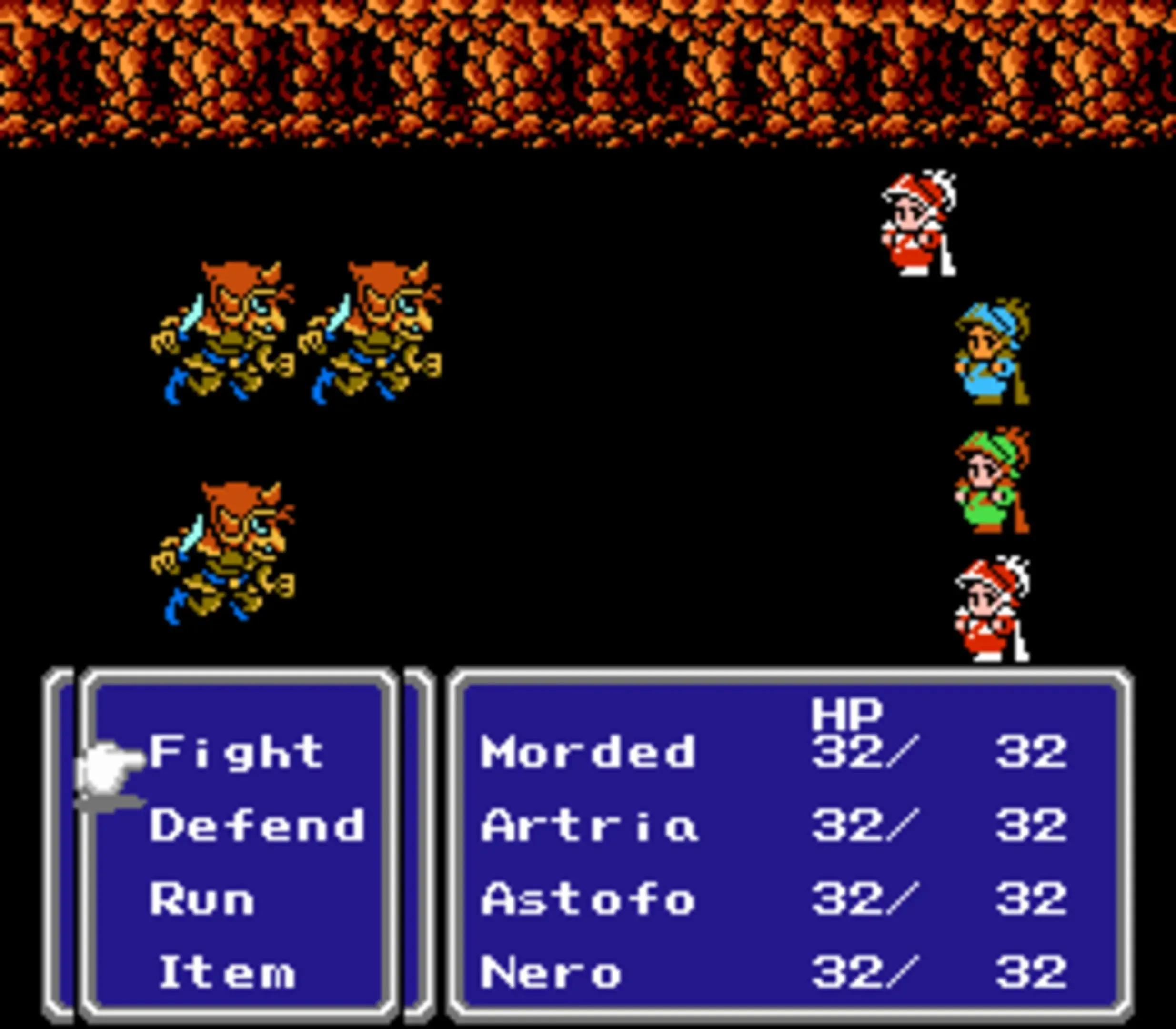
I’ve now finished the Pixel Remaster as well, and despite returning to the original game’s unnamed heroes, the adventure is largely as I remember it. I even ended up reusing the 3D remake’s character names for my party.
Having experienced both versions, I find that each has its advantages. The DS remake is more ambitious in its presentation and characterization, while the Pixel Remaster feels closer to what Square originally envisioned, with the added benefit of modern conveniences that make the adventure considerably more approachable.
The Job System and Gameplay
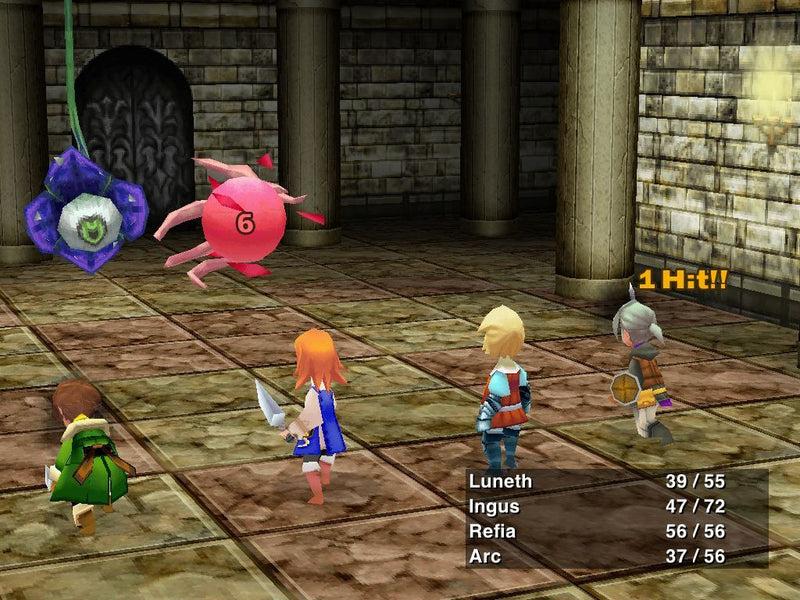
The job system is easily FFIII’s greatest contribution to the franchise. While the original Final Fantasy largely locked characters into their chosen classes, FFIII allows you to change jobs throughout the adventure as you unlock them through the crystals.
Alongside familiar Warriors, Monks, and Mages are Dragoons, Geomancers, Scholars, Dark Knights, Summoners, and numerous other jobs. Characters have conventional experience levels as well as individual job levels, letting them develop proficiency in particular roles.
I like the freedom this provides, although the game occasionally undermines it by encouraging particular jobs. Some dungeons require the party to cast Mini on themselves, rendering ordinary physical attacks largely ineffective, while certain bosses practically beg you to use Dragoons. The DS remake also temporarily penalizes characters after changing jobs, which thankfully is not present in the Pixel Remaster.
That said, having completed the Pixel Remaster, I came away feeling that the job system doesn’t have quite as much influence on the adventure as I might have expected. There are certainly situations where particular jobs make an enormous difference, but outside these encounters, I found that I could get through most of the game without regularly changing my party’s composition.
Goldor’s Manor is one example where your approach matters, given the enemies’ resistance to magic and the usefulness of having a Thief to open locked doors without consuming Magic Keys. Likewise, the battle against Garuda strongly encourages the use of Dragoons. Beyond situations like these, however, I rarely felt that experimenting with different jobs was essential to progressing.
That’s not necessarily a bad thing, since I appreciate being able to stick with classes that I enjoy. Still, for a game whose defining innovation is its job system, I would have liked more situations that rewarded creative combinations rather than simply encouraging a particular class for a particular encounter.
One combination I found especially effective in the Pixel Remaster was equipping a Dragoon with the Blood Lance. The weapon absorbs HP from enemies, allowing the Dragoon to recover health while attacking. Combined with Jump, which temporarily removes the character from the battlefield and protects them from attacks while airborne, it proved remarkably effective. It was easily one of my favourite combinations throughout the adventure.
Playing the Pixel Remaster also reminded me how much I dislike FF I’s spell-charge system, which is used here and in the 3D remake as well!1 Rather than having a conventional pool of MP, each spell level has a limited number of uses. Even after developing my White Mage to a fairly high level, I still found myself having to manage those charges carefully, particularly when relying on spells such as Cura throughout lengthy dungeons.
The DS remake used this system as well, but I’d forgotten how frustrating it could be. Personally, I much prefer the conventional MP system introduced in FFII and used in later games.
The Pixel Remaster’s Difficulty and Quality-of-Life Improvements
Perhaps the biggest surprise during my latest playthrough was how much easier the Pixel Remaster felt compared with what I remember of the DS remake.
Some of this undoubtedly comes down to the quality-of-life improvements. The ability to save more conveniently, take advantage of autosaves, and speed up routine battles makes the entire experience less punishing. Optional adjustments to experience and gil gains can also reduce grinding, although these are conveniences rather than changes to the underlying combat mechanics.
Whatever the reason, I found myself progressing through most of the adventure without encountering anything particularly troublesome.
In fact, the only boss battle I remember giving me much difficulty was the Two-Headed Dragon in the World of Darkness, during the final dungeon sequence. Its devastating physical attacks forced me to reconsider my party composition and equipment rather than simply relying on the tactics that had carried me through the rest of the game.
This was where Vikings and shields proved particularly useful. By equipping a Viking with two shields and taking advantage of its ability to draw enemy attacks, I could better protect the rest of the party while concentrating on dealing damage and keeping everyone alive.
It was one of the few encounters where I genuinely felt compelled to make use of the job system’s flexibility, and I enjoyed having to adjust my strategy accordingly.
Then there’s the Crystal Tower and the lengthy final sequence. The absence of conventional save points in the original and DS versions makes failure particularly frustrating. I don’t mind a challenging dungeon, but at some point it becomes more a test of endurance than skill.
The Pixel Remaster’s autosaves, quicksaves, and other conveniences make revisiting the game considerably more approachable. Although I appreciate the difficulty of the older versions, I can’t say I miss having to repeat an enormous stretch of the final dungeon simply because a boss happened to wipe out my party.
Despite these complaints, the gameplay remains enjoyable, and it’s easy to see how Final Fantasy V would eventually refine the job system by allowing characters to combine abilities learned from different classes. FFIII establishes the foundation, but FFV is where I feel the concept truly comes into its own.
Summons, Moogles, and Other Series Firsts
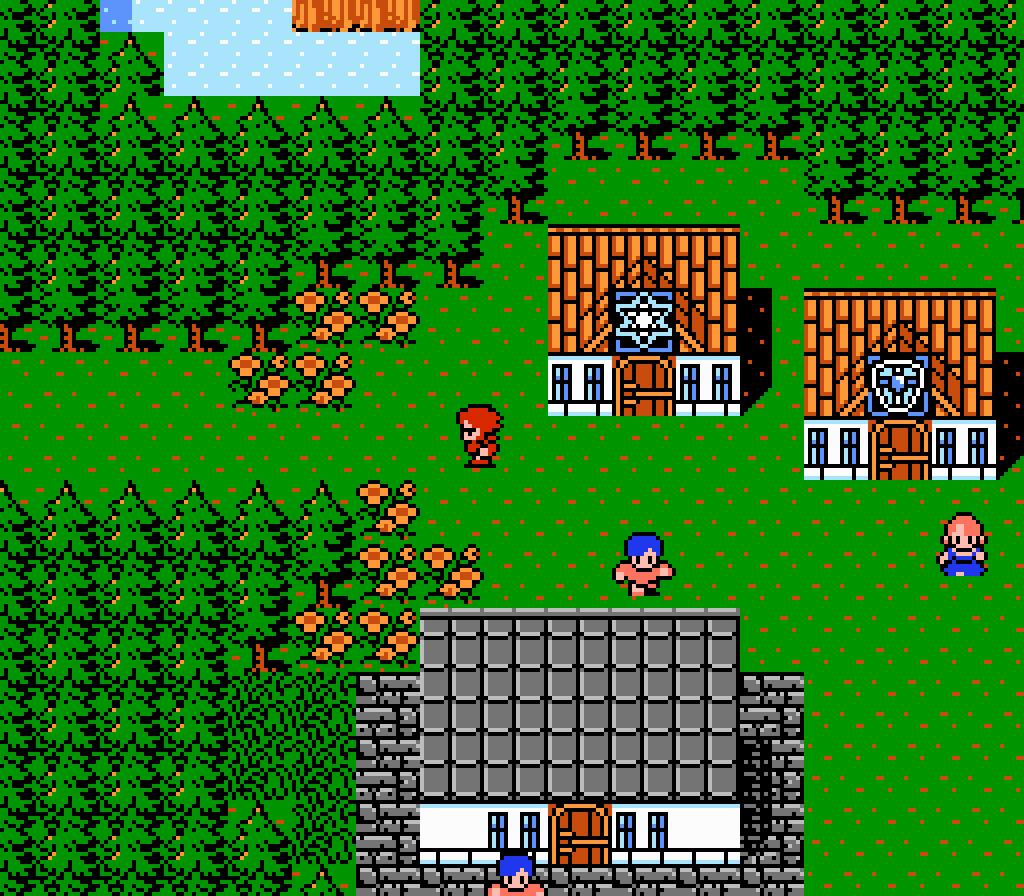
FFIII also introduces summoning magic, with familiar creatures such as Shiva, Ifrit, Ramuh, Titan, Odin, Leviathan, and Bahamut becoming available through summoning jobs. Bahamut2 and Leviathan3 had appeared in previous games, but this was the first time they could be summoned in battle.
Considering how important summons would become to the franchise, particularly through Rydia in FFIV, the Espers in FFVI, and the Guardian Forces in FFVIII, it’s remarkable how much of that history begins here.
Then there are Moogles. As I mentioned in my FFII retrospective, the Giant Beavers from that game were essentially proto-Moogles, originating from Koichi Ishii’s early designs, some of which can be seen in early development artwork. FFIII marks their proper debut, with several of them appearing at Doga’s Manor. Fat Chocobo also makes his first appearance, originally serving as a means of storing excess items.

I also appreciate the greater emphasis on transportation. The Enterprise, Nautilus, and Invincible each open up different parts of the world, making the acquisition of a new airship feel like a significant development rather than just a more convenient way to get around.
It’s particularly interesting how the game doesn’t simply give you one airship that becomes progressively more capable. Instead, the party acquires different vessels with distinct abilities, sometimes having to switch between them depending on where they need to go. The Nautilus can travel underwater once upgraded, while the Invincible can cross certain mountain ranges that would otherwise block the party’s progress.
Although I’ll admit that maneuvering the Invincible over mountains can be frustrating, I appreciate the way transportation becomes part of the game’s progression rather than just a means of getting from one location to another.
Graphics and Music
I rather like the visual style of the DS remake. The exaggerated character proportions and compact environments give the towns and dungeons an almost diorama-like appearance. It’s a charming approach that was later used for the DS remake of Final Fantasy IV.
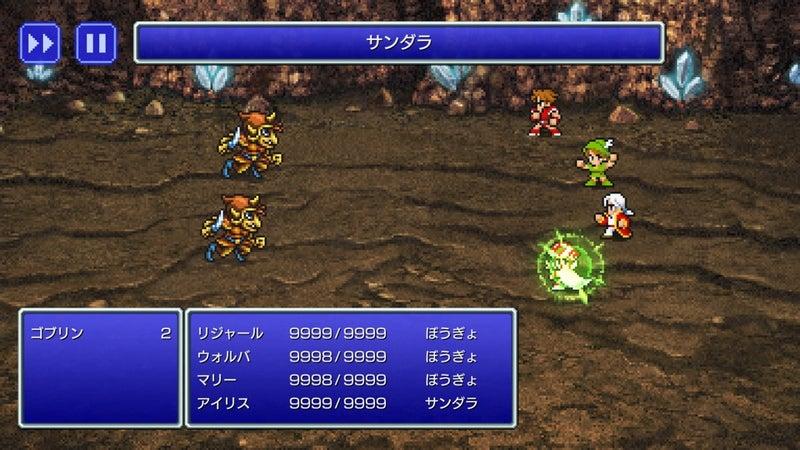
The Pixel Remaster, meanwhile, offers an attractive modernization of the original 2D presentation. Although it doesn’t have quite the same visual charm as the DS remake, I appreciate how faithfully it preserves the overall appearance and atmosphere of the Famicom game while making everything easier on the eyes.
As far as music is concerned, it’s been quite some time since I last played the DS version, but listening to the soundtrack again hasn’t changed my opinion much. The Prelude, battle theme, victory fanfare, chocobo theme, and crystal chamber music are all enjoyable. I particularly like Doga and Unei, with its peaceful, mysterious melody. Eternal Wind, The Boundless Ocean, and The Crystal Tower are also standout tracks and worth mentioning.
My problem is that no composition from either version of FFIII stands out to me quite the same way as Battle at the Big Bridge, Liberi Fatali, One-Winged Angel, Tifa’s Theme, Aerith’s Theme, The Man with the Machine Gun, or even the main theme from FFVII.
Those are pieces of music I find myself listening to outside the games. FFIII has a perfectly good soundtrack, and the Pixel Remaster’s arrangements are enjoyable, but its music hasn’t left that same lasting impression on me.
That said, Doga and Unei is gradually becoming one of those tracks I find myself returning to, so perhaps my appreciation for the soundtrack will grow over time.
Story Discussion: Spoilers Ahead
This section also contains spoilers for Final Fantasy IV, VIII, and IX.
A World Much Larger Than It Initially Appears
One of the more interesting revelations is that the world you’ve been exploring, at first, is actually a floating continent. After upgrading the Enterprise, the party discovers an enormous surface world almost completely submerged and frozen in time. With the help of the priestess Aria, they restore the Water Crystal, although Aria sacrifices herself in the process.
One thing I still find confusing is the chronology. I’d always assumed the catastrophe had happened centuries before the adventure, yet Cid recounts the airship crash that brought him and the four heroes to the floating continent as having occurred about ten years earlier.
The game’s references to the passage of time, particularly in relation to the stopped world, make it difficult to establish exactly how long certain events have been unfolding. Perhaps the catastrophe affected different parts of the world in ways that aren’t immediately apparent, but the sequence of events could have been explained more clearly.
Still, I appreciate the sense of discovery involved in learning that the floating continent is merely a small part of a much larger world. It’s one of those moments that reminds me how ambitious these early Final Fantasy games could be, even with the technological limitations of the Famicom.
Doga, Unei, and the Tragedy of Xande
Probably my favourite aspect of FFIII’s story involves the great magician Noah and his three apprentices. Before his death, Noah granted Doga tremendous magical power, Unei control over the world of dreams, and Xande the gift of mortality.
I have to admit that, revisiting the game, I feel a little sympathy for Xande. Imagine watching your fellow apprentices receive extraordinary powers, seemingly retain their longevity, and then being told that your gift is the privilege of eventually dying. It certainly seems like he got the short end of the stick.
What exactly was Noah trying to teach him? Perhaps he believed that knowing life is finite would help Xande appreciate the time he had. Unfortunately, the game doesn’t really explore Noah’s intentions. Xande interprets the gift as a curse and attempts to stop time itself to avoid death, endangering the entire world in the process.
There’s an interesting contrast with Doga and Unei, who are ultimately willing to sacrifice themselves to help the Warriors of Light. Xande is prepared to destroy the world to avoid dying, while his former companions are willing to die to save it.
That’s a genuinely compelling premise that I wish Square had explored in greater depth.
It’s also interesting in light of Final Fantasy IX. Doga’s Artifact and Une’s Mirror, obtainable at the Treno auction house, unlock the music associated with the two characters when taken to the Black Mage Village. More importantly, Vivi and Kuja both confront questions of mortality, with Kuja responding to his limited lifespan much like Xande.
FFIX feels like a much more thoroughly developed exploration of those ideas.
Xande and the Cloud of Darkness: The Antagonist Bait-and-Switch
And this brings me to my biggest criticism of the story. After spending so much time establishing Xande as the principal threat, the game has the party defeat him at the Crystal Tower and almost immediately replaces him with the Cloud of Darkness.
I understand the thematic significance of the Cloud of Darkness. It’s a manifestation of an imbalance between light and darkness, intent on returning everything to nothingness. But it’s not nearly as interesting a character as Xande. The history involving Noah and the three apprentices deserved a more satisfying conclusion than simply discarding Xande in favour of another antagonist.
I’ve never been particularly fond of this kind of bait-and-switch, which happens several times throughout the main titles of the franchise. I wouldn’t say it happens in every other Final Fantasy, but it comes close.
FFIV gives us Golbez, only to reveal Zemus as the real mastermind. FFVIII replaces Edea with Ultimecia, although at least that happens roughly two-thirds of the way through the adventure, giving the game some time to establish its new antagonist. FFIX, as much as I love it, introduces Necron immediately following the confrontation with Kuja.
It’s particularly frustrating that FFIII and IX both have villains terrified of their own mortality, only to replace them with abstract entities intent on erasing existence.
It’s one of the reasons I appreciate FFV, VI, and VII: Exdeath, Kefka, and Sephiroth remain central to the conflict until the very end. I don’t mind a villain transforming into some grotesque monstrosity for the final battle. I just dislike being presented with an entirely different villain at the last minute.
That said, I do like the introduction of the Warriors of Darkness. The idea that neither light nor darkness is inherently good or evil, and that the world requires a balance between them, is a refreshing departure from more conventional fantasy.
I just wish the game had introduced the Cloud of Darkness earlier or let Xande remain the focus of the final confrontation.
A Surprisingly Simple Ending
Having now completed the Pixel Remaster, I found myself paying considerably more attention to the ending than I had during my original playthrough of the DS remake.
I had forgotten quite a few details, particularly what happens after the Cloud of Darkness is defeated and the Warriors of Light return from the World of Darkness.
Rather than simply returning home, the party is reunited with the five allies who had previously helped them overcome the curse at the Crystal Tower: Princess Sara, Cid, Desch, King Alus, and one of the four old men from Amur.
The group then sets about returning everyone to their respective homes. It’s a pleasant conclusion that gives some closure to the supporting characters encountered throughout the adventure.
I also found it interesting that the party switches airships during this sequence, initially travelling aboard the Invincible before continuing their journey aboard the Nautilus. Given how important the different airships are throughout the adventure, it’s a nice touch to see them featured in the ending rather than having the party simply teleport from one location to another.
What surprised me most, however, was Princess Sara’s behaviour.
After the others have been returned home, Sara refuses to go back to Castle Sasune, insisting that she wants to spend a little more time with the Warriors of Light. She accompanies them to Ur, where the villagers are celebrating their return.
At one point, a dancing girl attempts to reward one of the heroes with a kiss, prompting an immediate and rather jealous objection from Sara.
I honestly couldn’t remember this happening in the DS remake, although looking into it revealed that the scene was present there as well. What makes the Pixel Remaster interesting is that the four protagonists are unnamed and largely interchangeable from a narrative perspective, leaving Sara’s romantic interest less clearly defined.
Is she particularly attached to the party’s leader, or is the game simply implying that she has feelings for one of the four Warriors of Light?
The original 2D story doesn’t really establish a definitive answer, but the DS remake makes the relationship considerably clearer by developing romantic undertones between Sara and Ingus.
It’s an interesting distinction between the two versions. The Pixel Remaster preserves the simplicity of the original story, while the DS remake gives some of these interactions greater context through its established characters.
I also appreciate that the DS remake doesn’t try to force a romance between Luneth and Refia, instead leaving their relationship relatively open-ended.
Ultimately, the ending is fairly straightforward, with the heroes restoring the balance between light and darkness and returning to their lives. There’s no particularly elaborate epilogue, but I don’t think the game necessarily needs one.
Sometimes saving the world, saying goodbye to the friends you’ve made along the way, and returning home is enough.
Conclusion: The Foundation of Something Greater
Final Fantasy III is an important entry in the franchise, introducing the flexible job system, summoning magic, and Moogles. The DS remake’s named protagonists and charming presentation make it a worthwhile reimagining, while the Pixel Remaster is an enjoyable way to experience the game closer to its original form.
Having now finished both versions, I would probably recommend the Pixel Remaster to someone experiencing FFIII for the first time, particularly because its quality-of-life improvements make the more frustrating aspects of the original game easier to tolerate. However, I still have a soft spot for the DS remake’s visual presentation and its attempts to flesh out the protagonists.
The Pixel Remaster also reinforced my belief that FFIII’s job system, despite being an important innovation, isn’t quite as developed as its reputation might suggest. There are some genuinely enjoyable combinations, such as the Dragoon and Blood Lance, and encounters where experimenting with jobs becomes essential. However, I found that much of the adventure could be completed without giving the system nearly as much attention as I expected.
That said, the ability to switch jobs when necessary is still preferable to being locked into a single class for the entire adventure.
Out of the original three games, I’d probably rank FFIII third. Despite its flawed progression system, I find FFII’s story and characters considerably more interesting. FFIII has a more conventional and flexible approach to gameplay, but its most interesting narrative ideas, particularly the story of Noah and his apprentices, feel underdeveloped.
My latest playthrough hasn’t fundamentally changed my opinion of the game, although I enjoyed revisiting it and was pleasantly surprised by how much more approachable the Pixel Remaster felt compared with my memories of the DS version.
I’d still recommend it to anyone interested in the franchise’s history. Without Final Fantasy III, we might never have gotten the job system that made FFV so beloved.
That alone is a pretty significant accomplishment.
Final Rating: 3.5/5
Good: An Important Foundation for Greater Things
| Category | Rating |
|---|---|
| Story | 3.25/5 |
| Characters | 3.25/5 |
| Combat and Gameplay | 3.75/5 |
| Character Class System | 4.25/5 |
| World and Exploration | 4/5 |
| Graphics (Nintendo DS Remake) | 4/5 |
| Music | 3.25/5 |
| Historical Significance | 4.75/5 |
| Overall Rating | 3.5/5 |
-
It has been such a long time since I played the 3D remake that I thought they had embraced the approach used in the Final Fantasy I ports for the Game Boy Advance and PSP, which replaced spell charges with conventional MP. ↩︎
-
Bahamut appears as an arbiter of the class upgrade in Final Fantasy I. He is still the King of Dragons and shares a similar appearance with later iterations. ↩︎
-
In Final Fantasy II, Leviathan is a creature that swallows the party and essentially acts as a dungeon that the party needs to navigate and escape. ↩︎