
Final Fantasy II - The Real Underdog of the Series?
This might be one of my hottest Final Fantasy takes, but I genuinely think Final Fantasy II is one of the most underappreciated entries in the entire franchise.
For years, I’ve seen Final Fantasy V described as something of an overlooked gem, particularly among Western fans. I can understand that sentiment given its original lack of a North American release, but I feel like we’ve reached a point where FFV being underrated has become such a commonly repeated opinion that it isn’t particularly underrated anymore. Between its excellent job system and the appreciation it has received over the years, it has long since earned its place among the more respected entries in the series.
Final Fantasy II, on the other hand, still has a reputation as the franchise’s black sheep, largely because of its unconventional character progression system. While I understand some of the criticisms, I think FFII deserves far more recognition, especially given how much it introduced. In some respects, it’s nearly as foundational as the original Final Fantasy, albeit for entirely different reasons.
My First Experience with Final Fantasy II
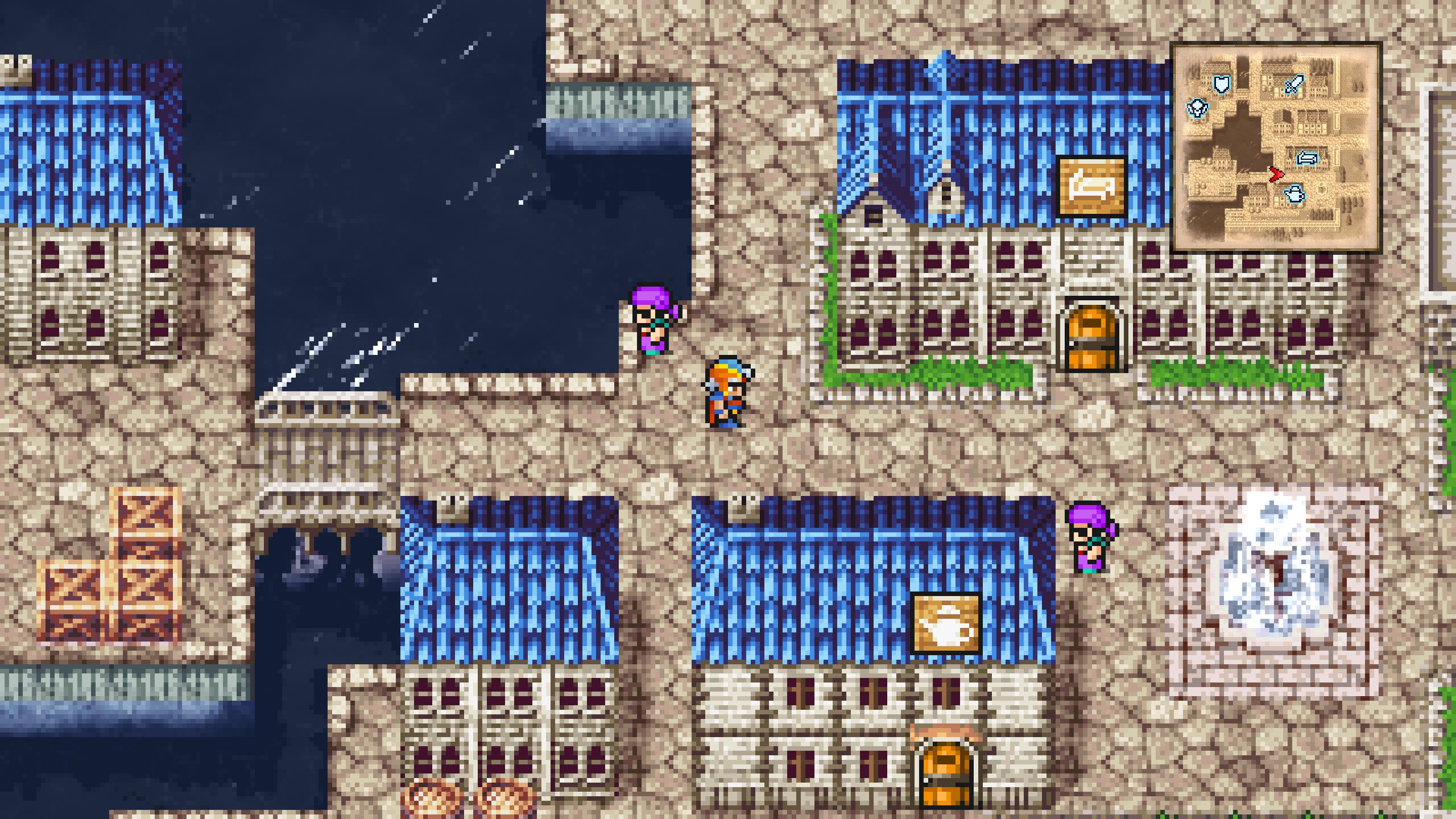
Like many North American fans, I never had the opportunity to play the original 1988 Famicom release of Final Fantasy II. To make matters somewhat confusing, the game originally released here as Final Fantasy II on the Super Nintendo was actually Final Fantasy IV. The first official North American release of the actual FFII wouldn’t arrive until 2003, when Square Enix included it alongside the original game in Final Fantasy Origins for the PlayStation.
My own introduction came through the Game Boy Advance compilation, Final Fantasy I & II: Dawn of Souls, released in 2004. At the time, I didn’t particularly appreciate how extensively the games had been rebalanced. As far as I was concerned, I was finally getting the opportunity to experience Final Fantasy II for the first time; the updated graphics, improved sound, and quality-of-life improvements were secondary.
I’ve since spent some time with the Pixel Remaster, although my impressions are still primarily based on the GBA version. I can’t really compare the difficulty with the original Famicom release, which by most accounts was considerably less forgiving. The GBA version also included an additional scenario called Soul of Rebirth, something I’ll discuss later.
A More Ambitious Story Than Its Predecessor
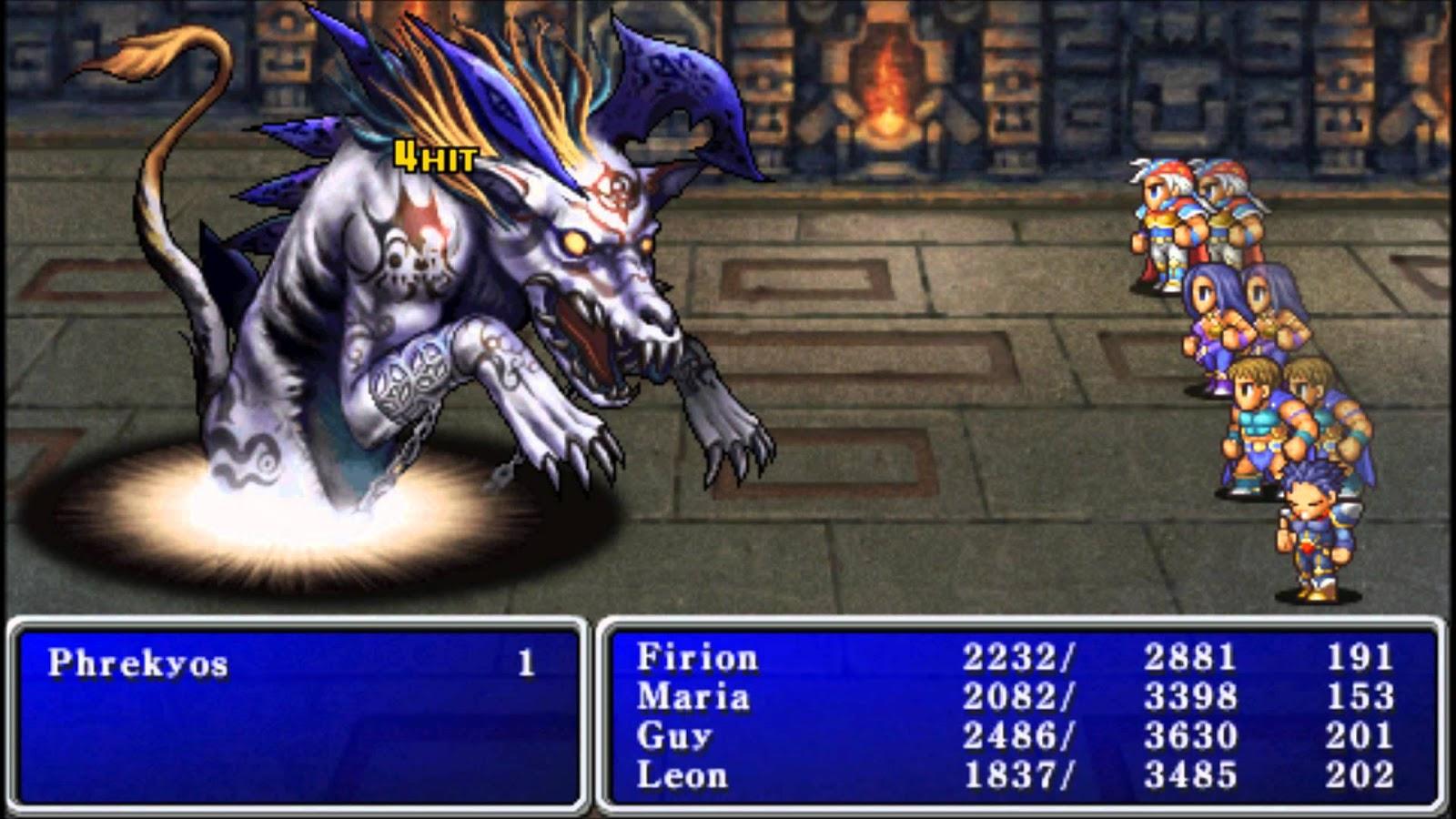
One of the biggest differences between Final Fantasy II and the original game is its approach to storytelling. Rather than following four largely anonymous Warriors of Light on a quest to restore the crystals, we’re introduced to characters with names, relationships, and personal motivations.
The story begins with the Empire of Palamecia, led by a ruthless emperor who seeks to conquer the world. During the empire’s invasion of the kingdom of Fynn, four young people: Firion, Maria, Guy, and Leon are forced to flee their home. Firion and Guy are taken in by Maria and Leon’s family, and the four essentially grow up together.
Unfortunately, their escape doesn’t go particularly well. Almost immediately, the game throws you into a battle against imperial soldiers, and you get your ass handed to you. There’s no clever strategy or hidden trick to overcome the encounter. You’re simply not supposed to win.
It’s a surprisingly effective introduction, particularly for a game released in 1988. Rather than having you defeat a few weak monsters, FFII immediately establishes that you’re facing an enemy considerably more powerful than yourselves.
When Firion awakens, he discovers he’s been rescued by the rebel forces operating out of Altair. Maria and Guy have also survived, but Leon has disappeared. The three seek permission from Princess Hilda to join the rebellion, setting the adventure into motion.
What follows is a series of missions against the empire, involving everything from gathering resources for the resistance to infiltrating enemy installations and searching for powerful magic. FFII is much more concerned with the consequences of war than its predecessor. Towns are occupied or destroyed, characters lose people close to them, and victories don’t necessarily come without significant sacrifices. There’s a genuine sense that you’re participating in a resistance movement against an overwhelmingly powerful empire.
Another interesting distinction is that Final Fantasy II is the first game in the series to move away from the elemental crystals as the driving force behind its story. Crystals are still present, most notably in the Mysidian Tower, but the adventure doesn’t revolve around restoring or protecting them as it does in Final Fantasy I, III, IV, and V. Instead, the conflict is centred on the war against the Empire of Palamecia.
It’s interesting that, starting with Final Fantasy VI, several subsequent entries would also move away from the traditional crystal-based narrative. FFVI and VII reinterpret the concept through magicite and materia, respectively, while FFVIII takes a rather different approach altogether. Even FFIX, which deliberately pays homage to the earlier games, treats the crystal as the origin of life rather than making the four elemental crystals the focus of the adventure. Crystals would eventually return to prominence in some later entries, but FFII was the first to demonstrate that a Final Fantasy story didn’t necessarily need to revolve around them.1
The writing is still fairly basic, and the characters don’t receive nearly the same development that we would eventually see in FFIV or VI. Nevertheless, it was a significant step toward establishing Final Fantasy as a franchise where storytelling and characters could be just as important as gameplay.
Practice Makes Perfect: The Unconventional Progression System
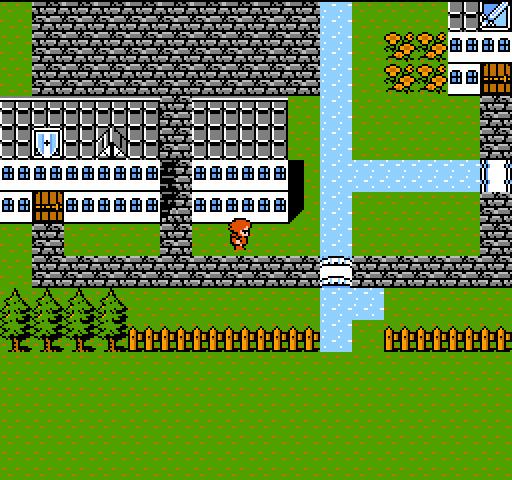
If there’s one thing Final Fantasy II is infamous for, it’s undoubtedly its character progression system.
Rather than following the traditional experience-point system used in Final Fantasy or Dragon Quest, FFII has no conventional character levels. Individual attributes and abilities improve depending on what you actually do in battle. My impression has always been that Square was attempting to create something resembling a more natural system of character development. Essentially, practice makes perfect.
If you repeatedly use an axe, your proficiency with axes increases. Individual spells also gain levels through repeated use, making them progressively more effective. Similarly, taking damage can increase your HP, while using MP can increase your magical reserves.
Instead of assigning characters predetermined classes, you’re essentially shaping them through their actions. If you want Firion to specialize in swords, use swords. If you want Maria to become proficient in black magic, have her repeatedly cast offensive spells. There’s something appealing about that freedom, especially given how early in the franchise’s history FFII was released.
Unfortunately, there’s a fairly significant problem.
The system is incredibly easy to exploit.
And that’s exactly what I did when I played the Game Boy Advance version. Rather than simply progressing through the game normally, I would deliberately get into battles and start attacking my own party members.
Yes, you read that correctly.
I would have my characters beat the living hell out of one another, heal them when necessary, and keep going until their HP and other attributes improved to a level I was satisfied with. Once I had sufficiently abused my poor party members, I would return to playing the game normally.
It sounds completely ridiculous, and frankly, it is. But it worked.
The irony is that a system seemingly designed to reward players for naturally using their abilities could encourage them to spend considerable amounts of time performing repetitive actions that had very little to do with actually defeating enemies. Of course, the game is perfectly playable without deliberately exploiting its mechanics, but I think this illustrates the biggest weakness of FFII’s approach.
There’s also the issue of individual spell levels. You might spend most of the game developing your existing spells, only to acquire something new that requires considerable additional use before reaching its full potential. This can make experimentation feel counterproductive, particularly later in the game.
Despite these shortcomings, I like the idea behind the system and appreciate that Square was willing to abandon something that had already proven successful in only the second entry. It’s not a system I would want every Final Fantasy to adopt, but I think it deserves recognition for its ambition.
And really, if nothing else, I have to respect a game where beating up your friends can be considered a legitimate training strategy.
Exploration, Dungeons, and Other Frustrations
The dungeon design is probably one of Final Fantasy II’s weaker aspects. Like many RPGs from the era, it relies heavily on random encounters, and exploring some of the larger dungeons can become exhausting.
What makes matters worse is the game’s tendency to include doors leading into completely empty rooms. These aren’t simply harmless dead ends. Many have unusually high encounter rates, effectively punishing players for exploring every available passage. I understand the idea of including traps and misleading routes, but there’s a difference between creating a challenging dungeon and making exploration unnecessarily tedious.
The game can also be rather cryptic about where you’re supposed to go next, although it introduces an interesting keyword system. Throughout the adventure, you learn important words and phrases from various characters, which you can then use in conversations with other NPCs to get information or advance the story. For example, learning about the Wild Rose rebellion allows you to bring up the subject with people who might have something useful to say about it.
I actually think this was a neat idea. Rather than having every conversation progress through ordinary dialogue, you’re actively collecting information and using it to investigate what’s happening in the world. It’s almost reminiscent of an adventure game.
The implementation isn’t perfect, particularly when you know what information you need but haven’t triggered the exact conversation the game expects. Still, I appreciate that Square was experimenting with how players interacted with the world, rather than limiting its changes to combat.
More Foundational to Final Fantasy Than It Gets Credit For
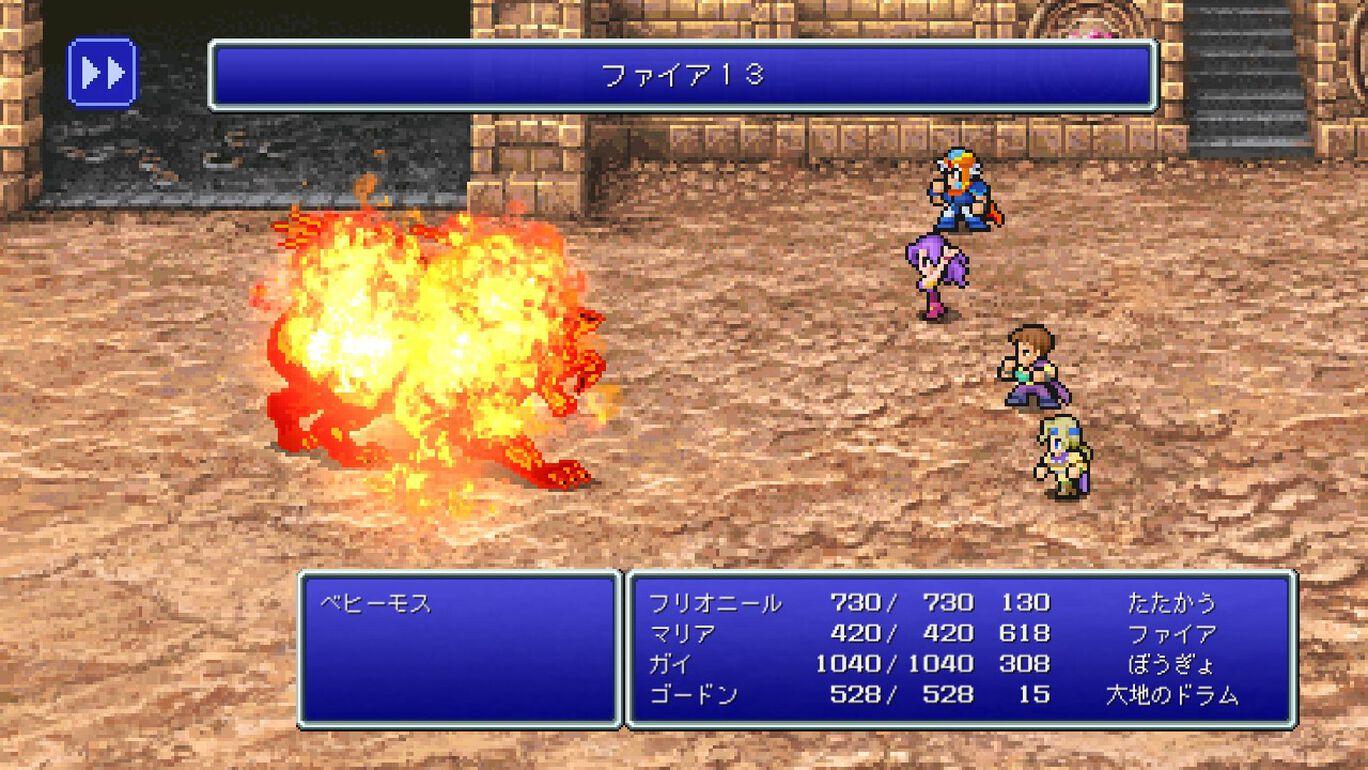
One reason I believe Final Fantasy II deserves more recognition is that many elements now synonymous with the franchise first appeared here.
The most obvious example is the chocobo. It’s difficult to imagine Final Fantasy without these oversized birds, but they weren’t present in the original game. FFII introduces them as a way to travel across the world map without worrying about random encounters.
Interestingly enough, the game also features what could essentially be described as proto-Moogles in the form of the Giant Beavers. These rather unusual creatures are encountered in the Snow Cavern, where we discover that Guy can communicate with them.
Anyone familiar with Moogles will probably notice a certain resemblance, and as it turns out, that’s not a coincidence. Koichi Ishii had originally developed the Moogle designs for FFII. However, when the developers couldn’t find a suitable place for them in the story, they modified the designs by removing their wings, adding fangs, and changing their colouring. The resulting creatures became the Giant Beavers, while the Moogles we know would make their official debut in FFIII.
Granted, I don’t think anyone is particularly disappointed that Giant Beavers didn’t become a recurring staple of the franchise, but it’s amusing that the origins of two of its most recognizable mascots can be traced back to this game.
Then there’s Cid. Although the original Final Fantasy later referenced a character named Cid, FFII was the first game to actually feature a character with that name. He also has a connection to airships, establishing an association that would continue throughout much of the franchise.
The game also introduces the Dragoons as an order of warriors associated with wyverns, rather than the playable job with the Jump ability that would appear in FFIII. Among them is Ricard Highwind. That surname should immediately sound familiar to anyone who has played some of the later games. FFIV gives us Kain Highwind, while FFVII introduces Cid Highwind. Speaking of FFIV, FFII also introduces Mysidia, a town associated with magic that would later return in FFIV.
Another notable first appearance is Leviathan2, although the creature wouldn’t take on its familiar role as a summon until Final Fantasy III.
Familiar Monsters and Enemies
It’s not just the friendly creatures that debuted in Final Fantasy II. A surprising number of the monsters we now associate with the franchise also originated here.3
Perhaps the most recognizable are the Behemoth and King Behemoth. The former is encountered as a boss in the Coliseum before appearing as a regular enemy, and both would go on to become recurring examples of the sort of enormous, physically powerful monsters you generally don’t want to encounter with an ill-prepared party.
Then there are the Bombs, along with their relatives, the Balloons, Grenades, and Mines. These rather angry-looking creatures would become regular nuisances throughout the franchise, and anyone who remembers the destruction of Mist in Final Fantasy IV will know that they aren’t always confined to random encounters.
Another familiar monster is the Malboro. Interestingly, the original FFII incarnation doesn’t yet use its infamous Bad Breath attack. Its physical attacks can inflict paralysis, but it wouldn’t be until FFIV that we would see the beginnings of the attack that has made Malboros so notorious. I suppose we can at least be thankful that Square hadn’t yet decided to inflict practically every conceivable status ailment on us at once.
FFII also introduces the Coeurl, the feline creature with its dangerous Blaster ability; the Adamantoise, a heavily armoured turtle that initially appears as a boss in the Snow Cavern; and the Iron Giant, a particularly rare and powerful enemy in the final dungeon. The Antlion and Lamia also make their debuts here. The former would become rather memorable in FFIV, while the Iron Giant and Adamantoise would eventually be featured as particularly formidable enemies in later entries.
It’s interesting to look back at the bestiary of a game released in 1988 and realize how many of these enemies are still recognizable decades later.
Items, Equipment, and Combat Mechanics
There are also a few less obvious additions. The original Final Fantasy used a system of spell charges, whereas FFII introduces a shared pool of magic points (MP), a system that would eventually become the standard in the series. Interestingly, FFIII would return to spell charges before FFIV brought back the conventional MP system.
FFII also gives us the Phoenix Down, Ether, and Elixir, three items that are now practically synonymous with Final Fantasy. They weren’t present in the original Famicom version of FFI, although they were retroactively added to later releases, including Dawn of Souls. Given how familiar these items are, I imagine it’s easy to forget that the original game didn’t have them at all.4
Other additions include spells such as Ultima, Esuna, and Shell, as well as the Blood Sword and pieces of Genji equipment, including the Genji Helm, Gloves, and Armour. Ultima is particularly noteworthy because of its significance to FFII’s story, rather than simply being another powerful spell for the player to acquire.
There are also front and back-row formations, allowing you to keep your spellcasters behind your physical attackers. In FFII, characters in the back row are generally protected from enemy melee attacks, while bows and magic can still be used from a distance. It’s another mechanic that would become familiar to anyone playing the later turn-based entries.
Looking at the series as a whole, FFII feels like much more than an incremental improvement over its predecessor. Between the monsters, items, spells, and gameplay mechanics introduced here, Square was already establishing much of what would become the identity of Final Fantasy.
Graphics and Music
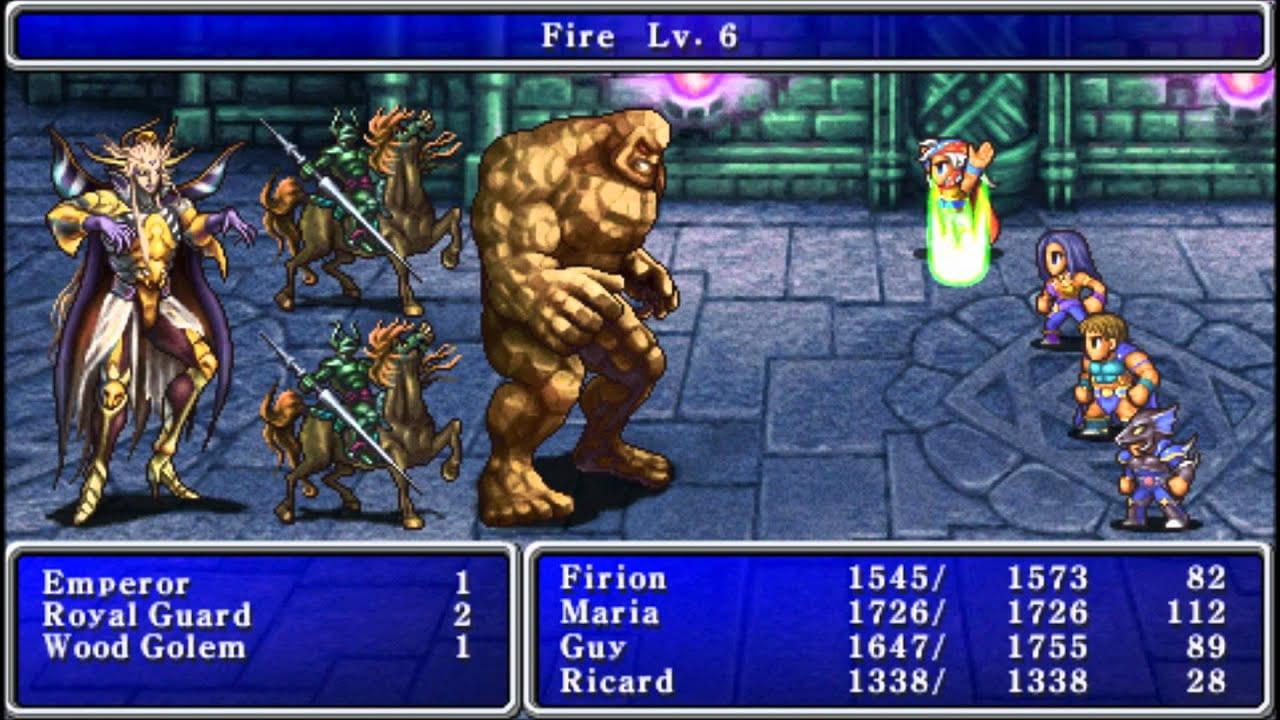
Since my primary experience was with the Game Boy Advance version, I can’t fairly judge the original Famicom graphics from firsthand experience. The GBA release features updated character sprites, environments, and battle visuals that make the game feel much more approachable. It isn’t as visually elaborate as the later Super Nintendo entries, but the presentation works quite well for a portable RPG.
As far as the music is concerned, I think Final Fantasy II has a perfectly fine soundtrack, although it isn’t one that particularly stands out to me. Nobuo Uematsu has composed some of my favourite video game music, but beyond the familiar Prelude, few compositions immediately come to mind when I think back to FFII.
That said, after listening to the soundtrack again, several tracks are worth mentioning. I particularly like the Opening Theme, which begins and ends quite differently, giving the composition an interesting sense of progression. The Rebel Army does a good job of conveying the determination of the resistance, while the overworld’s Main Theme has a more melancholy quality that suits the game’s atmosphere.
Castle Pandemonium and The Imperial Army also contribute to the game’s darker tone. Interestingly enough, while listening to the Pixel Remaster’s arrangement of The Imperial Army, I noticed certain elements that reminded me of what we would eventually hear in One-Winged Angel from Final Fantasy VII. Whether that resemblance was intentional or not, it’s interesting to hear similarities between Uematsu’s early work and his later compositions. I’m also quite fond of FFII’s rendition of the victory fanfare.
One thing worth mentioning is that most ordinary towns share the appropriately named Town composition, although significant locations, such as the rebel headquarters, have their own music. This isn’t particularly surprising for a game released in 1988, but it does mean that individual locations lack the distinct musical identities that would become more common in later Final Fantasy games.
While I still wouldn’t rank FFII’s soundtrack among Uematsu’s finest, revisiting some of these compositions has given me a greater appreciation for his work on the game.
With games such as FFIV, VI, or VII, numerous compositions immediately bring back memories of particular characters, places, and events. I don’t really have that same association with most of FFII’s music. Aside from the handful of tracks I’ve mentioned, little has stayed with me over the years.
The soundtrack serves the game well, but it isn’t one of the primary reasons I remember Final Fantasy II so fondly.
Dawn of Souls and the Different Versions
Something I didn’t fully appreciate when I first played FFII was just how much the experience could differ depending on the version.
The original Famicom release was considerably more unforgiving, particularly regarding progression. Certain attribute increases could cause others to decrease, meaning that developing a character in one direction could come at the expense of another. Later versions gradually addressed these issues, with Dawn of Souls removing attribute decreases entirely. The GBA version also allows HP to increase automatically after a certain number of battles, making it less necessary to deliberately subject your characters to punishment.
While I understand why some purists might prefer the original mechanics, I think these changes helped make the game more approachable.
The biggest addition, however, was an entirely new scenario called Soul of Rebirth. Rather than simply adding another optional dungeon or a handful of powerful bosses, Square created an adventure that expands upon the main story. Unfortunately, this content wasn’t included in the Pixel Remaster, which focuses more closely on recreating the original games with modernized presentation and various quality-of-life improvements.
The Pixel Remaster may be the most convenient way to play FFII today, but the GBA and PSP versions still offer content that isn’t available in that release. That’s something prospective players should consider when deciding which version to experience.
Story Discussion: Spoilers Ahead
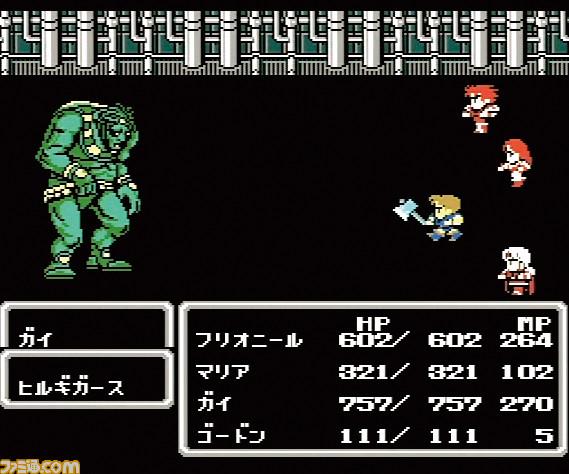
One of the things I particularly appreciate about Final Fantasy II is that it isn’t afraid to kill off members of its supporting cast.
Throughout most of the adventure, Firion, Maria, and Guy form the core of your party, while a fourth position is periodically occupied by guest characters. Some, such as Gordon and Leila, survive their involvement with the rebellion. Others aren’t nearly as fortunate.
Josef sacrifices himself to save the party from a massive boulder. Minwu gives his life attempting to break the seal protecting the legendary Ultima magic. And Ricard Highwind sacrifices himself while confronting the Emperor, allowing the others to escape. These are characters who actually join your party and participate in battles, only to be permanently removed from the story.
It’s worth emphasizing that this was happening in a game released in 1988. Some of the deaths happen rather suddenly, and the limited dialogue means we don’t necessarily get enough time to develop strong attachments to every character. Nevertheless, there’s something rather bleak about watching the resistance repeatedly lose people while continuing to fight an enemy that seemingly has endless resources.
I also like the mystery surrounding Leon5. His disappearance provides a personal motivation for Maria, and his eventual reappearance as the empire’s Dark Knight adds another dimension to the conflict. I do wish the game had explored his motivations and eventual reconciliation with the others in greater detail, because I think this could have been one of the strongest aspects of the story.
Then there’s the Emperor himself. He initially appears to be a fairly conventional fantasy villain, but the story takes an unexpected turn when his defeat doesn’t bring the conflict to an end. Instead, he returns from the afterlife, having become even more powerful. I appreciate that, unlike some later Final Fantasy games, the story escalates the threat without abruptly replacing its central antagonist.
Soul of Rebirth: Giving the Fallen Characters Their Own Story
This is where the GBA’s additional scenario becomes particularly interesting. Soul of Rebirth follows Minwu, Josef, Ricard, and Scott in the afterlife, giving several characters who died during the main story an adventure of their own. Scott is particularly interesting because, although he appears in the main story, he wasn’t originally playable.
I think it’s a fitting addition. Final Fantasy II spends much of its story emphasizing the sacrifices made by the rebellion, so allowing these characters to continue their struggle provides some additional closure. It isn’t essential to the original experience, but I appreciate that Square took the opportunity to expand the narrative rather than merely adding more monsters to defeat.
The Final Boss and the Infamous Blood Sword
One thing that recently made me reconsider just how exploitable FFII’s mechanics can be was watching a Final Fantasy YouTuber whose opinions I generally agree with, particularly regarding FFVII Remake and Rebirth. I was rather surprised to see him practically obliterate the Emperor in only a turn or two.
The trick involved the Blood Sword, a weapon that can deal damage based on a percentage of an enemy’s maximum HP. Against ordinary enemies, that might not sound particularly impressive. Against a final boss with an enormous amount of HP, however, it’s devastating. With sufficient weapon proficiency and multiple successful hits, the Blood Sword can make extremely short work of what should otherwise be a challenging encounter.
I have to admit, I found this a little deflating. When I originally played FFII, I never took advantage of the Blood Sword in this manner, and I’m not sure if I even retrieved it. That’s rather amusing when you consider that I had absolutely no problem spending hours beating up my own party members to improve their attributes.
Apparently, I was perfectly willing to exploit one aspect of the game, but completely overlooked another that could trivialize its final battle.
I suppose that’s part of the charm, and occasionally the frustration, of FFII. There’s something satisfying about discovering an incredibly powerful strategy, but also something disappointing about watching a climactic encounter end before the boss has much of an opportunity to fight back.
Conclusion: A Flawed but Important Final Fantasy
I don’t think Final Fantasy II is a perfect game. Its progression system is fascinating but deeply flawed, its dungeon design can be frustrating, and its story, while ambitious for its time, is understandably limited by the technology and conventions of the era. The soundtrack is perfectly serviceable, but I wouldn’t place it alongside the series’ very best.
Despite these shortcomings, I genuinely enjoyed playing FFII. What stands out to me isn’t simply what the game does well, but what Square was attempting to accomplish. Rather than producing a straightforward sequel to a successful RPG, the developers experimented with character progression, storytelling, and how players interacted with NPCs. They also introduced chocobos, Cid, Dragoons, as well as familiar enemies such as Bombs, Behemoths, and Malboros, and items such as Phoenix Downs and Ethers.
When people discuss the foundations of Final Fantasy, the original game understandably receives most of the attention. FFIV is frequently recognized for establishing the series’ more character-driven approach to storytelling, while FFV is celebrated for its flexible job system. FFII often seems to be remembered primarily for its unusual leveling mechanics, and I think that’s selling it rather short.
In fact, if someone were interested in exploring the original three Famicom-era Final Fantasy games and asked me which one I would recommend starting with, I would probably suggest FFII. I realize that’s a somewhat unconventional recommendation, but the original game’s relatively basic story and anonymous protagonists might make it difficult for someone accustomed to later entries to become invested. FFIII offers an excellent introduction to the job system, but I personally find FFII’s story and characters more compelling.
Of course, the biggest caveat is the progression system. I can understand why someone accustomed to traditional RPG mechanics might find it off-putting, although the adjustments made in Dawn of Souls and the Pixel Remaster make it considerably more approachable.
I wouldn’t necessarily recommend FFII as someone’s introduction to the franchise as a whole. There are later entries that offer a more polished and representative Final Fantasy experience. But out of the original three games, it’s the one I would be most inclined to recommend.
If Final Fantasy V is supposed to be the franchise’s overlooked gem, then I would argue that Final Fantasy II has an even stronger claim to that distinction.
It may be a flawed experiment, but it’s an important one. And for me, that’s precisely what makes it so interesting.
Final Rating: 3.5/5
Very Good: An Underappreciated and Historically Significant RPG
| Category | Rating |
|---|---|
| Story | 3.5/5 |
| Characters | 3.5/5 |
| Combat and Gameplay | 3.5/5 |
| Character Progression System | 3.5/5 |
| World and Exploration | 3/5 |
| Graphics (GBA Remake) | 3.5/5 |
| Music | 2.5/5 |
| Historical Significance | 5/5 |
| Overall Rating | 3.5/5 |
One of the more intriguing references involves the Deathbringer sword that the King of Fabul gives Cecil. According to an early Japanese FFIV guidebook, the sword originally belonged to a Dark Knight named Leonhart, who abandoned his sword and entered the priesthood approximately a century before the events of FFIV. Leonhart, of course, is Leon’s original Japanese name in Final Fantasy II.
Then there’s Mysidia, which appears in both games as a settlement inhabited by mages. There’s also an interesting parallel between Minwu’s journey to the Mysidian Tower to unseal Ultima in FFII and Tellah’s journey to Mount Ordeals to learn Meteor in FFIV. Both involve powerful, forbidden magic, and both ultimately result in the deaths of their respective characters.
There are further connections involving the Dragoons, particularly Ricard Highwind and Kain Highwind. Later releases of FFII even give the name Kain to a young boy living in Deist, while FFIV’s 3D remake establishes that Kain’s father was named Richard and died fighting an empire.
While none of this definitively establishes that the two games share the same world, I find the number of parallels rather fascinating. At the very least, it demonstrates just how much Final Fantasy IV drew upon its predecessors, particularly Final Fantasy II.
-
See the Mysidian Tower in the original Famicom release and the series history of crystals. ↩︎
-
In this game, the party is swept up in a whirlpool and swallowed by Leviathan. They subsequently have to traverse the creature’s insides to find a means of escape. ↩︎
-
For the original Famicom bestiary, see Gamer Corner Guides - Final Fantasy II and the Final Fantasy Compendium’s recurring monster guide. Square Enix also identifies FFII as the debut of King Behemoth. The Malboro’s series history distinguishes its original attacks from the later Bad Breath ability. ↩︎
-
See the original Famicom guide, Phoenix Down, Ether, and Final Fantasy II’s original battle mechanics. ↩︎
-
There are several interesting connections between Final Fantasy II and IV that make me wonder whether, at some point during development, Square considered having FFIV take place in the same world, perhaps a century or more after the events of FFII. ↩︎