
Fantasian: A return to the roots of Final Fantasy, courtesy of Mistwalker
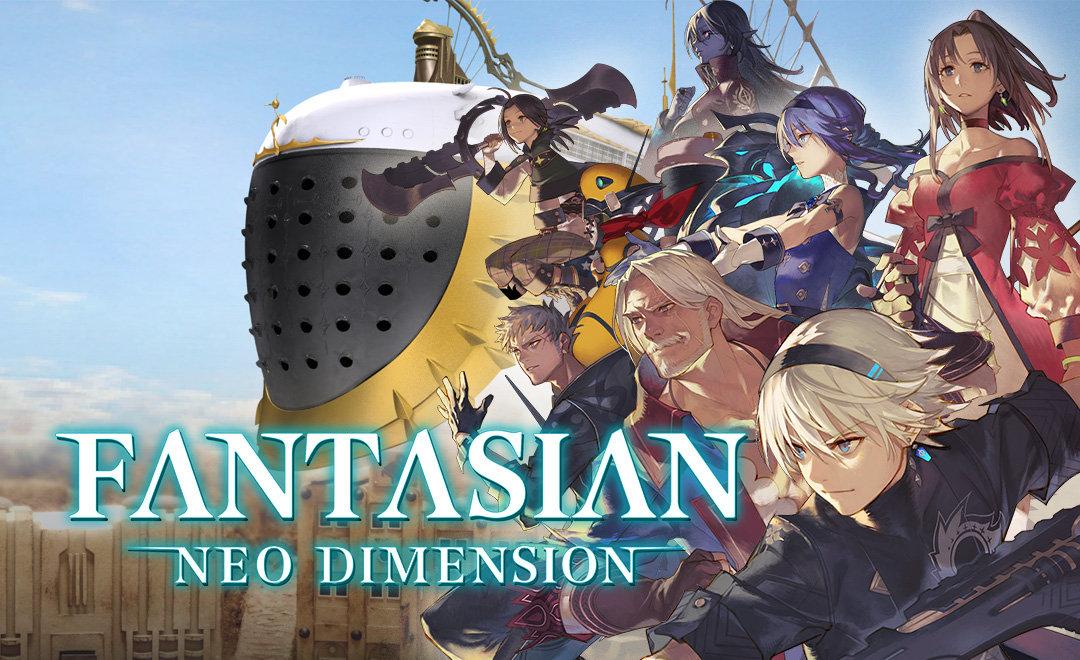
Apparently I lied.
After spending entirely too much time writing about Final Fantasy, I said I was going to move on for a while and write about Star Trek, homelab stuff, and technology.
And yet here we are.
In my defence, Fantasian is probably about as close as you can get to writing about Final Fantasy without actually writing about Final Fantasy.
It comes from Hironobu Sakaguchi, features a soundtrack by Nobuo Uematsu, uses traditional turn-based combat, and carries more than a little of the DNA of the SNES and PlayStation-era RPGs I grew up with.
I’ve followed Mistwalker for years largely because Sakaguchi has always been something of a personal hero of mine. I haven’t played everything the studio has produced, I owned an Xbox 360 for only a relatively short period and consequently missed Blue Dragon and Lost Odyssey when they were new, but I’ve always paid attention to what he was doing after leaving Squaresoft.
Mistwalker itself has always been an interesting company because it operates more as a creative studio, partnering with other developers to actually build its games. That gave us Blue Dragon, Lost Odyssey and The Last Story, but eventually the company shifted heavily toward mobile.
That period produced Terra Battle, which I ended up enjoying considerably more than I expected.
I liked its characters, their individual backstories and, most importantly, its battle system. There was grinding involved, but I rarely found it tedious. Even with the gacha elements hanging over everything, there was a genuinely good RPG underneath.
I also briefly played Terra Battle 2, though nowhere near as much as the original.
When Terra Battle 2 and Terra Wars disappeared relatively quickly, followed eventually by the original Terra Battle, I honestly started wondering whether Mistwalker itself was winding down.
Then Sakaguchi announced a partnership with Apple for a new RPG on Apple Arcade.
That game was Fantasian.
And when it arrived in 2021, it was almost exactly the sort of game I had been hoping Sakaguchi would make again.
Familiar, without simply being Final Fantasy again
Fantasian is immediately familiar if you’ve played older JRPGs.
Leo wakes up without most of his memories and gradually collects a group of companions while trying to understand his past and the larger threat facing the world.
So yes, we have another amnesiac protagonist.
There’s also a princess, mysterious villains, hidden identities and characters whose backgrounds are more complicated than they initially appear.
None of that particularly bothered me.
Sometimes familiar ingredients are familiar because they work.
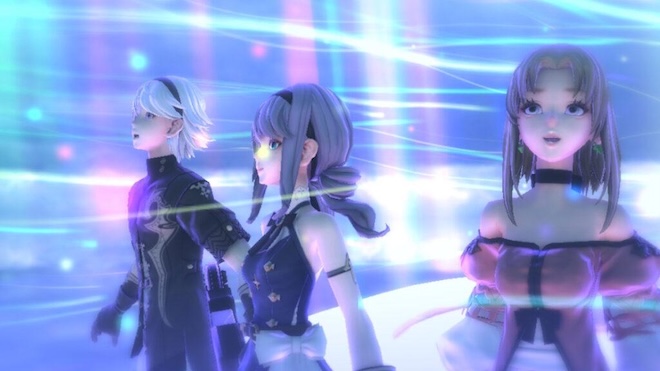
I liked Leo, but I think the supporting cast is where the game really shines.
Kina is immediately likeable, and her background becomes considerably more important than the opening hours suggest.
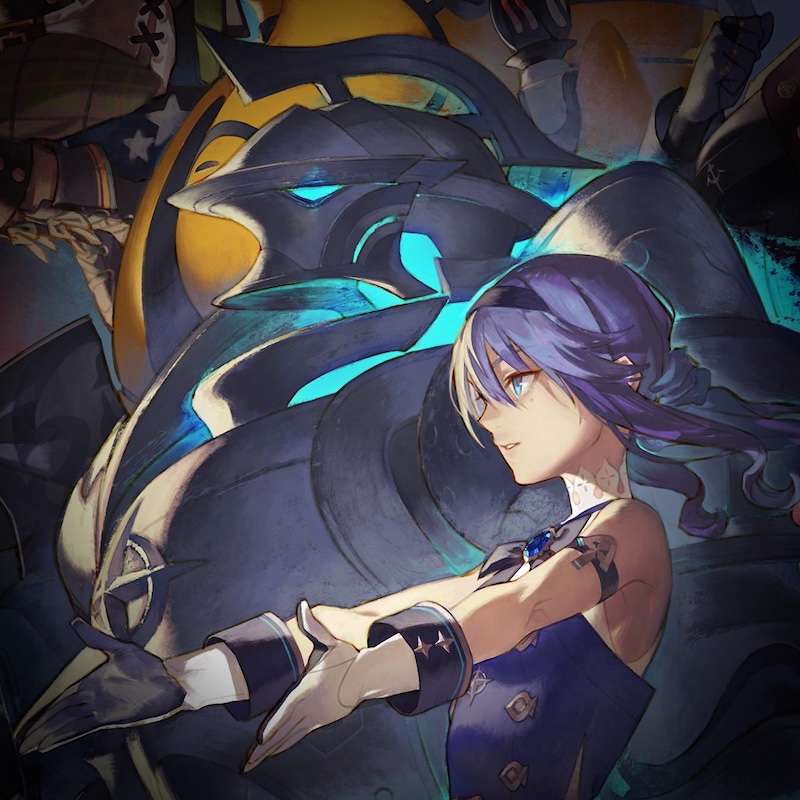
But I have to admit that Cheryl is probably my favourite character.
I liked her during my original Apple Arcade playthrough, but replaying Neo Dimension on PS5 has made me appreciate her even more.
Part of that is simply her personality, but part of it is what she becomes in battle.
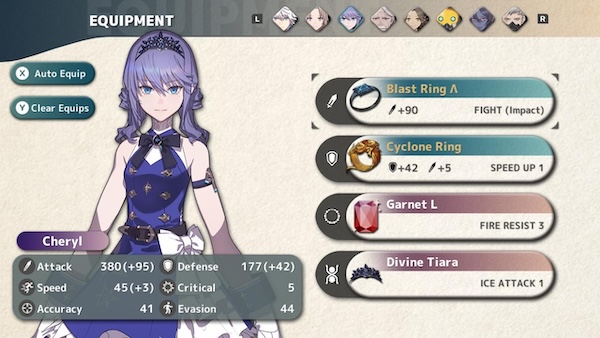
She’s not really a “tank” in the conventional RPG sense, she isn’t there primarily to stand around absorbing hits, but she has basically become my heavy artillery. Once I started building around her stronger abilities, she became the character I could rely on to dish out some of the highest damage in my party.
There are fights where everyone else is contributing and Cheryl comes along and simply deletes a substantial chunk of the boss’s health bar.
Charge, Concentrate and her stronger attacks can become ridiculous when everything lines up properly.
I love it.
The cast in general has that quality I associate with older JRPGs, where everyone has a fairly recognizable personality without the game needing hours of cinematic exposition to establish it.
There are also the Cinderella Tri-Stars, a recurring trio of antagonists who somehow manage to be both irritating and entertaining.
It’s all very old-school.
But Fantasian isn’t simply Sakaguchi making a fake 1997 RPG.
There are enough new ideas here to give it its own identity.
Those dioramas
The most immediately obvious one is the world itself.
Fantasian’s environments aren’t simply conventional computer-generated backgrounds. Mistwalker constructed physical dioramas and incorporated them into the game, with the 3D characters moving through them.
It’s still one of the coolest visual ideas I’ve seen in an RPG.
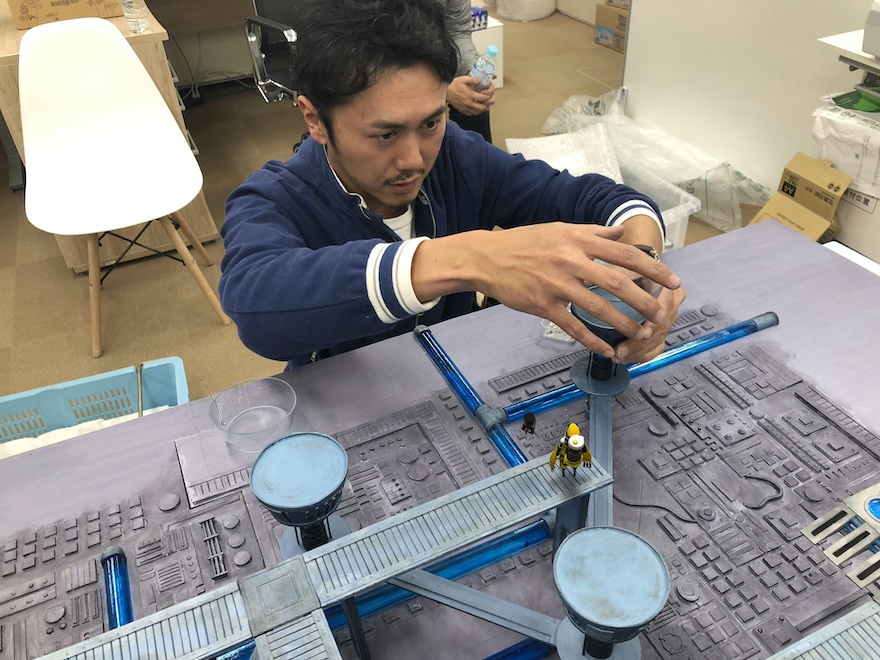
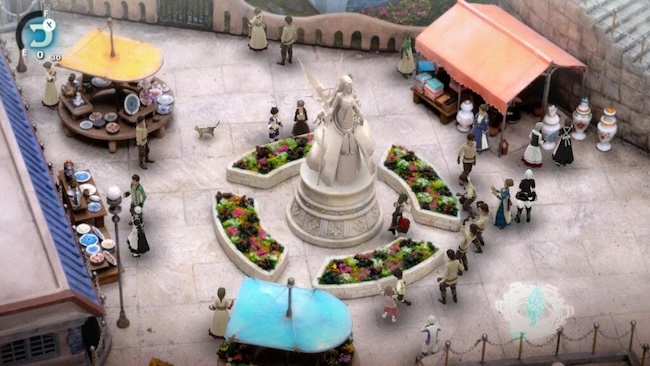
There’s an actual physical quality to everything.
Buildings look like models. Trees look as though somebody placed them by hand. Pipes, machinery, rocks, tables and tiny pieces of scenery have little imperfections that make the world feel tangible in a way a perfectly rendered 3D environment doesn’t.
Sometimes it looks like an enormous model railway.
Other times it looks like someone built an elaborate fantasy world on a table and somehow let you walk around inside it.
I love that.
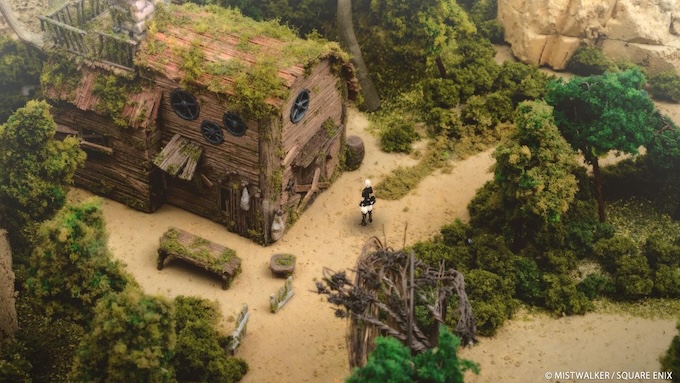
And strangely enough, there are environments where Fantasian brings Terra Battle back to mind.
It’s difficult to pinpoint one specific thing. Sometimes it’s the colour palette, sometimes the lighting, sometimes the combination of machinery and fantasy architecture.
The games obviously don’t look alike in any literal sense, but every so often I’ll enter an area and think, “Yeah, I can see Terra Battle in this.”
It feels like some of Mistwalker’s visual DNA survived the transition from those mobile games into Fantasian.
That combination of handcrafted environments and digital characters also fits the game remarkably well because Fantasian itself constantly sits between old and new.
It’s a traditional JRPG running through actual physical miniature sets while using combat mechanics designed around touchscreens.
That’s a strange sentence.
But it works.
Turn-based combat can still be fun. Imagine that.
One of the things I like most about Fantasian is that it never treats traditional turn-based combat as something it needs to apologize for.
I’ve complained about this enough in my Final Fantasy articles, so I won’t go through the entire argument again.
Mostly.
But I still don’t understand why turn-based combat apparently became something Final Fantasy needed to escape from while Dragon Quest has been allowed to continue refining it.
Fantasian is a pretty good example of why abandoning it was never necessary.
You can keep the foundation and still add new ideas.
The most obvious example is the trajectory system.
Many attacks don’t simply target one enemy. You can aim or curve them across the battlefield, lining up multiple enemies and trying to hit as many as possible in one shot.
It’s extremely satisfying.
You stop thinking only about which enemy needs to die first and start thinking about angles.
Can I curve this through four enemies?
Can I catch that stronger enemy at the end of the line?
Can I wipe out half the screen with one attack?
It gives ordinary encounters a little puzzle-solving element.
Then there’s the Dimengeon, probably my favourite idea in the game.
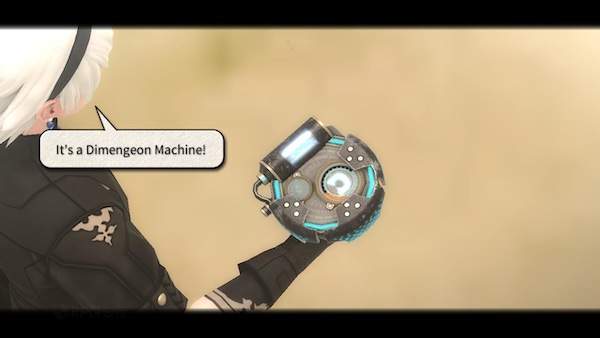
Once you’ve encountered an enemy type, the Dimengeon can essentially suck subsequent encounters into another dimension rather than interrupting you every few steps.
You keep exploring.
The enemies keep piling up.
Eventually you open the Dimengeon and fight all of them at once.
And sometimes that means fighting a ridiculous number of enemies.
That system solves one of my biggest problems with random encounters without simply removing them.
You aren’t being dragged into battle every fifteen seconds while trying to explore a town or dungeon.
Instead, you accumulate the encounters and deal with them when you’re ready.
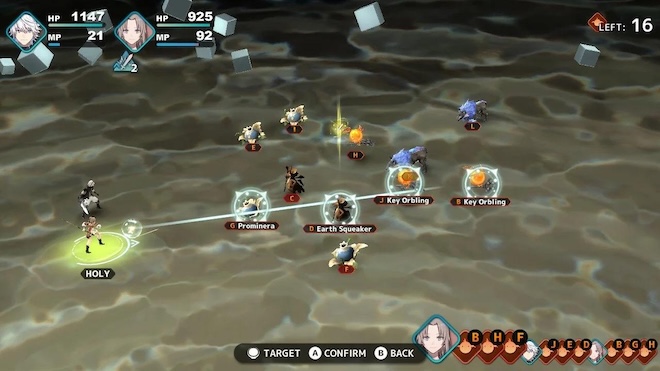
And because trajectory attacks become particularly useful against huge groups, Dimengeon battles are often some of the most satisfying fights in the game.
It’s also why grinding rarely feels like a chore.
I’m already someone who tends to grind in RPGs. I’ve been doing it since the early Final Fantasy games.
But there’s a big difference between grinding because the combat is enjoyable and grinding because you’re watching the same animation for the 700th time while questioning your life choices.
Fantasian usually falls into the first category.
You wander around.
The Dimengeon fills up.
You trigger the battle.
Thirty enemies appear.
You start trying to figure out the most efficient way of murdering all of them.
The experience and money pile up.
Then you do it again.
There’s a rhythm to it that I find genuinely enjoyable.
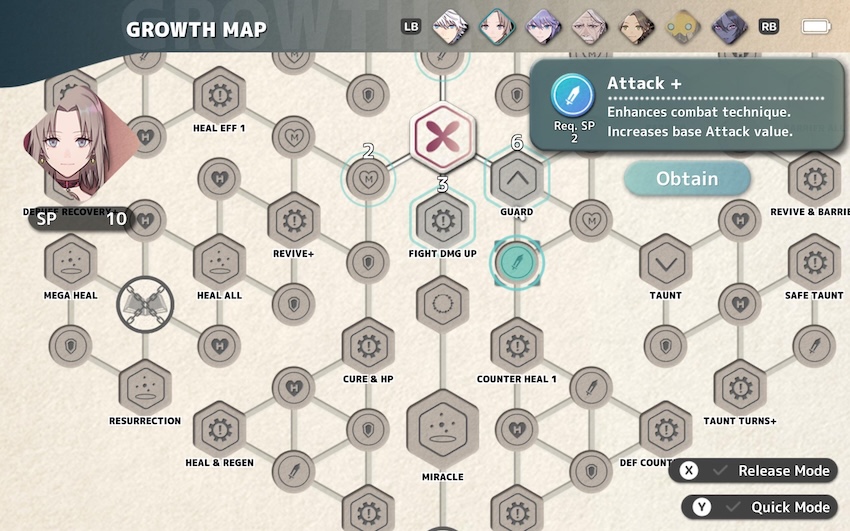
The later Growth Map makes that even better because you’re no longer grinding simply to make a level number increase. You’re earning points toward new abilities and improvements, giving you something specific to work toward.
That PS5 replay has only reinforced how much I enjoy the combat.
I earned the Platinum trophy in Neo Dimension, which obviously means I spent considerably more time fighting things than someone simply playing through the story.
At no point did I reach the “please, no more battles” stage.
That’s pretty high praise for any RPG.
The game still makes you think
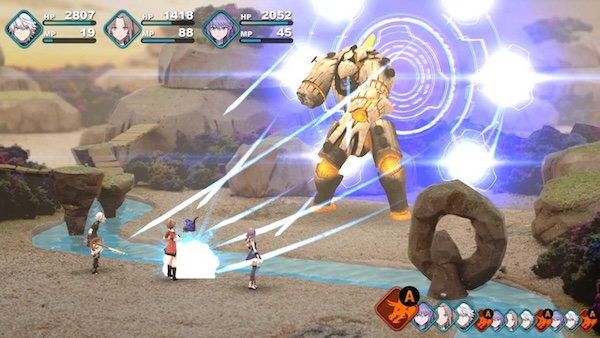
The amusing part is that Fantasian doesn’t necessarily let grinding solve everything.
At certain points, experience gains drop considerably once you reach the level the game expects you to be.
You can continue grinding if you’re determined enough, but the game is effectively telling you:
You’re strong enough. Figure out the fight.
I learned that lesson from a certain sandworm.
During my original Apple Arcade playthrough, I reached a boss that relies heavily on poison attacks.
One member of my party had protection against poison.
The others didn’t.
This was not one of my better strategic decisions.
What should probably have been a manageable boss fight turned into something approaching an hour of desperation, with one character constantly healing or reviving everybody while I desperately tried to keep the whole thing from collapsing.
The solution was painfully obvious in hindsight.
Equip poison protection.
Try again.
The next time I played through the game, I prepared properly and the battle became dramatically easier.
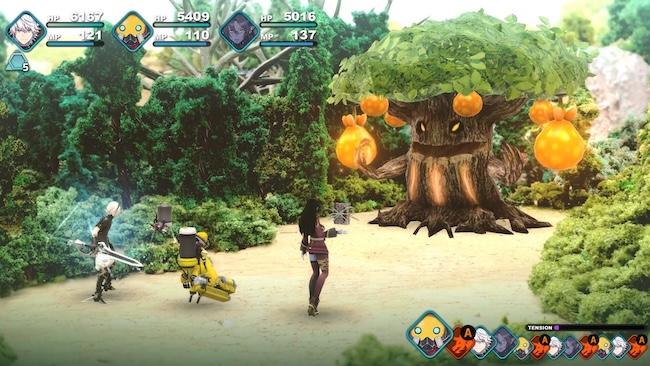
That’s something I appreciate about Fantasian. Equipment and party composition matter.
Sometimes the solution isn’t another five levels.
Sometimes you need to actually pay attention.
Final Fantasy VI is all over the second half
The second half of Fantasian is where the Final Fantasy VI influence becomes particularly obvious.
Sakaguchi has spoken about revisiting Final Fantasy VI years later and rediscovering how much he appreciated it, and you can absolutely see some of that influence here.
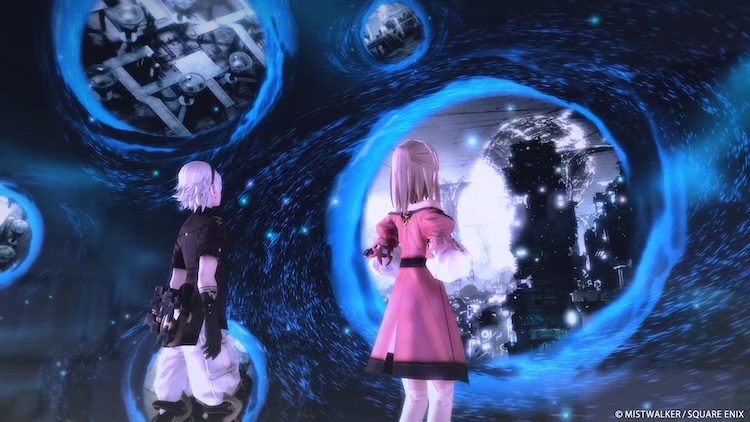
After a major turning point, Fantasian opens up considerably.
Your companions are scattered and you gradually have to find them again.
Anyone who has played Final Fantasy VI knows exactly why this sounds familiar.
You’re no longer moving down one relatively straightforward path. You’re looking at the world, deciding where to go next and figuring out which party members or objectives you’re capable of tackling.
Fantasian is more explicit about recommended levels, which makes the structure somewhat more guided than Final Fantasy VI, but the resemblance is difficult to miss.
And naturally, I reunite everybody.
I have never completed Final Fantasy VI without waiting for Shadow on the Floating Continent.
Not once.
I know you can leave.
I’m not doing it.
Likewise, apparently there are slight differences in Fantasian’s ending depending on whether you recover everyone.
I wouldn’t know.
I’m getting everybody.
Some of the smaller stories are the best ones
One of my favourite parts of the game is how it sometimes steps away from conventional cutscenes and tells stories through illustrations, text, music and sound.
The Story of Blik-0 is probably the best example.
It follows a robot created by Dr. Mabuse who gradually begins to understand human emotion, companionship and loss.
Interestingly, the story was written by Nobuo Uematsu.
These sequences are basically illustrated short stories embedded inside the game, and they’re remarkably effective.
From what little I’ve played of Lost Odyssey, it immediately reminded me of the Thousand Years of Dreams sequences in that game.
I actually appreciate that Fantasian is willing to do this.
Modern games sometimes seem terrified that the player might have to read something.
Not every emotional moment needs facial capture, twenty camera angles and a fifteen-minute cutscene.
Sometimes a beautiful image, a few paragraphs of writing and the right piece of music are enough.
Nobuo Uematsu still has it
Speaking of music, the soundtrack is fantastic.
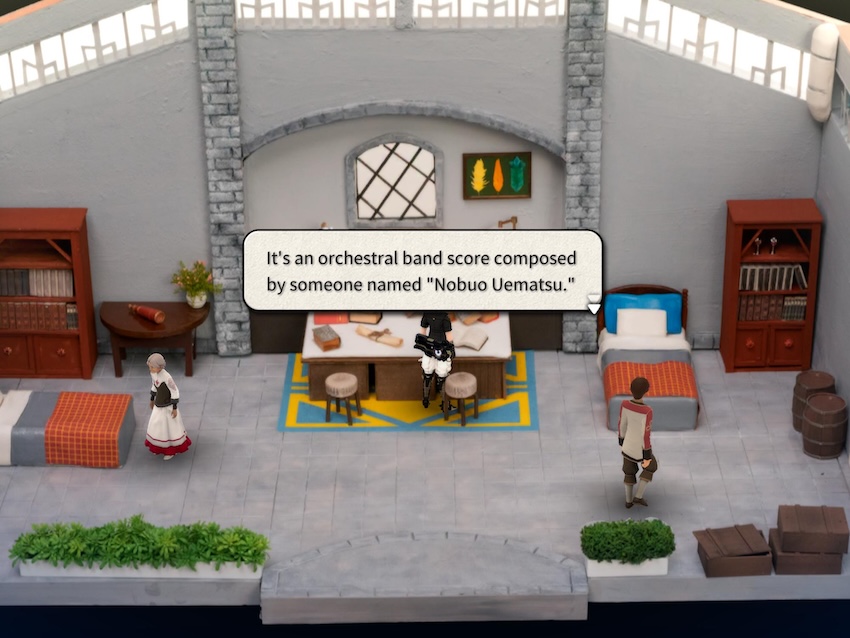
The original Apple Arcade version didn’t have voice acting, and honestly, I never cared.
Uematsu’s music gave the game so much personality that I never felt like something was missing.
There are a lot of tracks I still come back to: Owen’s Theme, Cheryl’s Theme, City of Water, Resonating Hearts, Thunderous Mountain, and Kina (Destiny) are all standouts for me.
Some of them are so closely associated with their character or location that hearing the opening few seconds immediately puts me back there.
That’s something Uematsu has always been exceptionally good at.
And then there’s Great Battle.
That’s probably my favourite battle theme in the game.
It gives me a similar feeling to Man with the Machine Gun from Final Fantasy VIII.
I don’t mean the compositions are identical. It’s that same kind of energetic battle music where the track kicks in and suddenly you’re perfectly happy fighting another group of enemies you’ve already seen twenty times.
That probably contributes to why I don’t mind grinding.
A fun combat system plus Uematsu blasting away in the background is a pretty good combination.
I was also fortunate enough to attend a recent con TIKI concert where Uematsu performed.
It was a last-minute decision and I’m extremely glad I went. I was sitting perhaps twenty feet from someone whose music I’ve been listening to for most of my life.
There were even moments during his solo performance where I became convinced a melody was about to turn into something from Fantasian.
It never did.
He got me several times.
Still, seeing him perform that close was something I’ll remember for a very long time.
Where Fantasian stumbles
As much as I enjoy the game, the story doesn’t always land.
Minor ending spoilers from here.
There’s a romantic development between two characters near the ending that feels as though somebody remembered at the last minute that they were romantically interested in each other.
I’m not opposed to romance in RPGs.
Just earn it.
I also think Leo’s relationships with Kina and Cheryl could have used a clearer conclusion.
There is clearly history and lingering attraction between Leo and Cheryl in particular, but the game never really resolves it in a way I found especially satisfying.
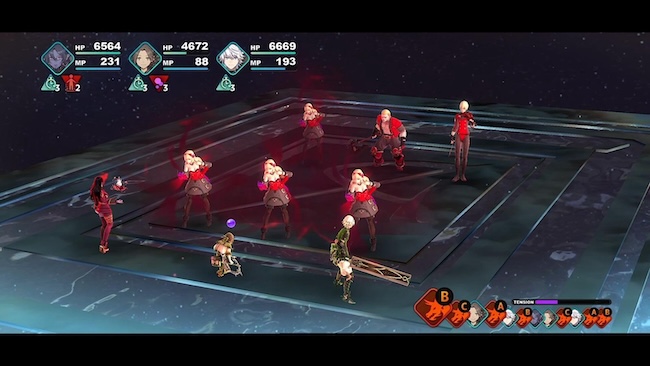
My larger issue is with the way the game handles its two principal antagonists, Vam and Jas.
Having played through the game more than once, I think I have a better appreciation of their motivations. The death of their companion Yim, coupled with their unsuccessful attempt to bring her back, seemingly broke them in different ways. Jas became convinced that returning everything to zero and starting creation anew was the answer, while Vam sought to harness the power of chaos to prevent him from succeeding. At least, that’s how I interpreted it.
What I found particularly interesting about Vam was that, despite being presented as the villain for much of the first half of the game, he wasn’t necessarily regarded as an evil figure by everyone. He had seemingly helped people in the Human Realm, even granting Kina’s adoptive father, Owen, his fortune-telling abilities, only to later take them away. Then there’s his kidnapping of Kina and Cheryl, whose significance becomes clearer once you understand what he was attempting to accomplish.
It makes Vam a considerably more interesting antagonist in retrospect. His methods are certainly questionable, but his ultimate objective is to prevent an even greater catastrophe.
My issue isn’t so much with the underlying premise, which I actually find quite interesting, but with how effectively the game communicates it. There’s a potentially compelling tragedy here about two individuals responding to the same loss in radically different ways, and I wish the game had spent more time exploring that aspect of their characters.
That’s probably my biggest criticism of Fantasian: I enjoy the characters and the journey more than I enjoy some of the answers the story eventually gives me.
Neo Dimension was exactly what the game needed
The original Fantasian being locked to Apple Arcade always felt unfortunate.
Whatever you think of Apple Arcade, it meant a lot of RPG fans simply weren’t going to play it.
Fantasian Neo Dimension fixed that when it arrived on PS5, PS4, Xbox Series X|S, Nintendo Switch and PC in December 2024.
It added voice acting, presentation improvements and new difficulty options.
Normal mode is easier than the original Apple Arcade balance, while the harder setting is closer to the original experience. There’s even a hidden Super Hard difficulty for people who apparently don’t value their free time.
More importantly, it gave the game another chance.
My own PS5 replay has made me appreciate it more than I did the first time.
The combat is still excellent.
The dioramas still look fantastic.
I’ve grown even more attached to Cheryl.
And because I already understood the mechanics and story, I found myself paying more attention to character builds, music, visual details and all the smaller things I missed the first time around.
There has also been a trademark for something called Fantasian Dark Edge.
Whether that turns into a sequel, another project or absolutely nothing remains to be seen.
Sakaguchi has historically been hesitant about sequels, so I’m not assuming anything.
Then again, Fantasian itself was once discussed as potentially being his final game.
Clearly that didn’t stick either.
Maybe he’s as good at moving on as I am.
Final Thoughts
The more I replay Fantasian, the more I appreciate it.
It isn’t simply “the guy who made Final Fantasy making Final Fantasy again.”
The influence is obviously there.
But between the physical dioramas, trajectory attacks, Dimengeon system and some of the visual and thematic ideas that seem to carry over from Terra Battle, it has enough personality of its own.
The handcrafted environments remain one of the coolest visual ideas I’ve seen in a modern RPG.
The battle system is genuinely fun.
Grinding doesn’t feel like work.
Cheryl has become my personal weapon of mass destruction.
And Uematsu’s soundtrack is exactly as good as you’d hope.
The game still has flaws.
Some bosses can produce abrupt difficulty spikes, and parts of the story don’t explain themselves nearly as well as they should.
But those problems bother me less on replay than they did originally.
I previously had Fantasian at a 4 out of 5.
After returning to it on PS5, I think I was slightly too harsh.
It’s not quite among the absolute best RPGs I’ve ever played, but it’s closer than I originally gave it credit for.
More than anything, Fantasian demonstrates that a traditional turn-based RPG can still feel modern without throwing away the things that made turn-based RPGs fun in the first place.
And after years of watching Final Fantasy increasingly move away from that style, I appreciate Fantasian even more for sticking with it.
If this ultimately ends up being the last major RPG collaboration between Sakaguchi and Uematsu, it’s a pretty fitting one.
Although given how well my declaration that I was finished writing about RPGs turned out, perhaps I shouldn’t make predictions about Sakaguchi either.
Rating: 4.25/5
References and Image Credits
All game screenshots and promotional artwork reproduced in this article are from Fantasian and Fantasian Neo Dimension, developed by Mistwalker and published for its Neo Dimension release by Square Enix. The article also includes a supplied behind-the-scenes photograph of the diorama production process.
© MISTWALKER/SQUARE ENIX. All Rights Reserved.