
A remaster of a classic - Magic Knights Rayearth (2026)
Returning to Cephiro: My First Impressions of the New Magic Knight Rayearth
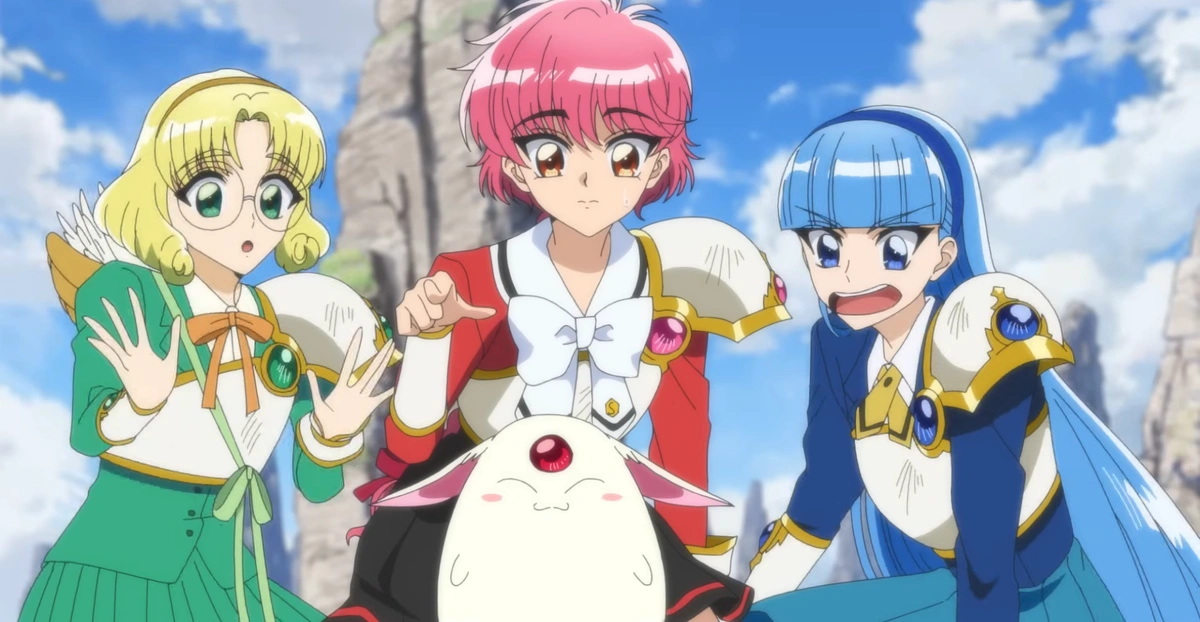
I was surprised when a new Magic Knight Rayearth anime was announced. It was one of those series I had fond memories of, but not quite in the way you might expect: I’ve never actually watched the original anime.
My introduction to Rayearth was through the Super Nintendo game. I played through it years ago and really enjoyed it. It was a fairly traditional Japanese RPG, more in the style of Final Fantasy or Dragon Quest, but I liked both the adventure and the story. In fact, it’s probably still my favourite work by CLAMP.
I enjoyed it enough that, when Tokyopop licensed the manga in English, I bought the first volume. Unfortunately, I remember being disappointed by the quality control. There were some fairly basic errors that I felt should have been caught before publication. It was a shame, especially for a series I had grown so fond of through the game. I never really got into the sequel, Magic Knight Rayearth 2, either, but my affection for the original story stuck around.
A remake that stays in the 1990s
The announcement of a new anime caught me off guard, and something about the actual show surprised me even more: rather than moving the girls into the present day, it keeps the Tokyo Tower opening in 1993, the era when the manga began. In a time when remakes often try to update everything for a new audience, I rather like that decision. The story can still begin in the world it originally belonged to.
I’ve watched the first three episodes of the 2026 version of the franchise, and I’m having fun with it. The three leads are enjoyable, but I still have a particular soft spot for Hikaru. With that red hair and those expressions, she reminds me so much of female Ranma.
That’s especially amusing because Ranma 1/2 has also received a new anime adaptation that appears happy to retain its original-era atmosphere. Ranma 1/2 has a special place in my anime history: it was the first anime I knowingly watched. I emphasize knowingly because I’d seen things like Samurai Pizza Cats and Voltron before that. I just didn’t realize at the time that they were anime.
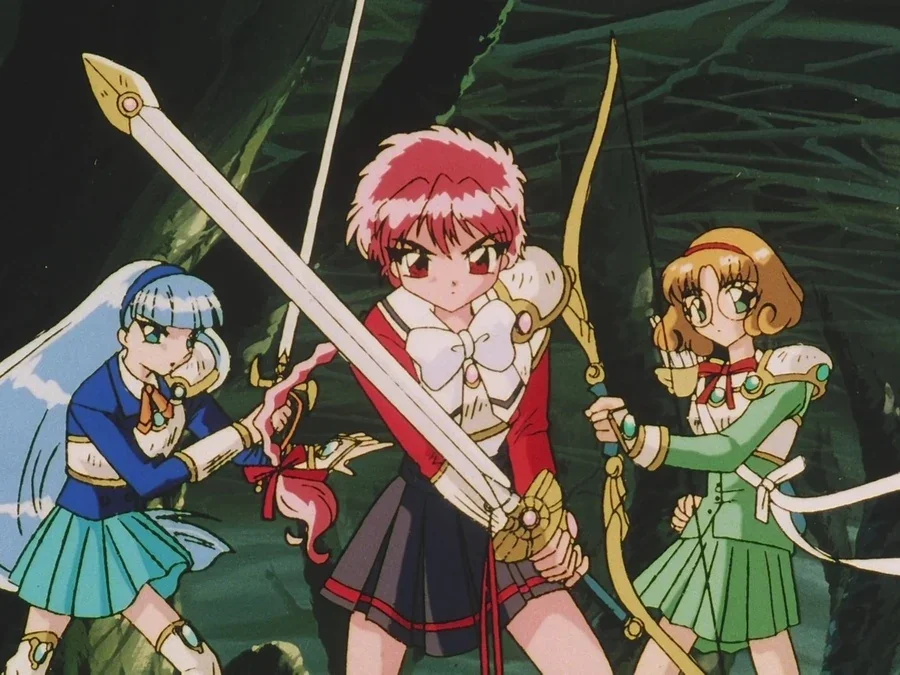
So, in a roundabout way, seeing Hikaru again brings back memories of another series that helped get me interested in anime in the first place.
One of my favourite moments of the new Rayearth so far came at the very end of the first episode, when it played Naomi Tamura’s “Yuzurenai Negai,” the opening song from the 1994 anime. I knew it from the video game versions, so hearing it again was a wonderful little moment of recognition. I was disappointed that it didn’t continue as the regular ending theme, although I expected as much. The new series has its own opening and ending songs, and the old track seems to have been a special treat for the premiere.
I was also wondering whether this would be a short, 13-episode adaptation or something longer. It turns out the official broadcast information confirms two consecutive cours, so there’s more Rayearth ahead than a single 12 or 13 episode short season.
Revisiting the games: SNES versus Saturn
Watching the new anime has also got me thinking about the different Rayearth games. I’ve often heard people say that the Sega Saturn version is the superior one. I can understand why it has its fans, although I’m not ready to rank it above the SNES game just yet.
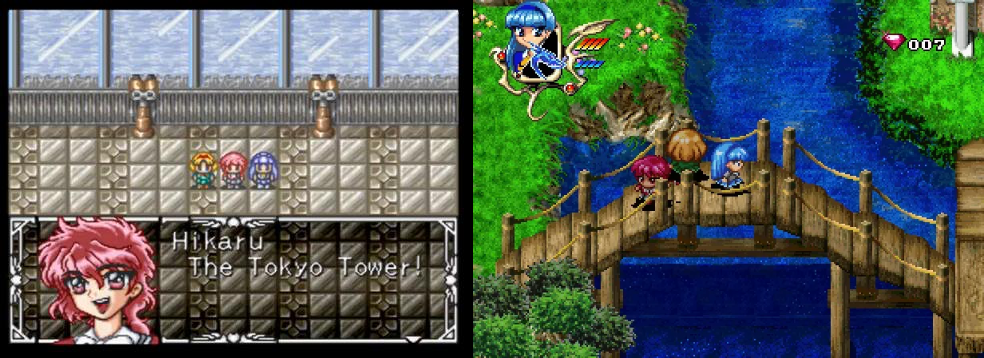
I’ve been trying the Saturn version, and it’s quite different. Instead of the traditional, turn-based JRPG structure of the Super NES game, the Saturn release is more of an action RPG, somewhat reminiscent of The Legend of Zelda. The characters have cute, chibi-style designs as you move around and fight in real time. It’s an interesting change of pace, and it gives the adventure a different feel, I would imagine especially once the Escudo weapons are made, because it is mentioned that they improve based on use.
There is also a change right at the beginning that caught my attention. In the version of the Tokyo Tower scene I remembered (and which the 2026 anime version uses), Hikaru wants to thank Fuu for giving her a coin, but loses her in the shuffle of students from Umi’s school. The Saturn game handles their meeting differently. Hikaru’s dog, Hikari, follows her to Tokyo Tower and starts running around, and Fuu helps Hikaru stop him before the girls are transported to Cephiro. It’s a small addition, but I like seeing how different adaptations find their own way of bringing the characters together.
I’m currently in the Forest of Silence in the Saturn game, and I’ll admit I’m a bit lost. I’m still trying to work out where I’m supposed to go and, rather importantly, how to bring a fallen character back to life. Perhaps that says something about how much more comfortable I am with the old-school SNES RPG approach. Still, I’m enjoying seeing another interpretation of a story I already know and like.
Ranma, Rayearth, and an unfinished fanfic
The resemblance between Hikaru and female Ranma also reminds me of an old crossover fanfic I liked, Pillars of Strength. It brought Ranma 1/2 and Magic Knight Rayearth together, with Ranma becoming involved in the trip to Cephiro. Unfortunately, the story was never finished.
That always seemed a shame because it’s a crossover with genuinely interesting possibilities. Without getting into all the details, Rayearth has a famously tragic turn to its original story. How would that play out with Ranma present? Would Ranma change what happens, or would Cephiro’s rules and the choices facing the Magic Knights ultimately lead everyone toward the same bitter conclusion?
Out of curiosity, I recently fed the six or seven chapters I had into a large language model and had it attempt a continuation, following the threads the original author had established. What it came up with was surprisingly plausible in places. The funny thing was that, almost by default, it found a way for the characters to avoid Rayearth’s tragic outcome.
Maybe Ranma’s presence really does change things, or maybe a language model just has a soft spot for a happier ending. Either way, it was fun to revisit a crossover I’d wondered about for years. Of course, it’s not the same as finding out how the original author intended to finish it.
Glad to be back
Three episodes in, I’m enjoying the new Magic Knight Rayearth. I can’t compare it properly with the original anime because I’ve never watched that version1, but perhaps that makes my perspective a little unusual. My connection to these characters comes from a Super Nintendo game, an imperfectly printed manga volume, a Saturn game I’m still finding my way through, and even an unfinished Ranma crossover.
It’s funny how a series can stay with you through all those different routes. For now, I’m happy to be back in Cephiro and curious to see how this new adaptation handles a story whose ending I haven’t forgotten.
-
Interestingly enough, the original anime is available for streaming via Crunchyroll, just like the 2026 version. ↩︎