
Juno Tab 4 and the State of Linux Tablets
A few months ago, I came across an article on 9to5Linux about the new Juno Tab 4 Wi-Fi, and I have to admit, it looks like a pretty impressive Linux tablet.
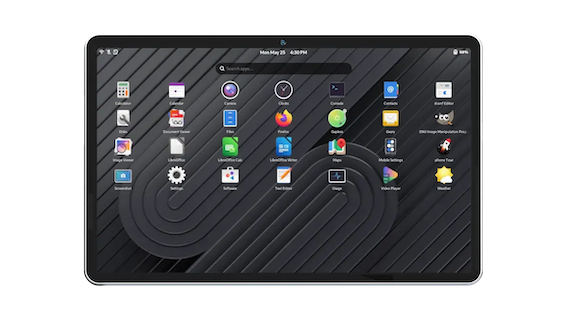
Basically, it is a proper PC squeezed into a tablet, rather than something running a mobile operating system.
The catch is the price: $989 USD.
I really wish there were more affordable Linux tablets available, but at the same time, I understand why something like this costs as much as it does. I can’t imagine the Linux tablet market is particularly large to begin with, especially when you consider what it is competing against.
There are countless inexpensive Android tablets available. The Lenovo tablet I have, for example, cost me around $200 and does most of the things someone buying a tablet would probably want to do. Then you have the iPad, which has become almost synonymous with tablets and, I imagine, represents a huge portion of the market.
Juno is a much smaller company competing in a very niche market, so they obviously aren’t going to have the economies of scale of Apple, Samsung, or Lenovo. They are also putting 16 GB of DDR5 RAM and a 1 TB NVMe SSD into this thing, which isn’t exactly budget hardware. The massive demand for memory from the AI industry probably isn’t helping hardware prices either.
Still, I would love to eventually see a Linux tablet somewhere in the $400–600 USD range. My ideal Linux table wouldn’t need a Core Ultra processor, 16 GB of RAM, or a 1 TB SSD either. Give me something with more modest hardware that can comfortably run KDE Plasma Mobile or Phosh, browse the web, play videos, use SSH1, and run normal Linux applications and I would be pretty happy.
My own experience with touchscreen Linux has been mixed.
Earlier this year I experimented with using my Raspberry Pi 5 with the official Raspberry Pi Touch Display. It worked, but I never felt like the overall experience was quite there, especially with KDE Plasma Mobile - where it felt as though there was support for maybe 1 or 2 touchscreen gestures.
I have wondered since then whether some of my issues were actually related to the touchscreen rather than Linux itself.
More recently, I came across a video from leepspvideo on YouTube where he experimented with running Phosh2, which has made me want to give it another shot on my Pi 5. I don’t have particularly high expectations for the Pi 5 and the official Raspberry Pi touchscreen combination, but I’m curious to see how much better Phosh works compared to what I tried previously.
That’s also part of what makes something like the Juno Tab 4 interesting to me. Instead of taking hardware that wasn’t necessarily designed around desktop Linux and trying to turn it into a tablet, you have a device where Linux is the entire point.
At nearly $1,000 USD, I don’t think it’s something I would personally rush out to buy, especially when I already have much cheaper Android and Apple tablets available to me. Still, I’m glad something like this exists. I’m sure some people will say that you could just buy a used Microsoft Surface and install Linux on it, and that’s fair. Personally, though, I’m a bit hesitant to buy used technology from other people unless I absolutely have to.
Linux has become remarkably good on traditional desktops and laptops, and it has also made a lot of progress on handheld gaming devices and even phones to some extent. Tablets still feel like one of those areas where Linux hasn’t quite found its footing yet.
Maybe devices like the Juno Tab 4 are another step toward changing that.
-
I realize that improvements with Android 16 and newer, on capable devices, allow you to run a Linux environment on an Android. I have a Google Pixel 9 which I am eager to test this on. ↩︎
-
Phosh is a mobile-focused graphical user interface built on GNOME technologies and designed primarily for touch-based devices. It was originally developed by Purism, the company behind the Librem hardware line. ↩︎